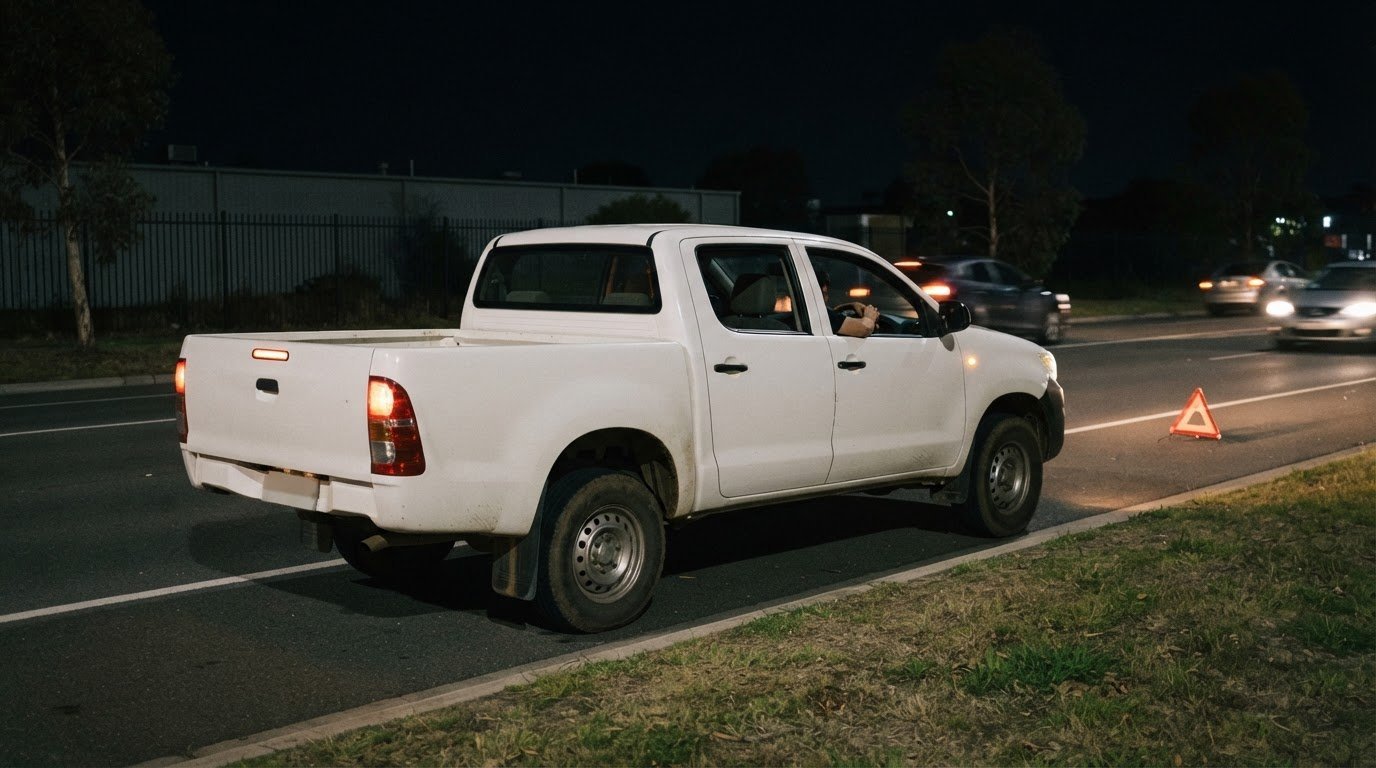
At night, a safe stop matters more than saving a few minutes: if your car starts failing, pull as far left as you safely can, switch on your hazard lights and parking lights, then turn off the ignition and apply the handbrake. Knowing what to do when your car breaks down also means deciding whether it’s safer to stay belted inside or leave through the side away from traffic and move behind a barrier.
A breakdown after dark can make every decision feel urgent. Headlights sweep past, visibility drops and the shoulder may leave little room to move. Take a breath and focus on getting clear of traffic. Don’t attempt a repair or tyre change where passing vehicles could put you at risk.
This guide explains how to choose a safer stopping place, use your lights and give assistance a precise location. You’ll also learn how to help another motorist without creating a second hazard, and how to pass stopped roadside assistance vehicles carefully. The goal is simple: make your next move safer, whether you’re on a quiet road or a busy highway.
Key Takeaways
- Ease off the road as soon as it’s safe, then use your lights to make the stopped car more visible, especially after dark.
- Decide whether it’s safer to remain belted inside or exit away from traffic and move behind a barrier.
- When helping another motorist, stop well clear of moving traffic and check the road before getting out.
- Pass stopped roadside assistance vehicles slowly and give them plenty of room to work.
Pulling over safely and using hazard lights
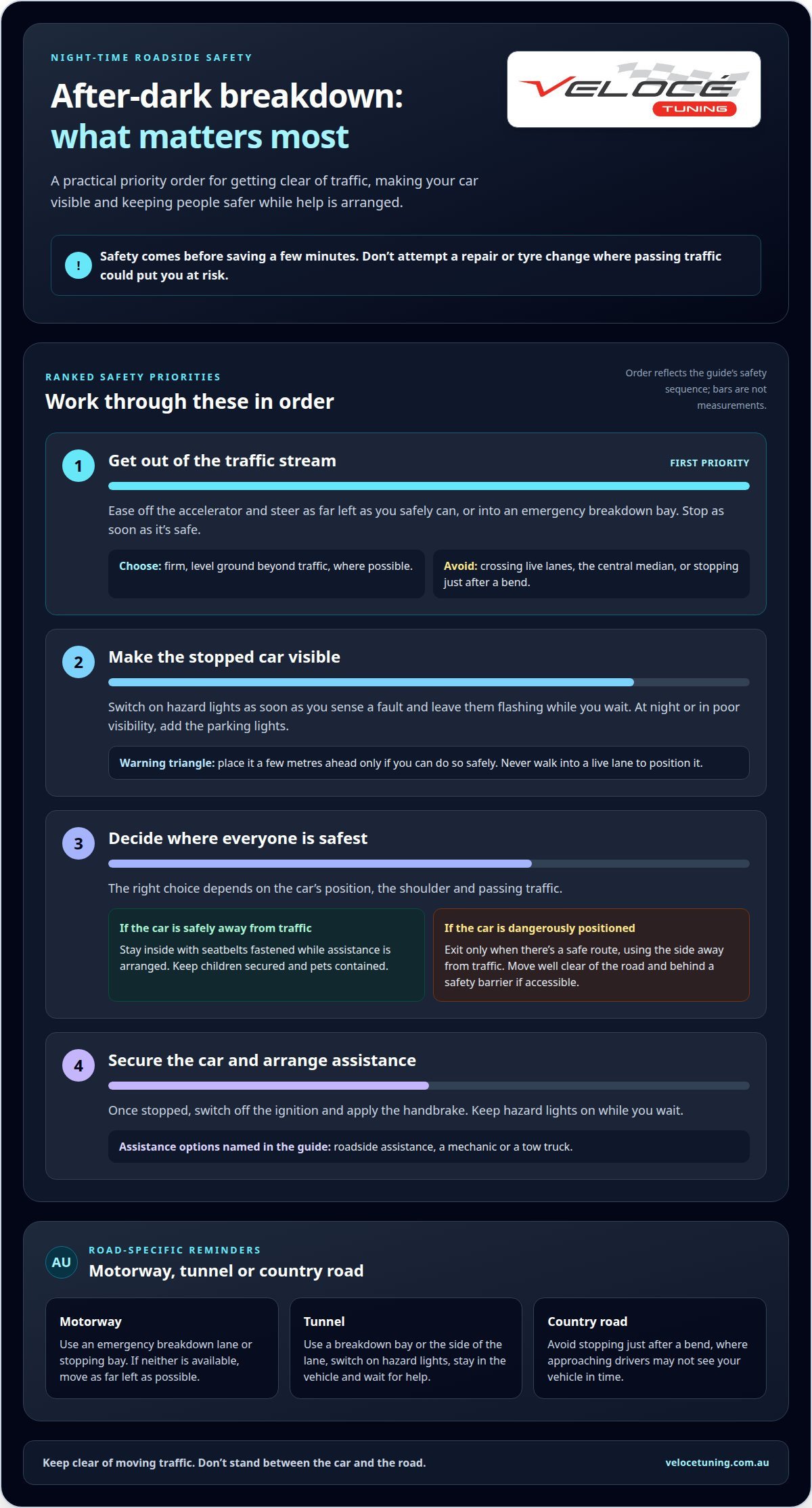
In Australia, steer as far left as you safely can or into an emergency breakdown bay. If moving the car could cause a collision, stop where you are, switch on the hazard lights and warn approaching traffic.
-
Move the car off the road safely
Ease off the accelerator and steer towards the far-left shoulder or an emergency breakdown bay. Don’t cross live lanes or stop on the central median while traffic is moving. Where possible, choose firm, level ground beyond traffic, rather than stopping just after a bend. If the car is struggling, don’t keep driving to reach a preferred spot; pull over as soon as it’s safe. At night, use visible road edges and signs to guide you, and avoid sudden turns.
-
Switch on the hazard warning lights
Switch on the hazard lights as soon as you sense a fault, then leave them flashing after you stop. They warn approaching drivers to slow down and move past, so use them before considering getting out. Once parked, switch off the ignition but keep the hazard lights on while you wait for assistance. Don’t assume other drivers have seen you, especially in darkness or near a bend. Keep the vehicle stationary and don’t investigate a fault beside moving traffic.
-
Use parking lights and warning triangles
At night or in poor visibility, switch on the parking lights as well as the hazard lights to make the car easier to see. Do this from inside the vehicle; don’t step into traffic to reach a lamp. Place a warning triangle a few metres ahead only if you can do so safely. Never walk into a live lane to position it. If there’s no safe place for the triangle, stay clear of the road and use the vehicle’s lights while you arrange help.
Helping someone whose vehicle has broken down
Help only after you’ve stopped safely yourself. Keep clear of traffic, then assess whether it’s safe to approach the broken vehicle.
-
Pull over and secure the vehicle
Stop well clear of traffic before approaching the broken vehicle. Park completely off the road where possible, switch on your hazard lights, then check approaching traffic before opening your door. Don’t stop beside the disabled car in a live lane or block the route a tow truck may need. If the scene is unsafe, move to a safer stopping place before calling for help.
-
Apply the parking brake
Once your vehicle is stationary, apply the parking brake and switch off the engine. This secures your car while you focus on the stranded motorist. Where possible, choose level ground and leave space between your vehicle, the broken car and passing traffic. Avoid stopping on a slope or narrow shoulder if another safe place is available.
-
Stay inside when it is safe
If the disabled vehicle is safely away from traffic, encourage its occupants to stay inside with seatbelts fastened while they arrange assistance. This limits their exposure to passing motorists, especially on a highway or in poor visibility. Ask whether they’ve contacted roadside assistance or a tow truck, but don’t stand beside the vehicle or lean into traffic to speak.
-
Get out of the vehicle safely
If occupants must leave because their car is dangerously positioned, they should check for traffic and exit on the side away from moving vehicles. Move well clear of the road and behind a safety barrier if one is accessible. Don’t cross the road or change a tyre in an exposed spot. Keep the keys with you and wait somewhere visible to approaching motorists.
Choosing a safe place to stop
On an Australian motorway, use an emergency breakdown lane or move as far left as possible if there’s no stopping bay. In a tunnel, pull into a breakdown bay or to the side of the lane, switch on the hazard lights, stay inside and wait for help.
-
Find a safe stopping place for a flat tyre
If a tyre goes flat, keep control and move off the road to a safe place if the car remains manageable. Don’t stop on a narrow shoulder just because it’s closest; look for a wider, level area with clear visibility. On a country road, avoid stopping just after a bend, where approaching drivers may not see your vehicle in time. Don’t keep driving on a severely damaged tyre if it makes the car unsafe to control.
-
Keep passengers, children and pets safe
Once stopped, consider the road, shoulder width and distance from passing traffic before deciding where everyone should wait. If the vehicle is safely away from traffic, keep occupants inside with seatbelts fastened while roadside assistance from Veloce Tuning is on the way in Carrum Downs. Keep children secured and pets contained so they can’t move into traffic if a door opens. If the car is in a dangerous position, leave only when there’s a safe route away from the road.
-
Stop safely on a motorway or in a tunnel
On a motorway, steer into an emergency breakdown lane or stopping bay. If neither is available, move as far left as possible. Don’t stop on the central median or cross lanes to reach a bay. In a tunnel, use a breakdown bay or the side of the lane, switch on the hazard lights, stay in the vehicle and wait for help. If you must leave because staying inside is unsafe, move behind a barrier if available and keep clear of traffic.
What to do if your car breaks down in Australia?
Knowing what to do when your car breaks down in Australia starts with getting yourself and your passengers out of immediate danger. Follow a simple sequence: secure the car, arrange assistance, then wait somewhere safer.
- Stop as soon as it’s safe, switch off the ignition and apply the handbrake. Keep the hazard lights on. If the car is close to traffic and you can exit safely, use the passenger-side door and move well away from the road. Stay behind a safety barrier if one is available, and don’t stand between the car and traffic.
- Call roadside assistance, a mechanic or a tow truck, and describe your location clearly. Give the road name, direction of travel, nearest exit or landmark, and any visible signpost. At night, share your precise position so help can find you. Your phone may show GPS coordinates or a map pin even without mobile reception.
- Stay with the vehicle while you wait, especially in a remote area. If there’s no phone reception, use a radio to request help and state your location clearly. Don’t walk away to find assistance. Another motorist may be able to help, but remain near your car where you can be seen.
- Avoid attempting repairs beside moving traffic. Don’t prod or pull at electrical or mechanical parts unless you know what you’re doing. If a tyre is damaged, follow your owner’s manual only when you’re well clear of traffic. If the vehicle is in a dangerous position, wait for professional help instead.
- A practical plan for what to do when your car breaks down also includes conserving your phone battery. Keep screen use brief and save the location details you’ve shared. On country roads, help may take longer to arrive, so stay with the vehicle. If you’re in immediate danger, contact emergency services and explain the hazard and your location.
Veloce Tuning
Veloce Tuning can help with the maintenance and vehicle-management work that supports dependable motoring after a breakdown. If a fault has interrupted your travel, arranging a professional assessment can help identify what needs attention before you return to your usual driving routine.
For ongoing care, logbook servicing helps maintain your vehicle in line with its scheduled service requirements and protects your new-car warranty. Businesses can also use Veloce Tuning’s Fleet Servicing to support consistent oversight of their vehicles. These services complement safe roadside decisions; they don’t replace emergency assistance when a vehicle is stranded in a dangerous position.
For vehicle servicing or fleet support in Carrum Downs, contact Veloce Tuning to discuss your needs.
Make your next drive more considered
A roadside emergency can change how you think about the kilometres ahead. Use the experience to plan future trips: keep assistance details accessible, consider everyone travelling with you and allow time to address vehicle concerns before setting off. A calm, prepared response starts well before a warning light appears.
Understanding what to do when your car breaks down is useful, but recurring faults need attention beyond the roadside. If your vehicle has stopped unexpectedly or you want to discuss its ongoing care, Veloce Tuning in Carrum Downs can help you choose a suitable next step.
Contact Veloce Tuning for assistance and take the next drive with greater confidence.
Frequently Asked Questions
What do I do if my car breaks down at night?
Make the vehicle visible, then keep yourself out of traffic’s path. If you’re waiting inside, keep the doors locked when approached and use your phone sparingly to preserve its battery. Give assistance your precise location, including the road name, direction of travel and nearest landmark. If someone approaches, communicate through a locked door rather than stepping onto the roadside.
But if you can’t fix it?
Stop troubleshooting and arrange professional assistance. A fault involving the engine, electrical system or a severely damaged tyre can worsen if you keep driving or attempt an unfamiliar repair. Call your roadside assistance provider or request a tow truck. You don’t have to accept a tow truck that arrives without being requested, so don’t feel pressured to take unsolicited help.
If your car breaks down, will insurance cover it?
Insurance cover depends on the policy and the cause of the breakdown. Vehicle damage from an insured event and mechanical failure may be treated differently, while roadside assistance can be a separate benefit. Check your policy documents for inclusions, exclusions, excesses and assistance options. If the cause is uncertain, note what happened and ask your insurer how to make a claim.
What are the most common causes of a car breakdown?
Common causes include a flat or worn battery, alternator trouble, tyre damage, electrical faults, overheating and engine oil problems. Incorrect fuel, a worn clutch cable or a blocked diesel particulate filter can also stop a vehicle. For example, an overheating warning and a sudden loss of electrical power point to different systems, so note what happened before the car stopped.
What do I do if I break down in a remote or rural area?
Stay with your vehicle rather than walking away to find help, particularly if you’re unsure how far away assistance is. Help may take longer to arrive on country roads, so conserve your phone battery and share your location. If there’s no mobile reception, use a radio to request help and state your position clearly. A map pin or GPS coordinates may still be available without reception.
Who do I call if I break down interstate?
Call the roadside assistance provider included with your membership or vehicle cover, using the number in your documents or app. Give the state, road, direction of travel and nearest exit or landmark, then explain whether the car is blocking traffic. If the breakdown creates immediate danger, contact emergency services. Don’t assume your usual assistance arrangements have the same inclusions on every trip.