The tallest lift isn’t automatically the best lift kit for Toyota Hilux. A setup that looks ready for the tracks may feel wrong on the school run, when carrying a regular work load or while towing a caravan. The right choice depends on your Hilux and how you actually use it.
Lift height is only one part of the decision. Springs, shock absorbers, accessories and the vehicle’s existing setup all influence ride comfort and handling. If the components don’t suit your Hilux and its usual load, the result may not deliver the balance you wanted.
This guide explains how to compare lift kit options against your Hilux model, regular load and driving plans. You’ll learn which suspension details to check, why fitment can vary between model variants, and what trade-offs to consider for ride quality, towing and handling. Before choosing a setup, you’ll also need to check the current Victorian modification requirements that apply to your vehicle.
For local, vehicle-specific advice, Veloce Tuning in Carrum Downs offers suspension and lift kits. Bring your Hilux details, accessories and intended use to a discussion with the workshop so you can consider the setup as a whole before making a decision.
Key Takeaways
- The best lift kit for Toyota Hilux depends on your model, regular load and driving plans, not lift height alone.
- Check your Hilux’s generation, variant and drivetrain before comparing kit fitment or suspension components.
- Consider how a suspension change may affect ride comfort, handling and towing, and weigh these trade-offs against your clearance goals.
- Use a pre-purchase checklist to confirm vehicle details, accessories, intended use and current Victorian modification requirements.
- A local workshop discussion can help you assess suspension options against your Hilux’s existing setup before installation.
Best lift kit for Toyota Hilux: start with how you use your ute
The best lift kit for Toyota Hilux is the one that suits your driving, carrying and towing needs, not simply the one with the biggest height claim. A ute set up for weekend tracks has different demands from one used mainly for commuting, touring with a loaded canopy or towing regularly. Start by describing the job your Hilux needs to do, then compare suspension options against those requirements.
Think of the kit as part of a complete vehicle setup. Ride height matters, but so do the components, the vehicle’s regular load and how the ute is driven. A suspension lift raises a vehicle through changes to its suspension. The right choice depends on how the whole setup is intended to work, so a lift-height figure by itself can’t tell you whether a kit suits your priorities.
Which Hilux details should you check before shopping?
Before comparing kits, gather your vehicle details and make a list of its current equipment. Model year, generation, variant and drivetrain can all matter when checking fitment. Don’t assume a component listed for one Hilux will suit another. Confirm your vehicle details from its documents, then check compatibility for that exact vehicle before making a decision.
- Record the basics: note the model year, generation, variant and drivetrain.
- List accessories: include fitted items such as a bull bar, canopy, drawers or winch.
- Describe the load: consider what you regularly carry and whether you tow. Choose around your usual use, not an occasional light or heavy load.
Accessories and regular payload affect what the suspension needs to support. Towing should be part of the discussion as well. There isn’t one setup that automatically suits every Hilux owner, even when two vehicles look similar.
Match the suspension goal to your driving
Occasional tracks may call for a different balance from frequent off-road touring with accessories and gear aboard. Consider how often you leave sealed roads, the terrain you tackle and how much time the ute spends commuting. On-road comfort, steering response and stability still matter, particularly if the Hilux is a daily driver or regularly tows.
Write down your priorities before discussing options. You might be seeking more clearance, support for a regular load, a particular balance of comfort and touring ability, or a combination of these. That gives a workshop a practical starting point for assessing suspension choices alongside your Hilux’s existing setup. For broader background, see this guide to suspension lift kits in Melbourne.
Toyota Hilux lift kit components and lift height explained
A lift kit is a combination of parts selected for a vehicle, not just a height figure. Depending on the design, a kit may include springs and shock absorbers, along with other components required for fitment. What’s included and how the parts work can vary. Check the specifications for your Hilux and the manufacturer’s information before comparing options.
What do springs and shock absorbers change?
Springs support the vehicle and help determine how its suspension responds to weight. A Hilux carrying a bull bar, canopy, drawers or regular touring gear has different demands from one that’s usually lightly loaded. Shock absorbers control suspension movement as the ute travels over bumps, helping manage how it settles. The right pairing depends on the vehicle’s load and intended use, so check the kit’s components and application rather than assuming every kit will behave alike.
Suspension lift or body lift for a Hilux?
A suspension lift changes suspension components to raise the vehicle’s ride height. A body lift raises the body relative to the chassis rather than changing the suspension itself. These approaches aren’t interchangeable, and neither is automatically right for every Hilux. Ask what the proposed change is intended to achieve, which components are involved and whether the setup suits your model, accessories and driving plans. Fitment, vehicle handling and Victorian modification requirements need to be assessed for the specific vehicle and proposed changes.
Use this comparison as a starting point for a fitment discussion, not as a substitute for checking kit details:
| Setup type | Intended use | Potential trade-offs | Questions to confirm |
|---|---|---|---|
| Suspension lift | Changing ride height through suspension components | May affect ride, handling and suspension geometry | Are the springs and shocks suited to the Hilux’s regular load and use? |
| Body lift | Raising the body relative to the chassis | Doesn’t raise the suspension itself; fitment and vehicle-specific effects need assessment | What clearance or fitment goal does it address, and what else needs checking? |
| Kit with additional components | Addressing requirements specified for a particular kit or vehicle application | More components mean more fitment details to verify | What’s included, and does the manufacturer list it for this exact Hilux? |
There’s no universally ideal lift height. The best lift kit for Toyota Hilux is a setup whose components, height and fitment align with the vehicle and its intended use. Before committing, check manufacturer specifications and discuss the proposed changes with a qualified workshop. If you’re weighing up options, talk with Veloce Tuning about your Hilux, its load and the suspension setup you’re considering.
Will a Hilux lift kit affect handling, towing or everyday comfort?
It can. A lift changes the Hilux’s setup, and the effect on ride, handling and towing depends on the components chosen, how they’re fitted and the vehicle’s usual load. More clearance may help suit your intended tracks or touring plans, but it doesn’t guarantee a more comfortable ride or unchanged road manners. Consider the whole vehicle before choosing.
Think about the driving you do most often. A Hilux used on sealed roads during the week with occasional gravel trips has different priorities from one that regularly carries touring gear over rough terrain. Steering response, stability and comfort still matter on the commute, while off-road clearance may be more important for frequent track use. Discuss the trade-offs before settling on a setup.
What trade-offs should Hilux owners weigh?
Look beyond the kit on its own. A bull bar, canopy, drawers, winch or other accessories add to the vehicle’s overall load and may change what the suspension needs to support. Consider how the Hilux behaves in its normal working or touring configuration, not only when it’s empty. Ask how the proposed components are intended to suit that load, and what changes to ride and handling you should discuss with the installer.
Before deciding, weigh up:
- Everyday use: How much time does the ute spend on sealed roads, and how important are comfort and steering response?
- Terrain: Are off-road trips occasional, or do you regularly travel rough tracks with accessories and gear aboard?
- Complete setup: Have the Hilux’s variant, existing suspension, accessories and typical payload all been considered together?
What should towing owners ask before upgrading?
If you tow, describe what you usually tow and how often, along with the load carried in the Hilux. Don’t assume a suspension change increases the vehicle’s permitted towing or carrying capacity. Check the relevant limits for your exact vehicle in its owner’s manual and other authoritative manufacturer documentation. Then ask how the proposed suspension setup accounts for those limits and your regular use.
Useful questions include:
- Are the proposed components suitable for my Hilux’s model, accessories and regular payload?
- How might this setup affect ride and handling when the vehicle is loaded or towing?
- Which vehicle ratings and component limits should I confirm before proceeding?
A clear workshop discussion can help you assess the Hilux as a complete vehicle, including its existing setup and brakes, rather than judging a lift kit by height alone. The best lift kit for Toyota Hilux is the option that fits your vehicle and priorities without overlooking the trade-offs.
Hilux lift kit checklist for fitment and Victorian compliance
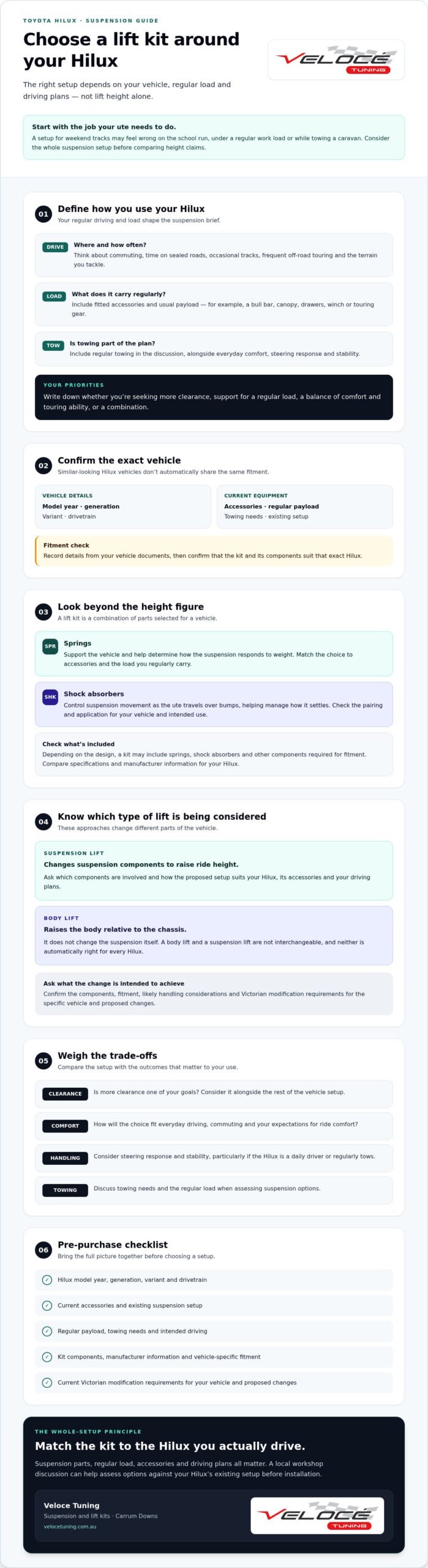
Before settling on a kit, verify the details that determine whether it suits your Hilux and whether the proposed changes meet current Victorian requirements. A fitment listing or another owner’s experience isn’t enough by itself. Model variations, existing suspension and previous modifications can all matter. Use this checklist to prepare clear questions for the supplier or installer.
How to verify Hilux kit fitment before purchase
Start with the vehicle, not the kit advertisement. Record the details from your documents, then ask the supplier or installer to confirm compatibility for that exact Hilux. Check the manufacturer’s information as well, especially if the kit includes multiple components or is listed for particular variants only.
- Confirm vehicle details: note the model year, generation, variant and drivetrain.
- Describe the existing setup: list current suspension components, accessories and any previous modifications.
- Explain the intended use: outline regular payload, towing and the type of driving you expect the ute to do.
- Verify kit application: ask for confirmation that the proposed kit suits your exact vehicle, and check its component specifications against the manufacturer’s information.
- Clarify the proposed work: confirm which components and installation work are included, and ask what post-installation checks are planned.
Keep the answers and relevant documentation together. This makes it easier to compare options on a like-for-like basis and identify unanswered fitment questions before purchase.
What should Victorian owners confirm about modifications?
Check the current Victorian requirements for your exact vehicle and proposed changes before proceeding. Ask the relevant Victorian authority or an appropriately qualified vehicle engineer whether the modification needs assessment, certification or supporting documentation. Requirements can depend on the vehicle and the details of the change, so don’t rely on a general rule of thumb or assume another Hilux’s approval applies to yours.
This checklist is general information, not legal advice. If the applicable requirement or certification pathway isn’t clear, pause and get advice from a qualified professional before parts are selected or fitted. The best lift kit for Toyota Hilux needs to suit the vehicle and be assessed against the rules that apply to the proposed setup.
For help discussing suspension and lift kit installation alongside your Hilux’s existing setup, contact Veloce Tuning.
Choose and install a Toyota Hilux lift kit with Veloce Tuning
Choosing a lift kit is a vehicle-matching exercise. Identify your Hilux, be clear about how you use it, account for its regular load and confirm kit fitment before committing. A workshop discussion can help turn those details into a practical suspension brief, rather than starting with a height figure and hoping it suits the ute.
Veloce Tuning is a Carrum Downs workshop offering suspension and lift kits, including installation. If you’re in Frankston or nearby, bring your Hilux details and information about the setup you’re considering. Confirm kit compatibility, components and availability for your exact vehicle before anything is selected.
What information should you bring to a suspension consultation?
Make the discussion specific. Have your model year, variant and details of existing modifications ready, then describe what the ute carries and where you drive it. A Hilux with a canopy and drawers used for touring presents different considerations from a lightly equipped vehicle used mostly for commuting. Clear information helps the workshop identify which questions need answering before a kit is chosen.
- Vehicle: model year, variant and any suspension changes already made.
- Equipment and load: accessories fitted, regular payload and towing use.
- Driving plans: the balance of sealed-road commuting, touring and off-road use.
- Kit details: which components are confirmed for your Hilux, what fitment checks are proposed and whether follow-up assessment is recommended.
Ask for the proposed components and their vehicle application to be confirmed, rather than relying on a general description or another owner’s setup. If any detail remains uncertain, resolve it before installation.
Plan the upgrade around the whole vehicle
Suspension doesn’t operate in isolation. Discuss how the proposed changes relate to your Hilux’s tyres, brakes, accessories, existing setup and regular load. This doesn’t mean every vehicle needs additional changes. It means the whole configuration should be considered before deciding what’s suitable. Confirm compatibility and expected outcomes against your vehicle and the relevant component information.
A considered setup is one where the parts, intended use and vehicle details all line up before work begins. For help discussing your Hilux and proposed suspension setup, contact Veloce Tuning about suspension and lift kits. Share your vehicle details, accessories and driving plans, then confirm the fitment questions with the local team before moving ahead.
Set up your Hilux for the roads ahead
The best lift kit for Toyota Hilux isn’t defined by height alone. Choose with your Hilux’s exact model and configuration, regular load, towing needs and driving plans in view. Confirm kit fitment and check current Victorian requirements for the proposed changes before committing.
A considered setup can help you choose parts with your real use in mind, rather than selecting components because they simply look right. Veloce Tuning offers suspension and lift kit services from its Carrum Downs workshop, serving nearby south-east Melbourne suburbs. Mechanical repairs and brake upgrades are also available, so you can discuss the suspension alongside your Hilux’s existing setup.
Veloce Tuning works with customers in Carrum Downs, Frankston, Patterson Lakes, Mornington, Skye, Seaford and Sandhurst. Share your vehicle details, accessories and intended use with the local team, and clarify which components and checks apply to your Hilux.
Frequently Asked Questions
What is the best lift kit for a Toyota Hilux?
The best lift kit for Toyota Hilux is the one matched to your exact vehicle, regular load and driving plans. A ute used for commuting and occasional tracks may need a different setup from one carrying touring accessories or towing regularly. Check the kit’s components and vehicle fitment, then weigh ride comfort and handling alongside clearance. Ask a workshop to assess your Hilux’s existing setup before choosing.
How much lift should I choose for my Toyota Hilux?
Choose lift height according to your intended use, vehicle configuration and the changes permitted for your specific Hilux. A higher lift isn’t automatically better, and a height figure alone can’t confirm fitment, ride quality or compliance. Consider your clearance goals, accessories, tyres and regular load together. Before buying, ask the supplier or installer to confirm the proposed components suit your vehicle and check current Victorian requirements for the modification.
Will a lift kit affect my Hilux’s towing or payload?
A lift kit doesn’t automatically increase your Hilux’s rated towing or payload capacity. Suspension changes may affect how the vehicle behaves under load or while towing, depending on the components, fitment and setup. Tell the installer what you carry and tow regularly. Check your vehicle’s owner’s manual and manufacturer documentation for applicable ratings, and don’t assume a suspension upgrade changes those limits.
Can I fit a lift kit to any Toyota Hilux model?
No, don’t assume a kit will suit every Hilux. Model year, generation, variant, drivetrain and existing suspension can affect compatibility, and parts listed for one configuration may not fit another. Provide the supplier or installer with your exact vehicle details and ask them to confirm fitment against the kit’s specifications. Also disclose existing modifications and accessories before parts are selected.
Is a lifted Toyota Hilux legal in Victoria?
A lifted Hilux may be permitted in Victoria, but compliance depends on the exact vehicle and proposed modifications, including any related changes. Don’t rely on a general height claim or another owner’s setup as proof that your vehicle is compliant. Check current Victorian requirements with the relevant authority and ask an appropriately qualified vehicle engineer if you’re unsure whether the changes need assessment, certification or documentation.
Do I need an engineer to approve a Hilux lift kit in Victoria?
Whether an engineer needs to assess or certify a lift depends on the specific vehicle and proposed changes. Don’t assume every lift has the same approval pathway, or that another Hilux owner’s documentation applies to yours. Confirm current requirements with the relevant Victorian authority or an appropriately qualified vehicle engineer before proceeding. If certification or documentation requirements aren’t clear, get professional advice before fitting the kit.
Will a lift kit change the ride and handling of my Hilux?
It can. Changes to suspension components and ride height may affect comfort, steering response and handling, with results depending on kit selection, fitment and the vehicle’s load. Added accessories or regular towing should be part of the assessment. Hilux owners around Carrum Downs, Frankston, Patterson Lakes, Mornington, Skye, Seaford and Sandhurst can discuss their vehicle’s requirements with Veloce Tuning, a local workshop offering suspension and lift kit services.