What if the engine that promises more power isn’t the right one for your vehicle? Choosing an engine conversion specialist Carrum Downs drivers can rely on starts with more than horsepower: your vehicle’s purpose, compatibility and the full project scope all matter. Before committing, get clear on what you want the vehicle to do and what a conversion may involve.
If you’re weighing up an engine conversion, you may have questions about how the new engine will work with your vehicle, what supporting changes may be involved and how to assess a specialist workshop. A useful plan should be based on your vehicle and priorities, not a generic promise.
This guide covers the decisions to make before starting, the information to prepare for a project discussion and Veloce Tuning’s engine conversion work in Carrum Downs. Operated by a head engineer and an automotive enthusiast team, Veloce Tuning takes an engineering-focused approach to complex conversions. First, get clear on what you want the vehicle to do.
Key Takeaways
- Define what you want your vehicle to do before settling on an engine conversion; your goal helps shape the project.
- Assess the engine, transmission, electronics and intended use as one package, since fitment and supporting systems can affect the work involved.
- When comparing an engine conversion specialist Carrum Downs, look for a clear project assessment and an explanation of how the proposed conversion suits your vehicle.
- Prepare your vehicle details and project priorities before discussing scope, parts, stages and relevant requirements.
- Veloce Tuning’s head engineer and automotive enthusiast team bring an engineering-focused approach to complex conversions in Carrum Downs.
Considering an Engine Conversion in Carrum Downs? Start With the Project Goal
An engine conversion can change how a vehicle responds, the work it can handle or the experience it delivers on the road. It changes the engine configuration or how an engine is installed, rather than simply returning the vehicle to its previous condition. Owners may consider a conversion to restore a much-loved vehicle, adapt it for a different purpose or create a different driving experience.
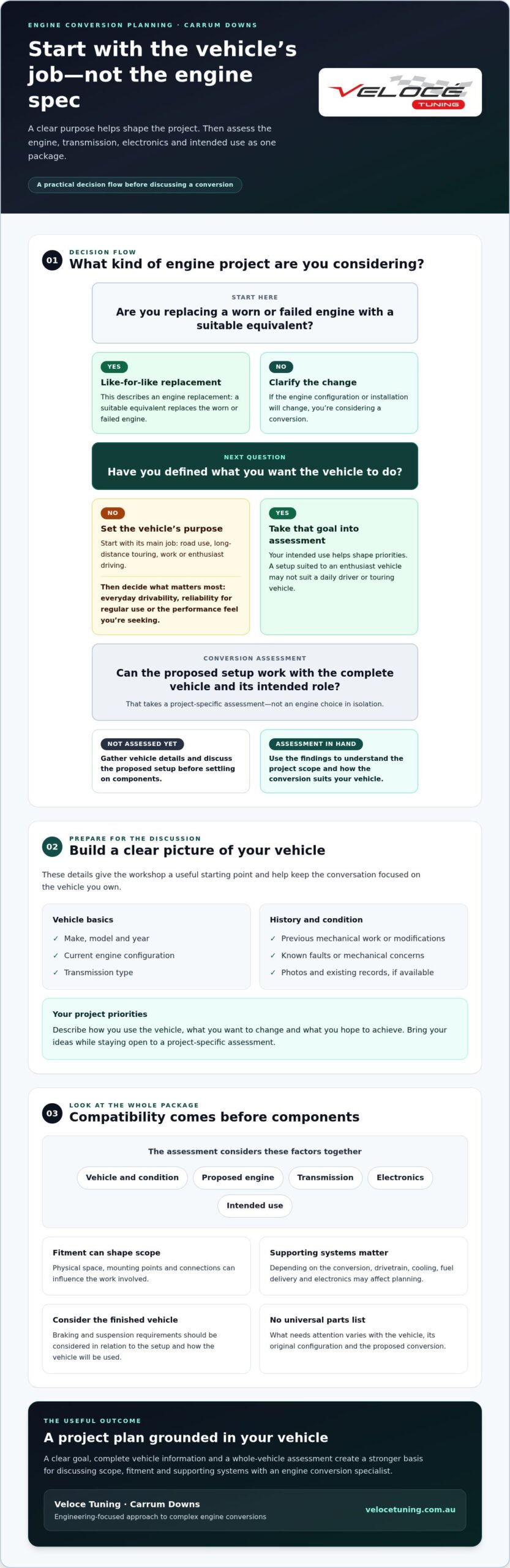
Start by identifying the vehicle’s main job. An engine conversion specialist Carrum Downs drivers work with should assess the vehicle, proposed engine and intended use together. Feasibility and project scope depend on how those factors fit. A setup suited to an enthusiast vehicle may not be the right choice for a daily driver or a vehicle used for touring.
What makes an engine conversion different from engine replacement?
A like-for-like engine replacement swaps a worn or failed engine for a suitable equivalent. A conversion changes the configuration or installation, so the project may involve broader decisions about compatibility, fitment and supporting systems. The work varies by vehicle and proposed setup; there’s no single checklist of modifications that applies to every conversion. An engine swap can also involve trade-offs, so consider the whole vehicle, not just the engine.
ECU tuning is different again. It adjusts engine management settings; on its own, it doesn’t replace the engine or turn a like-for-like replacement into a conversion. Being clear about these distinctions helps you describe the work you have in mind and have a more useful project discussion.
What do you want the converted vehicle to do?
Start with the vehicle’s job, not a list of engine specifications. Is it mainly for road use, long-distance touring, work or enthusiast driving? That purpose helps set priorities such as everyday drivability, reliability for regular use and the performance feel you’re seeking. These goals can pull the project in different directions, so decide what matters most.
Before an initial discussion, gather the vehicle’s make, model, year and current engine details. Add a short description of how you use it, what you want to change and any known mechanical concerns. Bring your ideas, too, while staying open to a project-specific assessment. Veloce Tuning is a Carrum Downs workshop offering complex engine conversions, with a head engineer and automotive enthusiast team. A clear goal gives the project discussion a strong starting point.
How an Engine Conversion Project Is Assessed: Compatibility Before Components
Choosing an engine is only one part of planning a conversion. The vehicle, proposed engine, transmission, electronics and intended use need to be considered together. A setup that appears suitable on paper may raise different questions once physical fitment, existing systems and the vehicle’s condition are assessed.
A conversion assessment starts with the complete vehicle and its intended role. That’s the practical principle behind a project-specific plan. There’s no universal parts list: what needs attention depends on the vehicle and proposed conversion. Physical space, mounting points and connections can influence the scope, so understand the wider project before settling on components.
Which vehicle details help assess a conversion?
Give the workshop a clear starting picture. Note the vehicle’s make, model and year, as well as its current engine configuration and transmission type. Include relevant history, such as previous mechanical work or modifications, and mention known faults rather than leaving them to surface later.
Then describe how you use the vehicle and what you hope to achieve. A daily road car, touring vehicle, work vehicle and enthusiast build may have different priorities. Photos and existing records can make an initial project discussion more focused. The more complete the picture, the easier it is to discuss a conversion in the context of the vehicle you own.
Why do supporting systems matter?
An engine doesn’t operate in isolation. Depending on the conversion, the drivetrain, cooling, fuel delivery and electronics may all affect planning. The existing transmission and vehicle systems can shape what’s practical, while the work involved may vary with the engine and the vehicle’s original configuration.
Braking and suspension requirements should also be considered in relation to the finished vehicle and how it’ll be used. That doesn’t mean every conversion needs the same upgrades. It means the assessment should consider the vehicle as a complete package, with decisions grounded in its specific setup rather than assumptions about a particular engine.
For an engine conversion specialist Carrum Downs vehicle owners can work with on complex projects, Veloce Tuning brings an engineering focus to the assessment. The workshop is operated by a head engineer and an automotive enthusiast team. Sharing your vehicle details, history and goals gives the project discussion a useful foundation. You can explore Veloce Tuning’s engine conversion work as you prepare.
Choosing an Engine Conversion Specialist in Carrum Downs: Compare the Right Factors
An engine replacement and an engine conversion aren’t the same job. Replacing a worn engine with a suitable equivalent differs from changing the engine configuration or installation, where compatibility and supporting work can broaden the project. When comparing an engine conversion specialist Carrum Downs drivers can talk to, look for a project-focused discussion, not just a promise of more power.
| Factor | What a useful approach looks like |
|---|---|
| Project assessment | Considers the vehicle, proposed engine, transmission, electronics and intended use as a connected system. |
| Technical explanation | Explains compatibility questions and possible trade-offs in language you can follow. |
| Scope clarity | Identifies areas that may affect the work and explains that details depend on the specific vehicle and conversion. |
| Vehicle use | Connects the project direction to how you plan to drive or use the finished vehicle. |
Experience replacing engines can be useful, but conversion work calls for a broader set of decisions. The engine is only one part of the equation; fitment, drivetrain, electronics and other supporting systems can all influence the project. Clear discussion of constraints and trade-offs helps set realistic expectations. Be wary of performance promises that aren’t tied to your vehicle, its condition and your priorities.
What should a useful conversion consultation cover?
At Veloce Tuning in Carrum Downs, the discussion centres on your vehicle, the direction you’re considering and what matters most to you. Ask how the proposed engine may suit the vehicle, what supporting work could affect the scope and how the plan accounts for your intended use. Project specifics are tailored to the vehicle, rather than assumed in advance.
How do performance goals affect the decision?
Outright performance may be the main draw, but a vehicle built for regular road use may also need to prioritise drivability, reliability and everyday usability. Those aims can shape the project differently, so weigh the full vehicle experience rather than focusing on a single specification. A conversion is a complete vehicle project.
If your main interest is fuel economy rather than changing the engine, custom ECU tuning is a separate option. Veloce Tuning offers complex engine conversions, with a head engineer and automotive enthusiast team bringing a technical focus to project discussions.
Planning an Engine Conversion: Information, Scope and Compliance
A well-prepared project discussion can help turn a broad idea into a clearer plan. Before work begins, organise what you know about the vehicle, what you want from it and which questions need resolving. For an engine conversion specialist Carrum Downs owners can discuss a technically complex project with, use this sequence to prepare:
- 1. Define the use. Note whether the vehicle is for regular road driving, touring, work or enthusiast use, and what you want to change about the experience.
- 2. Gather vehicle details. Bring its identification details, service history, current engine and transmission information, and records of existing modifications.
- 3. Discuss the scope. Talk through the proposed direction, known mechanical concerns and supporting work that may affect the plan.
- 4. Consider requirements. Include applicable Victorian roadworthiness and vehicle modification requirements in the early planning conversation.
What should you bring to an engine conversion discussion?
Useful records include the vehicle’s make, model and year, maintenance invoices, service book details and notes about previous repairs or modifications. If the vehicle has a fault, describe when it occurs and what you’ve noticed. Photos can illustrate visible changes or the vehicle’s current condition, while written records add helpful context. A consistent maintenance history can also make it easier to understand the vehicle’s starting point. Veloce Tuning’s log book servicing information is relevant if you’re organising those records.
Write down your desired outcomes and the conditions the vehicle needs to handle. Daily commuting and long-distance touring, for example, can place different demands on a project. Being upfront about both priorities and concerns gives the discussion a clearer direction.
How should compliance and project scope be handled?
Victorian roadworthiness and modification requirements can depend on the vehicle and the changes proposed. Treat compliance as an early planning consideration, and verify current requirements through authoritative Victorian sources before the project proceeds. Avoid relying on assumptions or general examples as a decision about your specific vehicle.
The agreed scope should make the intended work and its dependencies understandable. Discuss which parts of the project are established, which details depend on assessment and how one decision may affect another. Timing, parts and project stages vary with the vehicle and agreed scope, so estimates shouldn’t be assumed before those factors are understood.
Bring your vehicle details and project priorities to Veloce Tuning in Carrum Downs to begin planning a conversion shaped around your vehicle. Start an engine conversion discussion.
Engine Conversion Specialist Carrum Downs: Start Your Project With Veloce Tuning
An engine conversion is a substantial change to a vehicle, and choosing the right workshop means finding a team that treats it as a complete project. Veloce Tuning is based in Carrum Downs and offers complex engine conversions. For owners in Carrum Downs and nearby Frankston, Seaford and Skye, it’s a local place to start a considered conversation about what they want their vehicle to become.
A local workshop for complex engine conversion work
Veloce Tuning is operated by a head engineer and a team of automotive enthusiasts who brought European tuning technology to Australia. That combination of engineering focus and enthusiasm for automotive performance is relevant to projects where multiple technical decisions need to work together. The team’s approach centres on the individual vehicle and the conversion being considered, rather than a one-size-fits-all performance promise.
Every project has its own starting point. The vehicle’s configuration, condition and intended role all influence the discussion, so consider specific outcomes in the context of the project rather than assuming they’ll match a general example. This keeps the focus on a conversion that suits the vehicle and the owner’s priorities.
How to take the first step
Before discussing your project, gather the vehicle’s make, model, year, current engine and transmission details. Include relevant maintenance history, previous modifications and known mechanical concerns. Then describe what you want from the vehicle: the kind of driving you’ll do, the qualities you want to change and what matters most in the finished result.
That preparation gives the conversation something solid to build on. Veloce Tuning discusses your vehicle, proposed direction and project priorities, then tailors the scope to the needs of the conversion. If you’re looking for an engine conversion specialist Carrum Downs drivers can speak with about complex work, bring your questions and goals to the discussion. You don’t need every technical detail worked out in advance.
Start the conversation when you’re ready to explore what a conversion could involve for your vehicle. Discuss your engine conversion project with Veloce Tuning.
Turn Your Conversion Idea Into a Clear Project Plan
A successful engine conversion starts with a clear purpose, then brings the vehicle, proposed engine and supporting systems into the same conversation. Compatibility and project scope depend on the specific vehicle and how you intend to use it, so a considered assessment is more useful than a one-size-fits-all performance promise.
Before taking the next step, gather your vehicle details, maintenance history and information about existing modifications. Be ready to explain what you want from the finished vehicle and discuss relevant Victorian requirements as part of planning. These details help make the project discussion more focused.
For an engine conversion specialist Carrum Downs vehicle owners can talk with about complex conversion work, Veloce Tuning brings together a head engineer and an automotive enthusiast team. The workshop’s project-specific approach puts your vehicle and goals at the centre of the conversation.
Ready to explore the possibilities? Discuss your engine conversion project with Veloce Tuning. A clear goal is the first step towards building a vehicle that feels right for you.
Frequently Asked Questions
What does an engine conversion involve?
An engine conversion changes a vehicle’s engine configuration or how an engine is installed. Depending on the vehicle and proposed setup, the project may also involve assessing compatibility with the transmission, electronics and supporting systems. It’s different from simply adjusting engine management settings. The plan should reflect how you intend to use the vehicle, whether for everyday driving, touring, work or enthusiast motoring.
Is an engine conversion the same as an engine replacement?
No. An engine replacement generally involves changing a worn or failed engine for a suitable equivalent. A conversion changes the engine configuration or installation and can involve wider compatibility and supporting-work decisions. The scope varies by vehicle and proposed engine, so not every conversion needs the same modifications. Clarifying which type of work you’re considering helps make the project discussion more useful.
How do I choose an engine conversion specialist in Carrum Downs?
Look for a workshop that discusses the whole project, explains compatibility and scope clearly, and connects its recommendations to how you’ll use the vehicle. Veloce Tuning offers complex engine conversions in Carrum Downs and is operated by a head engineer and an automotive enthusiast team. It’s local to drivers in Carrum Downs, Frankston, Patterson Lakes, Mornington, Skye, Seaford and Sandhurst.
Can any car have an engine conversion?
Not every proposed conversion will suit every car. Feasibility depends on the vehicle, its condition, the engine being considered, compatibility with connected systems and the vehicle’s intended use. Physical fitment and supporting work can also shape the project. A vehicle-specific assessment helps establish what may be practical and what the conversion could involve, rather than assuming an engine will fit because it has worked in another build.
Do engine conversions need approval in Victoria?
Approval and compliance requirements depend on the vehicle and the modifications proposed, so don’t assume every conversion follows the same process. Consider Victorian roadworthiness and modification requirements early, and verify current rules with authoritative Victorian sources before work begins. Planning for these requirements as part of the project discussion can help clarify the steps relevant to your vehicle. A general example isn’t a substitute for checking your specific circumstances.
What information should I prepare before discussing an engine conversion?
Prepare the vehicle’s make, model, year, current engine configuration and transmission type, along with its service history and details of existing modifications. Note known mechanical concerns, how you use the vehicle and what you want the conversion to achieve. Photos, invoices or other records can help explain the vehicle’s current condition. This gives the workshop a clearer starting point for discussing compatibility and project scope.
How long does an engine conversion take?
There isn’t one timeframe that applies to every engine conversion. Timing depends on the vehicle, proposed setup, parts required and agreed project scope, including any supporting work. The stages can only be discussed in the context of those details. Sharing your vehicle information and goals with Veloce Tuning helps frame a project-specific discussion, rather than relying on a generic estimate that may not reflect your conversion.