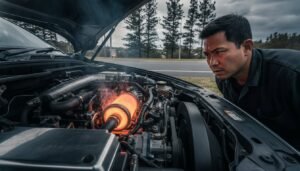

A single highway run isn’t a magic fix for a diesel particulate filter that keeps clogging. If you’re wondering how to prevent DPF blockage, the more reliable approach is to support the filter’s normal regeneration and address driving habits or faults that may interrupt it.
Short, stop-start trips can leave the exhaust too cool for soot to burn away naturally, so repeated warnings or a disrupted journey can be frustrating. A regular 20-30-minute drive at highway speeds may help some vehicles complete regeneration, but prevention takes more than one long run. Follow your vehicle’s handbook when a warning appears.
This guide explains how passive, active and forced regeneration work, why short trips and maintenance issues can contribute to blockage, and which driving habits may reduce the risk. It also covers when a warning calls for a qualified assessment rather than more self-help. The aim is practical: build sensible routines, protect your time on the road and know when to get the problem checked.
Key Takeaways
- Learn how to prevent DPF blockage by supporting regeneration and addressing driving patterns or maintenance issues that may interrupt it.
- Understand why regeneration burns soot but doesn’t remove ash, and why a suitable uninterrupted journey may help some vehicles.
- Check your vehicle handbook before trying a hard drive or fuel additive. Neither is a guaranteed fix for every DPF.
- Use a simple routine: understand your vehicle’s guidance, review your trip pattern, keep up with maintenance and respond to warning prompts.
- Don’t keep driving if your handbook or warning says to stop. Repeated warnings, failed regeneration or reduced performance need qualified assessment.
How a diesel particulate filter works: why blockage develops
A diesel particulate filter (DPF) sits in a diesel vehicle’s exhaust system and traps soot before it leaves through the tailpipe. Think of it as a fine barrier in the exhaust flow: it collects particles, then needs suitable conditions to clear accumulated soot. The Diesel particulate filter (DPF) overview explains the basic design and different regeneration modes.
DPF regeneration is the process of burning accumulated soot in the filter under suitable conditions, so it can continue to capture particles. Regeneration reduces soot but doesn’t remove ash. Ash is a non-combustible residue that can build up over time, so driving differently won’t always solve a filter restriction.
What does a DPF capture, and what happens during regeneration?
The engine management system monitors operating conditions and may initiate active regeneration when required. During active regeneration, the vehicle adjusts engine operation to raise exhaust temperature and burn soot. Passive regeneration can happen naturally when the exhaust reaches suitable temperatures during driving. Conditions and driver instructions vary by vehicle, so use the handbook for model-specific guidance. Forced regeneration, by contrast, is a workshop procedure, not a driving technique.
Soot can be burned away, but ash cannot. If ash accumulates or another fault prevents regeneration, repeated attempts to clear the filter with a drive may not address the cause.
Why can repeated short trips contribute to DPF trouble?
Frequent short journeys, especially in stop-start traffic, may not let some vehicles reach the conditions needed for successful regeneration. The filter can then retain soot between trips. That doesn’t mean every short trip causes blockage or that one longer drive will prevent it. Driving habits are only part of the picture.
For example, a driver commuting around Carrum Downs, Seaford or Frankston might mostly make brief local trips. That pattern could affect regeneration in some vehicles, but it isn’t a diagnosis on its own. The vehicle’s system, maintenance history and condition matter too.
Incorrect engine oil, including oil that isn’t the required low-SAPS type, can contribute to DPF problems. Faults such as a failing EGR valve, leaking injectors or turbo actuator issues can also interfere with normal operation. So, how to prevent DPF blockage isn’t simply a matter of taking the car for a hard run. Follow the handbook, use the specified oil and take recurring warnings or performance changes seriously. Prevention starts with understanding what the filter needs and recognising when the cause may need qualified assessment.
Driving habits that help your DPF complete regeneration
A suitable, uninterrupted journey may give some diesel vehicles the conditions needed to complete regeneration. The right conditions depend on the vehicle, so there’s no universal speed, gear or route for clearing a filter. Driving advice varies by vehicle, so always follow the manufacturer’s guidance. Check your handbook first, then follow any dashboard prompts without taking risks or compromising safe driving.
Can a longer drive help prevent DPF blockage?
A longer drive may help a vehicle complete regeneration, but it can’t guarantee a clear filter or fix an underlying fault. Don’t speed, rev excessively or ignore traffic and road conditions to try to raise exhaust temperature. If a warning stays on, returns repeatedly or appears alongside reduced performance, don’t keep repeating long drives in the hope it will clear. Follow the handbook’s instructions and arrange a qualified assessment.
For further general background, the California Air Resources Board’s DPF care and maintenance guide discusses driver habits and warning lights for trucks. Treat it as supplementary information, not a substitute for your vehicle’s handbook or advice specific to your model.
Which driving patterns are worth reviewing?
Look at your regular use, not just one trip. Frequent cold starts, very short journeys and stop-start driving can limit the opportunity for some vehicles to regenerate. Where practical, combine errands into one trip rather than making several separate runs. It’s a sensible adjustment, not a cure or guarantee.
Also consider what the vehicle is doing. Towing, carrying a heavy load, your route and the vehicle’s condition can all affect its operating conditions. Keep these factors in mind if a warning appears. A change in driving pattern alone may not explain or resolve the issue.
In practical terms, learn your vehicle’s prompts, follow the handbook and avoid trying to force regeneration through aggressive driving. If the DPF warning keeps returning, a qualified assessment can help establish whether the issue needs attention. Drivers around Carrum Downs and nearby suburbs can also enquire about DPF servicing and repairs from Veloce Tuning.
DPF prevention myths: what maintenance and warning signs really mean
A hard drive with high revs isn’t a universal DPF fix. Regeneration depends on the vehicle and its operating conditions, while persistent blockage may point to a fault that driving cannot resolve. If you’re considering how to prevent DPF blockage, treat aggressive driving and quick-fix products with caution. Follow the vehicle’s guidance and address recurring warnings at their source.
Do additives or forced regeneration prevent every blockage?
No single additive or procedure suits every vehicle or every cause of a DPF problem. Before using a fuel or filter additive, check that it’s compatible with your vehicle and permitted by the manufacturer. Don’t treat an additive as a substitute for investigating repeated warnings. For a refresher on the process, this overview of how a diesel particulate filter works can help put regeneration in context.
Forced regeneration is a workshop-directed procedure, not something to attempt by revving the engine or pushing the vehicle hard on the road. It may not resolve a problem caused by another fault or accumulated ash. Follow the handbook and ask the manufacturer or a qualified mechanic before trying products or procedures. If the issue has progressed beyond prevention, Veloce Tuning’s DPF repair Melbourne guide offers further repair context.
How can routine servicing support DPF health?
Stick to the manufacturer’s service schedule and use the specified oil grade. The correct oil matters because using an unsuitable type may contribute to filter problems. Regular servicing also gives a mechanic an opportunity to consider whether an engine fault could be contributing to recurring DPF warnings. If a warning keeps returning, share what you’ve noticed and ask for the underlying cause to be assessed.
For business vehicles, consistent maintenance planning can be especially useful when several vehicles are affected or interruptions to work recur. Veloce Tuning’s information on commercial vehicle repair in Melbourne provides related context for operators managing vehicles. Prevention habits can help, but they can’t replace attention to a recurring fault. If warnings persist or performance drops, seek a qualified assessment rather than relying on another hard drive or additive.
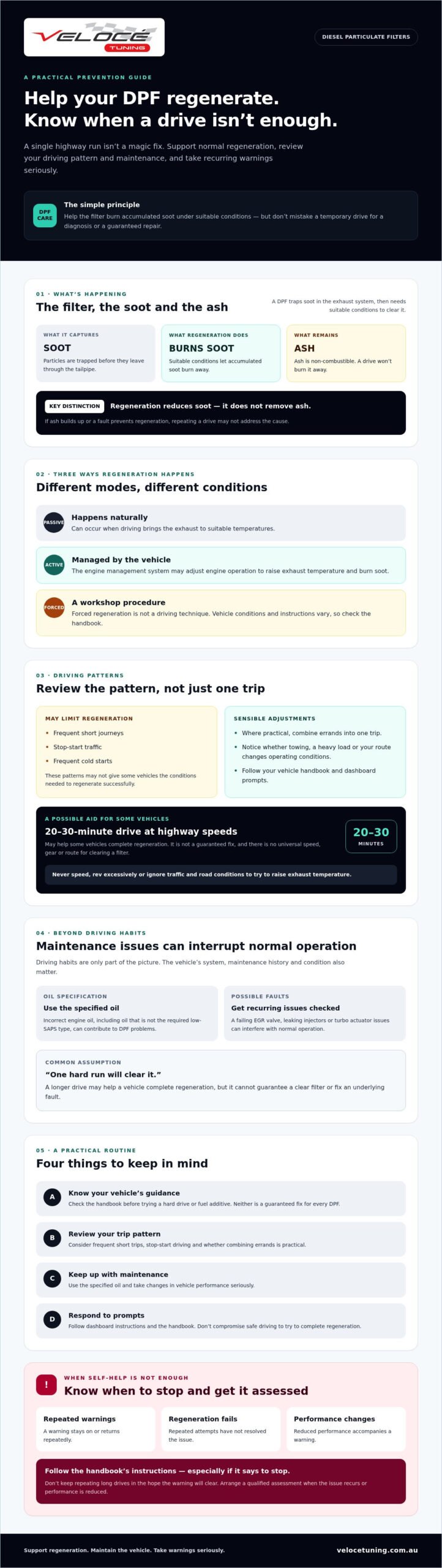
A practical DPF prevention checklist for Australian diesel drivers
DPF prevention checklist: Read your vehicle handbook, review your usual trips, follow the manufacturer’s maintenance requirements and respond to dashboard warnings as instructed. You can monitor your routines and prompts, while recurring faults and workshop procedures need qualified attention.
For diesel drivers travelling around Carrum Downs, Frankston and nearby areas, prevention starts with habits you can realistically maintain, not a special route or one-off hard drive. Use this routine to separate everyday checks from issues to raise at a service appointment.
- Know your vehicle’s instructions. Keep the handbook accessible and check what its DPF messages mean, including any model-specific regeneration guidance. Dashboard symbols and recommended actions differ between vehicles, so don’t rely on advice meant for another model.
- Review your trip pattern. Consider whether most use involves short journeys, repeated cold starts or stop-start traffic. Where practical, combine errands or plan a longer trip as part of normal driving, but don’t treat that as a guaranteed way to clear the filter.
- Respond to prompts and changes. Don’t ignore a warning light, recurring regeneration request or reduced performance. Follow the handbook, and don’t keep driving if it says to stop. Note when the prompt appeared and whether the vehicle’s behaviour changed.
- Keep servicing on track. Follow the manufacturer’s schedule and specified oil requirements. At an appointment, tell the mechanic about your usual journeys, warning messages and performance changes. Ask whether the correct servicing and oil requirements are being followed, and describe repeated warnings as a pattern rather than a one-off event.
Driver checks: You can review the handbook, note warning messages, consider your trip pattern and keep service records. Avoid attempting workshop procedures or using products unless the manufacturer or a qualified mechanic confirms they’re suitable for your vehicle.
Workshop discussion: A mechanic can assess recurring DPF concerns and consider whether an underlying vehicle issue needs attention. For information about scheduled maintenance, see Veloce’s log book servicing and warranty guidance.
If prevention habits haven’t stopped repeated warnings, ask Veloce Tuning about DPF servicing and repairs. A qualified assessment is the sensible next step when the vehicle keeps signalling a problem.
When prevention is not enough: get a recurring DPF issue assessed
Prevention habits can support normal regeneration, but they can’t rule out a fault or tell you what a warning means. If a DPF warning persists or keeps returning, regeneration fails, or the vehicle’s performance changes, arrange a qualified assessment instead of relying on another long drive or quick fix.
When should a driver seek professional help?
Take repeat warnings and noticeable changes seriously, particularly if the vehicle loses power or enters limp mode. A warning light alone doesn’t identify the cause. An issue with the filter, an engine component or a sensor may need attention. Follow the handbook and any warning instructions. If they say to stop, don’t continue driving to see whether the alert clears.
Getting the concern assessed can help establish what needs attention before you decide on next steps. Veloce Tuning provides DPF servicing and repairs from its Carrum Downs workshop, serving nearby areas including Frankston, Patterson Lakes, Mornington, Skye, Seaford and Sandhurst. No particular repair outcome can be assumed without an assessment.
What information should you give the mechanic?
A clear account of what’s happening gives the workshop useful context. Before arranging an assessment, note:
- The exact warning message or dashboard symbol, and when it appears.
- Whether the vehicle’s performance or behaviour has changed.
- Your usual journey pattern, including frequent short trips or stop-start use.
- Recent servicing, the oil used if known, and any previous DPF-related work.
These details don’t replace an assessment, but they help describe the issue beyond “the warning came on”. Share them even if the alert has disappeared, because a recurring pattern still matters. Bring the handbook or any relevant service records if you have them.
Knowing how to prevent DPF blockage includes recognising when prevention is no longer enough. If warnings return despite sensible driving and maintenance, don’t keep trying to force regeneration. For drivers around Carrum Downs and nearby suburbs, contact Veloce Tuning about DPF servicing and repairs to discuss the concern and an appropriate next step.
How to prevent DPF blockage with informed care
Knowing how to prevent DPF blockage starts with realistic habits: understand your vehicle’s regeneration guidance, follow its service requirements and respond promptly to warnings. A suitable drive may support regeneration, but it can’t guarantee a clear filter or resolve an underlying fault.
If a warning keeps returning, regeneration fails or performance changes, don’t rely on repeated hard drives or additives. Follow the handbook, stop if it instructs you to, and share the warning details and vehicle history with a qualified mechanic. Clear information can help move the conversation from guesswork towards an appropriate assessment.
Veloce Tuning provides DPF servicing and repairs from its Carrum Downs workshop, serving nearby areas including Frankston, Patterson Lakes, Mornington, Skye, Seaford and Sandhurst. The business also lists 24/7 breakdown assistance as a separate offering. If you’re dealing with a recurring DPF concern, talk to Veloce Tuning about DPF servicing and repairs.
Stay attentive to your vehicle’s signals, follow its guidance and keep your next drive moving with confidence.
Frequently Asked Questions
Can short trips cause DPF blockage?
Repeated short trips can make it harder for some diesel vehicles to reach the conditions needed for regeneration, but they don’t automatically cause blockage. Vehicle design, engine condition and driving conditions all play a part. To understand how to prevent DPF blockage, review your usual trip pattern and check your handbook for model-specific guidance. If warnings keep returning, seek an assessment rather than assuming one longer drive will solve the problem.
Does a long drive clear a blocked DPF?
A suitable, uninterrupted drive may help some vehicles complete regeneration, but it isn’t a universal remedy and can’t guarantee a clear filter. Follow your owner’s manual and dashboard instructions rather than relying on generic speed or distance advice. If a warning persists or returns repeatedly, or the vehicle loses power, seek qualified diagnosis. Don’t try to force regeneration by speeding or revving the engine excessively.
How often should I drive a diesel car to prevent DPF blockage?
There’s no single journey frequency or distance that suits every diesel vehicle. Regeneration needs depend on the vehicle, its condition and how it’s used. If most trips are short or stop-start, check the manufacturer’s handbook for relevant guidance and watch for dashboard prompts. Don’t treat a generic mileage target as a replacement for scheduled servicing or diagnosis if warnings recur or performance changes.
Can I prevent DPF blockage with an additive?
No additive can be relied on as a guaranteed prevention method or a fix for every DPF fault. Products and compatibility vary, so check your handbook or ask a qualified mechanic before using one. An additive can’t be assumed to resolve an underlying engine or sensor problem. If warnings keep appearing, have the cause investigated instead of repeatedly treating the symptoms with a product.
Is it safe to keep driving with the DPF warning light on?
The right response depends on the warning and your vehicle’s instructions, so consult the owner’s manual promptly. Don’t ignore the light or assume continued driving will clear the filter safely. If the warning stays on, returns or appears with reduced performance, arrange a qualified assessment. If the dashboard message or handbook says to stop, follow that instruction rather than continuing the journey.
What maintenance helps reduce the risk of DPF problems?
Follow the manufacturer’s service schedule and specified oil requirements. Tell your mechanic about recurring warnings, frequent short trips and any change in performance, so these details can be considered together. Regular maintenance may help identify conditions contributing to DPF trouble, but it can’t guarantee the filter will never block. Veloce Tuning provides DPF servicing and repairs from Carrum Downs for drivers in Frankston, Patterson Lakes, Mornington, Skye, Seaford and Sandhurst.
Can a DPF blockage be prevented completely?
No driving routine or maintenance plan can guarantee a DPF will never block. Short-trip patterns may affect regeneration in some vehicles, while faults or the filter’s condition can also contribute. Follow your manufacturer’s guidance, maintain the vehicle as specified and respond promptly to warnings. If problems persist or keep returning, seek qualified diagnosis rather than relying on driving habits alone to prevent another blockage.