What if the right van service starts with how your van works, not just what badge it wears? For Frankston drivers, van servicing Frankston should account for daily kilometres, heavy loads and stop-start trips, as well as the manufacturer’s maintenance schedule. When a van keeps work or family life moving, unexpected downtime can quickly throw everything off course.
Routine servicing should do more than tick off a date in the logbook. It can help assess wear and flag concerns, but symptoms such as a loss of power or transmission trouble may need specialist diagnosis rather than routine maintenance alone. Knowing the difference helps you plan care around the van’s actual use and maintenance history.
This guide explains what to consider when arranging van servicing, which warning signs may call for technical attention, and how commercial use can shape ongoing maintenance. Veloce Tuning in Carrum Downs serves Frankston, Patterson Lakes, Mornington, Skye, Seaford and Sandhurst with log book servicing and fleet vehicle management, as well as technical DPF and DSG servicing and repairs. Here’s how to make your next service a more informed one.
Key Takeaways
- Match servicing priorities to how your van is driven, loaded and used for work or daily runs.
- Use the manufacturer’s schedule, service history and reported concerns to guide maintenance and recommendations.
- Know when routine van servicing Frankston drivers arrange may not be enough, and changed behaviour or warning lights need diagnosis.
- Prepare for your visit by gathering service records and noting the van’s make, model, usage and symptoms.
- Veloce Tuning’s Carrum Downs workshop serves Frankston with log book servicing and fleet vehicle management.
Why van servicing near Frankston should reflect your work
A van that’s due on a job, carrying tools across town or making the next delivery can’t simply be treated as a car with extra space. Its working day shapes what deserves attention. When arranging van servicing, Frankston owners should consider how far the van travels, how often it stops, what it carries and whether it tows, alongside its service history.
Van servicing is maintenance guided by the manufacturer’s schedule and adjusted to the vehicle’s real-world use and condition. The schedule sets the reference for service timing. A new rattle, warning light or change in performance is a separate concern to report and diagnose, even if the next scheduled service is still some distance away.
How a van’s workload can change its maintenance needs
A van covering longer highway stretches has a different pattern of use from one making repeated short trips, sitting in traffic and restarting throughout the day. Frequent stops, heavy loads and towing can all affect what a technician should consider during servicing. Describe the van’s typical routes, payload and driving conditions, then use the manufacturer’s schedule as the reference for when servicing is due.
That context makes recommendations more relevant. A work van used lightly on open roads shouldn’t automatically be assessed as if it spends every day fully loaded in stop-start traffic. The reverse is true, too: a busy duty cycle is useful information, not a detail to leave out.
What Frankston owners should consider when choosing a workshop
Look for commercial vehicle experience and explanations that connect recommended work to the van’s condition, history or reported symptoms. Clear reasoning helps you distinguish scheduled maintenance from a repair that needs separate attention. A general overview of a motor vehicle service can explain common servicing concepts, but work on an individual van should still follow its own schedule and condition.
Veloce Tuning’s workshop is in Carrum Downs and serves Frankston and nearby areas. Its log book servicing and fleet vehicle management suit owners maintaining a work vehicle or managing a fleet. For broader planning around commercial vehicles, the commercial vehicle repair guide offers further context.
Before booking, note the van’s usual load, whether it tows, the routes it covers and any new symptoms. Bring available service records, too. Those details give the workshop a clearer starting point and help keep the conversation focused on what this van needs, rather than assumptions based on its badge or body style.
What a van service can cover: maintenance, checks and clear recommendations
A useful service starts with a clear picture of the van, not a one-size-fits-all checklist. The manufacturer’s schedule provides the basis for service timing and required maintenance, while the vehicle’s condition and your reported concerns help shape what else needs attention. For van servicing, Frankston drivers can make the visit more productive by sharing service records and the real-world signs they’ve noticed.
The right service scope depends on the van, its maintenance needs and the concerns it presents. Depending on the vehicle and its schedule, servicing may involve maintenance tasks, visual checks or diagnostic work. What’s relevant depends on its make, model, service history and condition. Any extra work should be explained clearly, including why it’s recommended and whether it’s maintenance or a separate repair.
What information helps shape a van service
Bring the current odometer reading and any available service records, including log book entries. Then describe the van’s working pattern and any change you’ve noticed. Useful details include:
- Typical routes, including frequent short trips, longer runs or stop-start driving.
- Usual loads and whether the van tows.
- New noises, changes in performance, warning lights or difficulty starting.
Specific observations help guide inspection and diagnosis. For example, note when a noise occurs or whether a warning light appeared during a particular type of trip. Don’t try to diagnose the cause yourself. Report what happened and let the workshop assess it.
When specialist DPF or DSG attention may be relevant
DPF or DSG concerns are specialist repair topics, not automatic inclusions in every routine service. If a warning light appears or the van’s drivability changes, describe the symptoms promptly rather than assuming scheduled maintenance will resolve them. Details such as when the issue began and how the van behaved can help direct attention to the right diagnostic pathway.
Veloce Tuning offers technical DPF and DSG servicing and repairs. For diesel owners looking to understand more about DPF faults and diagnosis, the DPF repair guide provides further context. It’s useful background, but the van’s own symptoms and condition determine what needs assessment.
For broader safety information, the US-based NHTSA vehicle safety guidelines offer general reference material. Australian vehicle owners should follow their manufacturer’s schedule and relevant local guidance. To explore routine care for your van, Veloce Tuning’s servicing information is a practical next step.
Routine van servicing or specialist repair? How Frankston drivers can tell
A service date and a new symptom call for different kinds of attention. Scheduled maintenance follows the manufacturer’s guidance and the van’s service history. A new warning light, unfamiliar noise or change in how it drives needs to be described and assessed, rather than assumed to be part of routine servicing.
Use this comparison to decide what to tell the workshop. It’s a guide to the next step, not a diagnosis: one symptom can have different causes, and only an assessment can identify what’s happening.
| Situation | What to do |
|---|---|
| Scheduled service due | Arrange maintenance in line with the manufacturer’s schedule and share the van’s service records. |
| New or emerging symptom | Describe the change, when it began and how often it occurs so it can be assessed. |
| Breakdown or unsafe to drive | Don’t treat it as an ordinary workshop visit. Seek appropriate breakdown assistance. |
Signs to raise when booking a van service
Be specific about what has changed. Mention an unfamiliar noise, a different braking feel, altered engine performance, a dashboard warning light or an unexpected change in fuel use. A description such as “the noise happens when braking” gives more useful context than “it sounds wrong”.
Note when each issue first appeared and whether it happens consistently, only on certain trips or under particular driving conditions. If a warning light comes and goes, say so. These details help distinguish a concern that needs separate diagnosis from scheduled maintenance, without asking you to work out the fault yourself.
When a breakdown needs a different response
A van that can be driven safely to a planned workshop visit is different from one that has stopped or shouldn’t continue on the road. If you’re concerned it isn’t safe to drive, prioritise safety and arrange suitable breakdown assistance rather than pressing on to keep a job on schedule.
Not every warning light or fault means the van needs roadside recovery. Explain what you’re seeing and how the vehicle is behaving; the next step depends on the situation. Veloce Tuning provides a 24/7 breakdown service for breakdown situations, separate from routine servicing.
For planned maintenance, the manufacturer’s service schedule and the van’s service history help inform what’s due next. If a symptom has appeared between services, report it as a separate concern so it can be assessed on its own merits. That gives the technician a clearer starting point and keeps recommendations focused on the van in front of them.
How to prepare for van servicing near Frankston
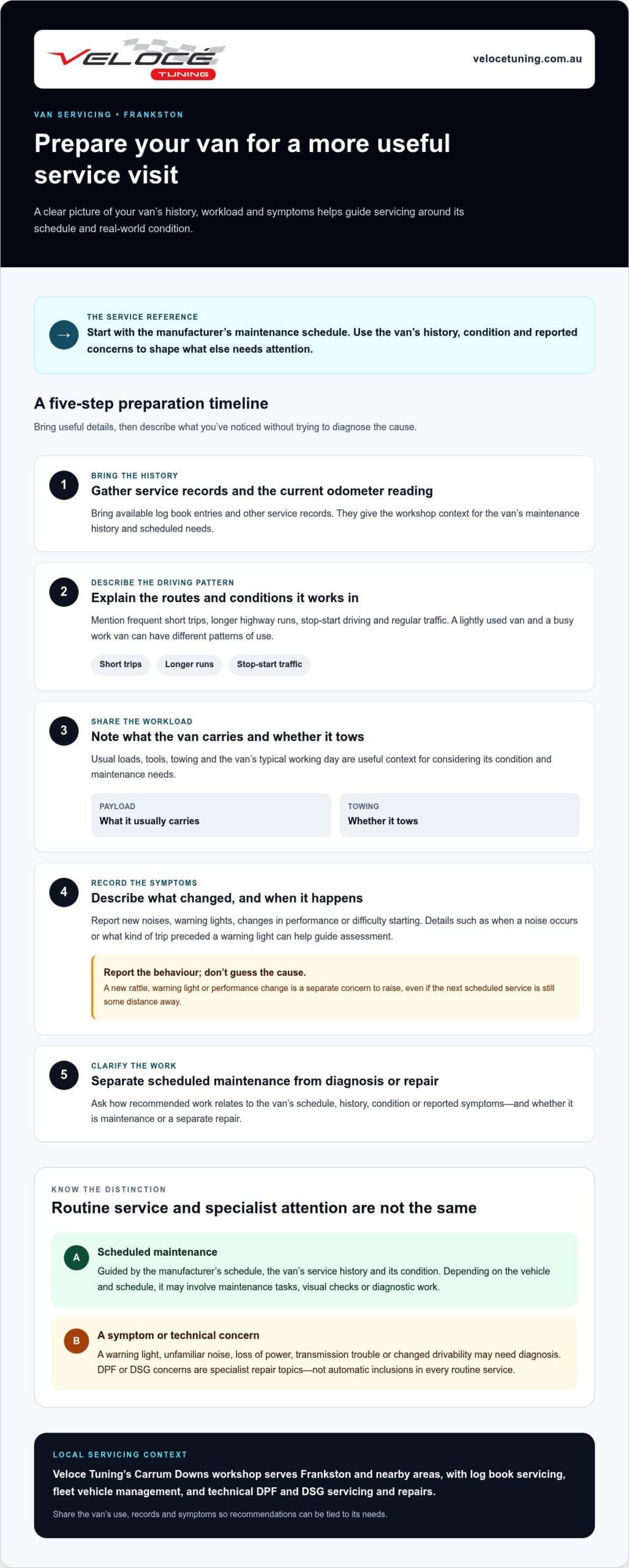
A little preparation can make a service visit more focused and help the workshop understand what your van needs. Before arranging van servicing Frankston, gather its records, note any concerns and be ready to describe its usual workload. Clear information gives the technician a useful starting point, while the van’s condition and service history guide what happens next.
What to have ready before booking
Collect the van’s make and model, current odometer reading and available log book or service records. Previous repair notes can add useful context, especially if an issue has returned or work was recently completed. You don’t need to identify the fault yourself. A clear account of what you’ve noticed is more helpful than a guess about the cause.
Before you book, work through this short sequence:
- Gather the history. Set aside service records, the odometer reading and relevant notes about earlier repairs.
- Record any concerns. Write down warning lights, unusual sounds, starting trouble or changes in how the van performs.
- Describe the pattern. Note when each issue began, whether it happens every time and what the van was doing when you noticed it.
- Explain the workload. Share the types of routes it covers, whether it carries regular loads and if it tows.
- Arrange the visit. When booking, identify the van’s make and model, relevant service history and the reason for the visit.
Specific details help distinguish an occasional symptom from one that’s consistent. For instance, “the warning light appeared after a long drive” gives more context than simply saying a light came on. The workshop can then assess the concern rather than relying on assumptions.
If you’re unsure how log book servicing relates to the manufacturer’s maintenance schedule, Veloce Tuning’s log book servicing guide provides helpful background. Keep the van’s own records handy when discussing its service history.
Plan the visit around your workday
For a work van, drop-off and collection can affect jobs, deliveries or family commitments. Veloce Tuning is based in Carrum Downs and serves Frankston-area customers. As you arrange the visit, consider when you can leave the van at the workshop and how you’ll manage your day without it. Allow room in your plans for the visit, and bring the records and notes you’ve prepared so the discussion can start with the details that matter.
With the information ready, you can make the service conversation clearer and more useful. Explore Veloce Tuning’s workshop services for a local next step.
Book van servicing with Veloce Tuning near Frankston
Choosing the right care for a work van means looking beyond the next service date. Its maintenance history, working conditions and any symptoms you’ve noticed all help shape the conversation about what it needs. For van servicing, Frankston drivers can turn to Veloce Tuning’s Carrum Downs workshop, which serves Frankston and nearby areas.
A local workshop for vans and commercial vehicles
Veloce Tuning offers log book servicing and fleet vehicle management, connecting routine maintenance with the practical demands of keeping vehicles in service. Log book servicing follows the relevant manufacturer schedule, while an understanding of vehicle use and service records helps inform maintenance planning. For operators looking after multiple vehicles, fleet management provides a way to approach vehicle care as an ongoing responsibility rather than a series of unrelated visits.
Bring the van’s make and model, odometer reading and available service records to the booking conversation. Include the typical workload, such as regular deliveries, tools or equipment on board, and any towing. If a concern has appeared, describe what changed and when. These details give the workshop useful context; they don’t replace an inspection or determine a repair before the vehicle is assessed.
Specialist work can be a separate pathway if the reported concern points in that direction. Veloce provides technical DPF and DSG servicing and repairs, which may be relevant when symptoms or diagnosis call for attention to those systems. They aren’t automatic additions to every log book service. The next step depends on the van’s condition and the issue being assessed.
Take the next step with Veloce Tuning
Whether you’re planning scheduled maintenance or raising a new concern, a focused booking starts with accurate information. Have your service history ready, note any warning lights, noises or changes in performance, and explain how the van is used. That makes it easier to discuss the visit with the details in front of you, rather than trying to recall them between jobs.
With a Carrum Downs location serving Frankston and surrounding areas, Veloce Tuning offers log book servicing and commercial vehicle maintenance planning. Get in touch to arrange a service and share the van’s history and symptoms: Get in touch with Veloce Tuning.
Arrive prepared, understand the recommendations and make your next maintenance decision with greater clarity. Good care starts with knowing how the van has been used and what it’s telling you now, so you can plan ahead for the next drive.
Make your next service part of the plan
For van servicing Frankston drivers, the next step is straightforward: choose a service visit that starts with your van’s history and how it’s used. Bring your records and a concise description of any symptoms, then discuss what the vehicle needs with the workshop. Clear information helps turn a booking into a more focused conversation.
Ready to plan your van’s next service? Arrange your van service with Veloce Tuning and take the next step towards a more considered maintenance routine.
Frequently Asked Questions
Can I have my van serviced by an independent workshop without affecting its warranty?
Yes, using an independent workshop doesn’t automatically affect your new vehicle warranty, provided servicing is completed correctly by a qualified repairer and parts meet the original specifications. Follow the manufacturer’s schedule and keep invoices, service records and details of parts used. These documents help show what work was carried out and when, should you need to refer to the maintenance history later.
How often should a van be serviced?
Follow the service intervals in your van’s manufacturer schedule, which may specify a time period, distance travelled or both. Check the owner’s handbook or log book rather than relying on a generic interval for all vans. If your van has missed a scheduled service, arrange maintenance based on its current odometer reading and history, rather than waiting for a new warning light to appear.
What should I do if a warning light comes on before my van service?
Check the owner’s handbook for the warning light’s meaning and note when it appeared. If the van loses power, behaves unusually or may be unsafe to drive, pull over somewhere safe and arrange appropriate assistance. Otherwise, record whether the light stays on or comes and goes, and tell the workshop when booking. Don’t assume it can wait until the next scheduled service.
Does van servicing include DPF cleaning or DSG repairs?
Not automatically. Routine maintenance and a specialist repair are different jobs, and DPF cleaning or DSG repairs depend on the vehicle’s condition and the concern being assessed. Veloce Tuning offers technical DPF and DSG servicing and repairs. If you notice a relevant warning light or change in how the van runs, describe it so the issue can be assessed rather than assuming a specific repair is required.
How long does a van service take?
There isn’t one fixed duration for every van service. The time depends on the vehicle, the work required under its schedule and whether an inspection identifies a separate concern that needs assessment. A repair can change the scope from routine maintenance. When planning your day, allow flexibility for the workshop visit and any discussion about recommended follow-up work, rather than assuming every service will take the same amount of time.
Can Veloce Tuning help with a van breakdown outside business hours?
Yes. Veloce Tuning provides a 24/7 breakdown service for emergency breakdown situations, including outside normal business hours. If your van stops, first focus on getting yourself and others to a safe place, away from moving traffic where possible. Be ready to explain your location and what happened. This emergency support is separate from routine servicing, which is planned around maintenance needs.
Where is Veloce Tuning for Frankston van servicing?
Veloce Tuning is based in Carrum Downs and serves Frankston and nearby areas, including Patterson Lakes, Mornington, Skye, Seaford and Sandhurst. For van servicing, Frankston drivers can use the Carrum Downs workshop for log book servicing and fleet vehicle management. Have your van’s make, model and service history handy when arranging a visit, so the booking starts with useful vehicle details.