A dashboard warning is a signal, not a diagnosis. The practical route to avoiding costly car repair mistakes is to monitor key fluids, respond promptly to warning lights, follow your vehicle’s service schedule and use the correct oil. Four maintenance checks can help you catch developing problems before they gather momentum.
Could a bad battery cause multiple warning lights? It can be one possible cause, but a cluster of lights doesn’t prove the battery is at fault. Treat the display as a reason to investigate, not to replace parts by guesswork.
This guide covers which fluids to check, how to respond to warning lights, and why the right oil and change interval matter. You’ll also learn how routine logbook servicing can keep maintenance on track. Consistent checks can help you spot changes early and make informed repair decisions.
Key Takeaways
- Monitor engine oil, coolant, brake fluid and transmission fluid, and pay attention to leaks or changes in how the car behaves.
- Multiple dashboard warning lights can have more than one cause; diagnose the underlying fault rather than replacing parts based on assumptions.
- Use the oil grade and change interval recommended in your owner’s manual, as incorrect oil or poor change procedures can damage the engine.
- Keep maintenance on schedule with log book servicing, helping identify developing issues before they disrupt your drive.
1. Checking engine oil, coolant, brake fluid and transmission fluid
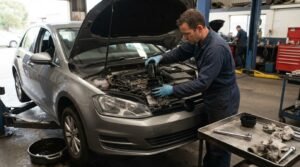
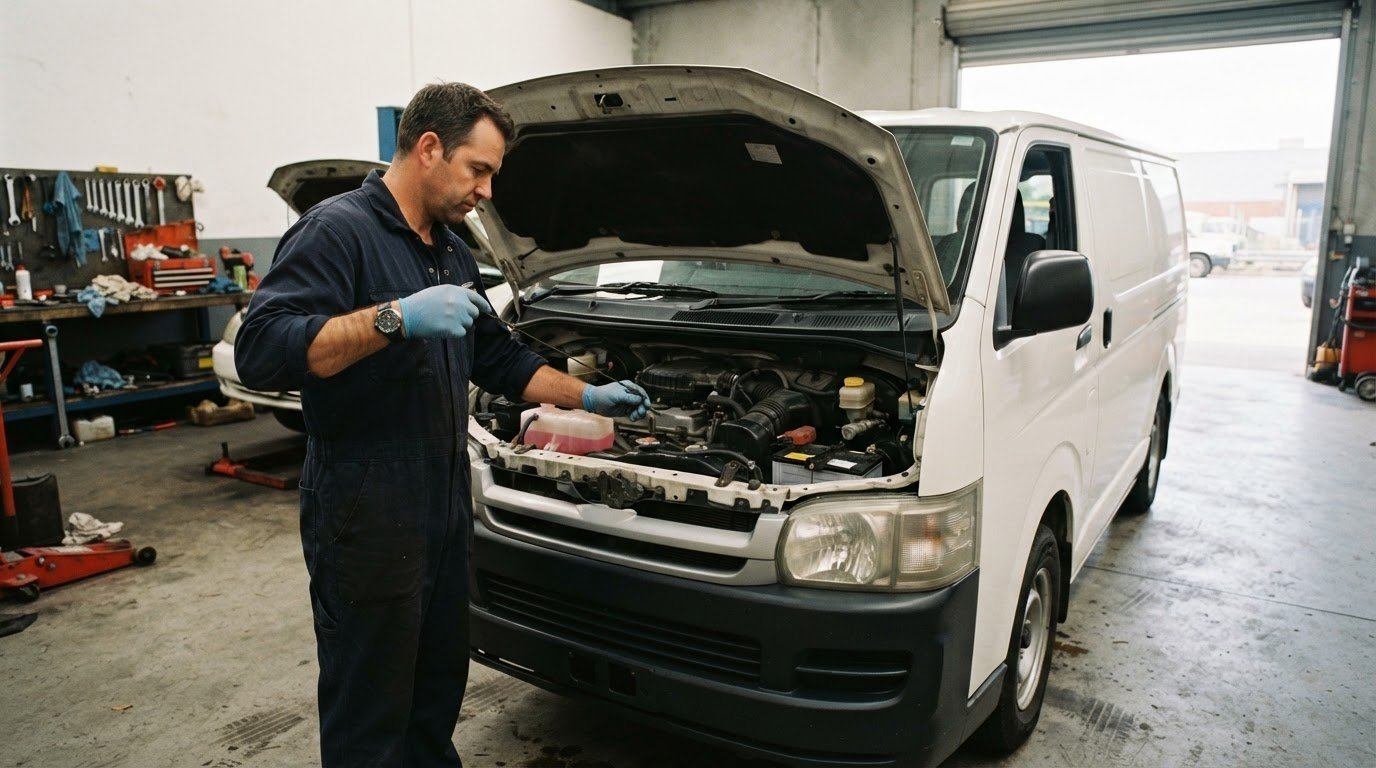
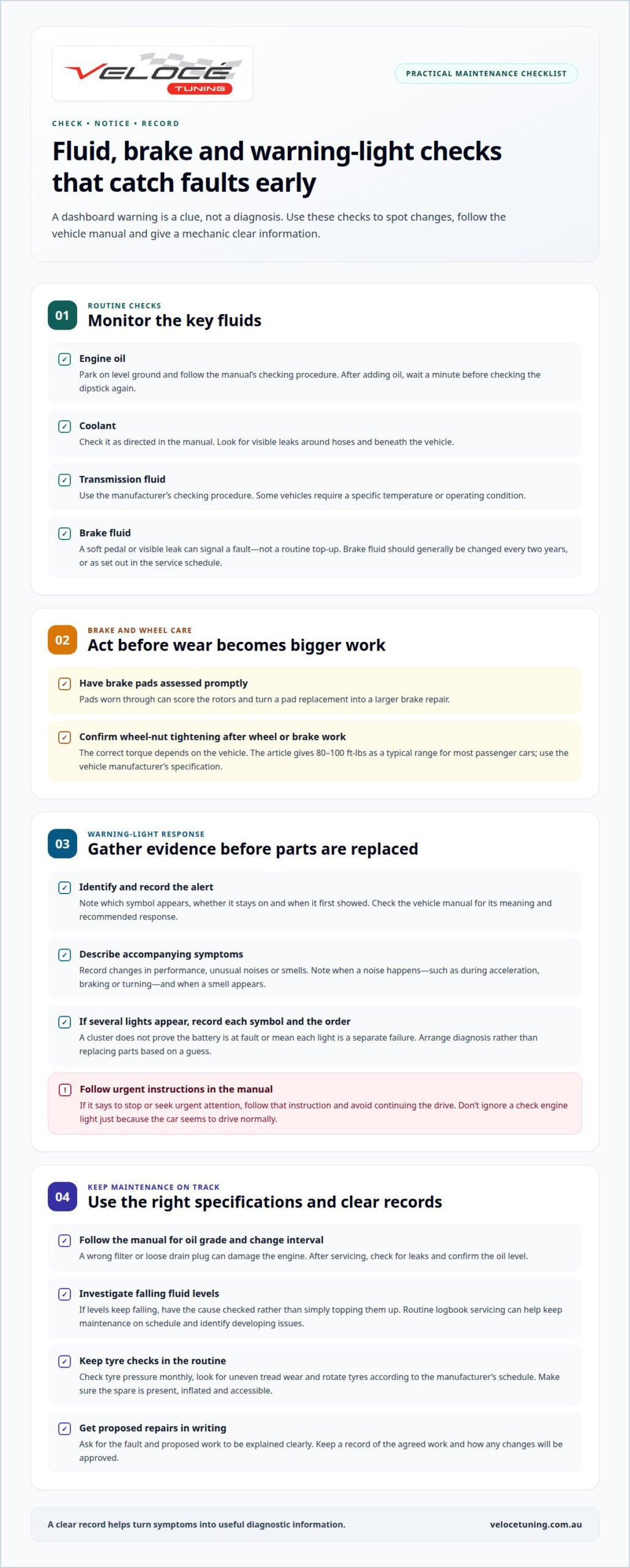
Check engine oil on level ground and follow the procedure in your vehicle manual. After adding oil, wait a minute before checking the dipstick again. Check coolant as directed in the manual, and look for visible leaks around hoses and beneath the vehicle. Follow the manufacturer’s procedure for checking transmission fluid, since some vehicles require a specific temperature or operating condition.
Brake wear needs prompt attention. Have brake pads assessed before they wear through and score the rotors, turning a pad replacement into a larger brake repair. A soft pedal or visible brake-fluid leak can signal a fault; don’t treat either as a routine fluid top-up. Brake fluid should generally be changed every two years, or according to the vehicle’s service schedule.
Is it cheaper to repair or replace a car? Compare the written repair estimate with the cost of replacing the vehicle, taking its condition, the chance of the fault recurring and any other work due into account. Repair may make sense if the vehicle is otherwise sound and the fault is clearly diagnosed. Extensive work on a vehicle with several problems can change that calculation.
To assess a mechanic’s qualifications and reputation in Australia, ask about training and experience relevant to the vehicle and repair, then review customer feedback for patterns in diagnosis, communication and completed work. Request a written estimate before repairs begin, with the fault and proposed work explained clearly.
Brake maintenance includes more than pads and fluid. After wheel or brake work, wheel nuts need tightening to the vehicle manufacturer’s specification. A typical lug nut torque range for most passenger cars is 80–100 ft-lbs, but the correct setting depends on the vehicle. Incorrect tightening can affect how securely the wheel is fitted.
If a fault may involve a manufacturing defect, Australian Competition and Consumer Commission (ACCC) guidance says consumer guarantees may entitle you to a repair, replacement or refund, even after the manufacturer’s warranty expires.
2. What is the most expensive car repair mistake to avoid?
Replacing parts before identifying the fault can lead to unnecessary work. A mechanic can check battery voltage, ground connections and vacuum lines before recommending parts. An OBD-II code can narrow the search, but it doesn’t confirm which component has failed. Careful diagnosis is central to avoiding costly car repair mistakes.
Use the engine oil grade and change interval specified in your vehicle manual. A wrong filter or loose drain plug can damage the engine, so check for leaks and confirm the oil level after servicing. If fluid levels keep falling, have the cause investigated rather than simply topping them up.
Check tyre pressure monthly, look for uneven tread wear and rotate tyres according to the manufacturer’s schedule. Before a puncture leaves you stranded, make sure the spare tyre is present, inflated and accessible.
Australian drivers can compare written repair quotes by requesting the diagnosis, proposed work, parts and labour in each. Compare quotes for the same work, and clarify how additional repairs will be approved.
Under Australian Consumer Law, ask for the agreed work and the process for approving any changes in writing. This gives you a clear record of what the repairer proposed.
According to the Australian Competition and Consumer Commission, a manufacturer’s warranty typically allows you to choose your preferred repairer if its maintenance and servicing standards are met.
Ignoring warning signs, guessing at faults and replacing parts without diagnosis are common ways to increase repair needs. Get a second opinion if a major repair is recommended without a clear explanation, or the diagnosis doesn’t fit the symptoms. If work seems faulty or costs more than quoted, keep the paperwork and raise the concern in writing. Clear records support avoiding costly car repair mistakes.
For transmission concerns such as slow gear selection, DSG servicing and repairs may address faults in that system.
3. Diagnosing dashboard warning lights
A warning light is a clue, not a diagnosis. Note which symbol appears, whether it stays on and when it first showed. Check the vehicle manual for the symbol’s meaning and recommended response. For example, a check engine light may indicate a fault that needs investigation, but it doesn’t identify the failed component.
Don’t ignore a check engine light just because the vehicle still seems to drive normally. Arrange diagnosis promptly and describe any change in performance, unusual noise or smell. Those details help a mechanic understand when the problem occurs and narrow down possible causes.
Look beyond the dashboard. Reduced performance, unusual noises and strange smells can signal trouble even when no warning light appears. Note whether the noise happens during acceleration, braking or turning, and whether a smell appears after driving. A written record of these conditions gives the mechanic more useful evidence than a general description such as “it feels wrong”.
If several lights appear together, record each symbol and the order they came on. Don’t assume they indicate several separate failures or replace parts based on a guess. A mechanic can inspect the vehicle and diagnose the underlying fault before recommending repairs. If a warning returns after a repair, note the conditions and tell the mechanic when it reappears.
Respond according to the symbol and your vehicle manual rather than treating every alert as routine. If the manual says to stop or seek urgent attention, follow that instruction and avoid continuing the drive. For other warnings, arrange diagnosis and note any accompanying symptoms. A clear account can help distinguish an isolated sensor issue from a fault affecting vehicle performance.
4. Regular oil changes and using the correct oil
Engine oil lubricates moving parts and helps manage heat, so follow the change interval and oil grade in your vehicle’s manual. The listed general interval is every three months or every 3,000 miles, whichever comes first, but the manufacturer’s schedule is the key reference for your vehicle. Common manual-specified grades include 5W-30 and 0W-20. Don’t choose oil by viscosity alone; check the grade and specification required for your engine.
A correct oil change depends on the details as well as the interval. The wrong filter may not fit or work as intended, while a loose drain plug can let oil escape. Either error can damage the engine. After a change, check for leaks and confirm the oil level using the manual’s procedure. If the level drops between services, investigate the cause rather than repeatedly topping it up.
Coolant must meet the correct specification. Use the type listed in your vehicle manual, and don’t assume different formulations can be mixed. Check the level as directed and look for leaks around hoses or beneath the vehicle. A falling level may indicate a leak; ongoing coolant loss needs diagnosis, not just another top-up. Never remove a hot cooling-system cap.
Replacement parts must suit the vehicle’s make, model and engine. An incorrect part can reduce performance or cause further damage, while low-quality parts may wear faster and lead to additional repairs. Ask the mechanic to explain how the proposed part matches the fault and vehicle specification. To avoid unnecessary replacements or upselling, request the diagnosis and reason for each recommended part, then approve only work you understand.
For help keeping maintenance aligned with your vehicle’s requirements, arrange a vehicle maintenance discussion.
Veloce Tuning
Veloce Tuning helps keep maintenance organised with Log Book Servicing and Fleet Vehicle Management. Choose logbook servicing for routine maintenance in line with your vehicle’s schedule. Fleet management supports businesses coordinating maintenance across their vehicles. Veloce is based in Carrum Downs and serves local drivers and businesses.
If you’re considering changes to how your vehicle handles or performs, Veloce also offers Suspension and Lift Kits and Custom ECU Tuning. These upgrades don’t replace investigating a warning light or addressing an urgent fault. Focus first on the work your vehicle needs.
For help with maintenance or vehicle upgrades, contact Veloce Tuning.
Keep your next drive on track
A maintenance plan is most useful when it reflects how you use your vehicle, especially before long road trips or holidays. Just as travellers prepare for overseas journeys by using Apply Evisa Vietnam well in advance, keeping a clear record of completed work, new symptoms and upcoming service needs turns avoiding costly car repair mistakes into a practical habit, not a last-minute scramble.
When a repair or maintenance decision feels unclear, focus on understanding the diagnosis and what the proposed work is intended to address. Veloce Tuning in Carrum Downs provides servicing, repairs and performance upgrades, giving local drivers a place to discuss their vehicle’s needs and plan the next step.
Veloce Tuning can help you plan the next step for your vehicle, whether that means maintenance or a considered upgrade. Contact Veloce Tuning to discuss what your vehicle needs. Keep moving forward with confidence, one well-informed decision at a time.
Frequently Asked Questions
Can a bad battery really cause multiple warning lights?
Yes, a weak battery or poor electrical connection can contribute to several warning lights appearing together. But a cluster of alerts doesn’t confirm the battery is the cause. A mechanic can test the battery and charging system, inspect connections and compare the results with diagnostic information. This helps distinguish a power-supply issue from separate faults that need attention.
Do I need a scan tool for modern vehicle repairs?
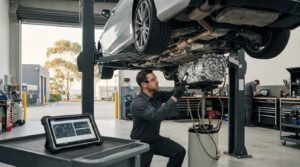
Not for every repair, but a scan tool can retrieve fault codes and support diagnosis. A code is a starting point, not proof that a particular part has failed. Some repairs on vehicles from 2020 or newer may require a scan-tool reset or calibration procedure. The vehicle’s systems and the work being performed determine whether that step is needed.
How can you prevent costly auto repairs?
Build a maintenance record that captures service dates, work completed and symptoms noticed between visits. If a sound, smell or performance change starts after a particular repair, note when it occurs and share that detail during diagnosis. A clear timeline can help connect a new symptom with recent work, making it easier to investigate the right system rather than guess.
How do I avoid stripping threads during DIY repairs?
Start a bolt or plug by hand, turning it gently until the threads engage smoothly. If it binds immediately, stop and realign it rather than forcing it with a tool. Keep threads clean, use the correct fastener and tool, and follow the vehicle manual’s tightening instructions. If a fastener won’t seat correctly, pause before damage makes removal harder.
What is the most expensive car repair mistake to avoid?
One major mistake is continuing to drive with a developing fault without finding its cause. A minor symptom can worsen if affected components keep operating under strain. Avoid replacing parts based only on a guess, too. Tell the mechanic what changed, when it happens and whether it affects starting, acceleration, braking or gear selection.