A higher 4WD isn’t automatically a better-equipped one. Choosing 4×4 lift kits in Carrum Downs starts with matching the suspension setup to your vehicle, its carried load and the way you drive; extra height can improve ground clearance, but it also changes how the vehicle sits and handles. Get the setup right, and the upgrade works with your build rather than against it.
If you’re weighing up suspension options, you’re likely balancing more clearance with a comfortable, predictable drive, especially when your vehicle carries gear or tackles varied terrain. This guide explains how to choose a setup around your driving needs, understand the effects of lift height and load, and prepare for installation and aftercare. You’ll also see what a professional installation involves and which details shape the work, so you can plan your next step with a clearer picture of the finished setup.
Key Takeaways
- Choose suspension around your vehicle, intended driving, carried load and build goals, rather than selecting a lift by height alone.
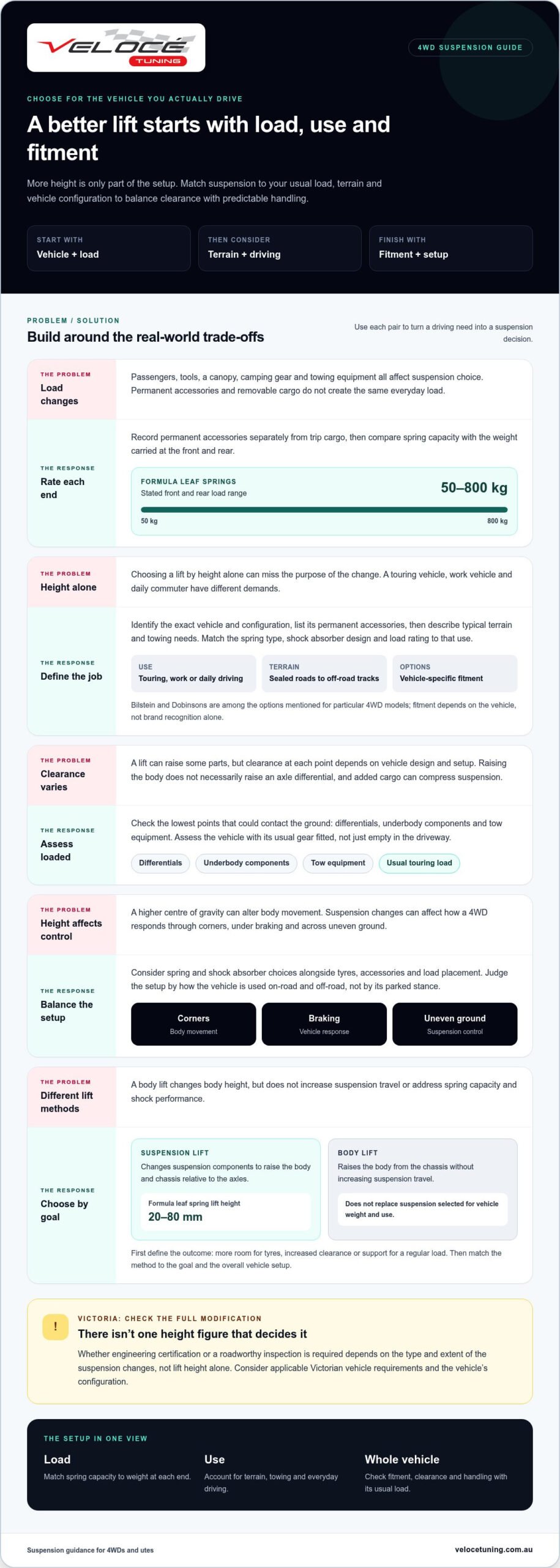
- Match spring capacity to the weight your 4WD carries; the stated front and rear load range for Formula leaf springs is 50 kg to 800 kg.
- Consider how added height can affect clearance and handling, then plan installation and aftercare around the complete suspension setup.
- Formula leaf springs are stated to provide lift heights from 20 mm to 80 mm, helping you weigh clearance needs against your vehicle’s use.
- For suspension and lift kit installation in Carrum Downs, Veloce Tuning can help align the setup with your vehicle and driving needs.
Choosing suspension for vehicle weight and driving needs
Choose suspension around your 4WD’s load, terrain and everyday use, not lift height alone. A touring vehicle carrying accessories needs a different setup from a lightly loaded vehicle used mainly on-road.
Matching Suspension to Vehicle Use
Start with the vehicle’s usual load: passengers, tools, a canopy, camping gear and towing equipment all affect suspension choice. Formula leaf springs are stated to suit front and rear loads from 50 kg to 800 kg, so compare the spring rating with the load each end carries.
Next, define the main job. A vehicle used for touring, work or regular off-road driving has different demands from a daily commuter. List permanent accessories separately from removable cargo; this helps distinguish a constant load from weight carried only on some trips.
GVM suspension planning should consider the complete loaded vehicle, rather than springs alone. Account for accessories and supporting components, including brakes where the build calls for them, so the upgrade suits the way the 4WD is actually used.
Lift Kit Brands and Options
Compare vehicle-specific options by spring type, shock absorber design, load rating and intended use. Bilstein and Dobinsons appear among the lift kit options for particular 4WD models; fitment depends on the vehicle, not brand recognition alone.
Use this sequence to narrow the choice: identify the exact vehicle and configuration, record permanent accessories, then describe typical terrain and towing needs. A 4WD carrying a constant canopy load may need a different spring setup from the same model used with occasional camping gear.
What lift height is legal for a 4×4 in Victoria without engineering approval? A single height figure cannot determine this on its own; the modification must be considered against applicable Victorian vehicle requirements and the vehicle’s configuration.
Whether a lift kit requires engineering certification or a roadworthy inspection in Victoria depends on the type and extent of the suspension changes, not lift height alone.
Suspension Lifts and Body Lifts
A suspension lift changes suspension components to raise the vehicle’s body and chassis relative to the axles. A body lift raises the body from the chassis without increasing suspension travel, so it does not address spring capacity or shock performance.
For a 4WD that carries touring gear or works on uneven tracks, suspension choice should account for load support and how the vehicle behaves over terrain. A body lift may change body height, but it doesn’t replace suspension selected for the vehicle’s weight and use.
Before choosing either approach, define the outcome: more room for tyres, increased clearance, or support for a regular load. Then match the method to that goal and the vehicle’s overall setup. Formula leaf springs are stated to provide lift heights from 20 mm to 80 mm, offering a specific range to consider when planning suspension changes.
Vehicle clearance, handling and load-carrying capability
A lift changes more than appearance: vehicle height, suspension movement and the way a loaded 4WD responds are connected. Assess clearance and handling with the vehicle carrying its usual gear, not just sitting empty in the driveway.
Measure Clearance Under Real Load
Identify the lowest points that could contact the ground, such as the differentials, underbody components and tow equipment. A suspension lift can raise some parts, but clearance at each point depends on the vehicle’s design and setup. Raising the body, for example, does not necessarily raise an axle differential.
Then consider what happens when you add permanent accessories or touring cargo. Weight compresses suspension, which can reduce the clearance available compared with an unloaded vehicle. A touring 4WD with a canopy, tools and camping equipment therefore needs to be assessed in its working condition.
Formula leaf springs are stated to suit front and rear loads from 50 kg to 800 kg. Use the range as a prompt to identify the load each end must support; a front-mounted accessory and rear touring equipment place weight in different locations. Matching spring capacity to that distribution helps the suspension suit the way the vehicle is actually used.
Account for Handling and Vehicle-Specific Fitment
Suspension changes affect how a 4WD responds through corners, under braking and across uneven ground. A higher centre of gravity can alter body movement, while spring and shock absorber choices influence how the vehicle controls that movement. Consider your regular driving, including sealed roads, corrugations, towing and off-road tracks, rather than judging a setup by its parked stance.
Vehicle-specific fitment matters because suspension components must suit the exact model and configuration. A ute and a wagon, for example, can carry weight differently even if they share a model name. Check the vehicle details, suspension layout, accessories and usual cargo before selecting a kit. A model-specific kit is the starting point; the vehicle’s actual load helps determine the right configuration.
For fleet operators, consistent loads across vehicles can make a difference to suspension planning. Fleet vehicle management can help businesses account for how vehicles are used and equipped when managing their fleet.
Balance Clearance with Everyday Control
More clearance can help reduce underbody contact on uneven tracks, but a lift should work with the whole vehicle. Tyres, accessories, load placement and suspension response all contribute to the result. A 4WD built for occasional gravel trips has different priorities from one regularly carrying work equipment on rough access roads.
Before choosing a setup, record the vehicle’s usual cargo, permanent accessories and main driving conditions. Compare these details with the kit’s vehicle fitment and load suitability, then consider both clearance and on-road control. This practical checklist keeps appearance in perspective and focuses your decision on usable performance.
Click + Fit installation and after-service care
Installing a lift kit involves more than fitting springs and shocks. The vehicle, kit and intended load shape the work, and post-installation checks help ensure the components work together. “Click + Fit” describes the installation topic, not a universal kit specification: parts and fitting steps depend on the vehicle.
Which 4×4 workshops in Carrum Downs install lift kits? Choose a workshop that carries out 4WD suspension and lift kit installation, with fitment matched to the vehicle’s make, model and configuration. The installation process should account for accessories and the vehicle’s usual load.
Prepare the vehicle and kit
Before installation, provide the vehicle’s exact model details and describe how you use it. Include permanent accessories, towing equipment and cargo carried for work or touring. A ute with a canopy and tools, for example, has a different load from the same vehicle without accessories.
The installer must match the kit components to that configuration. Springs and shock absorbers need to suit the suspension layout and intended load; parts designed for another variant may not fit or perform as intended. Confirm the work covers the components required for your selected setup.
Installation and alignment checks
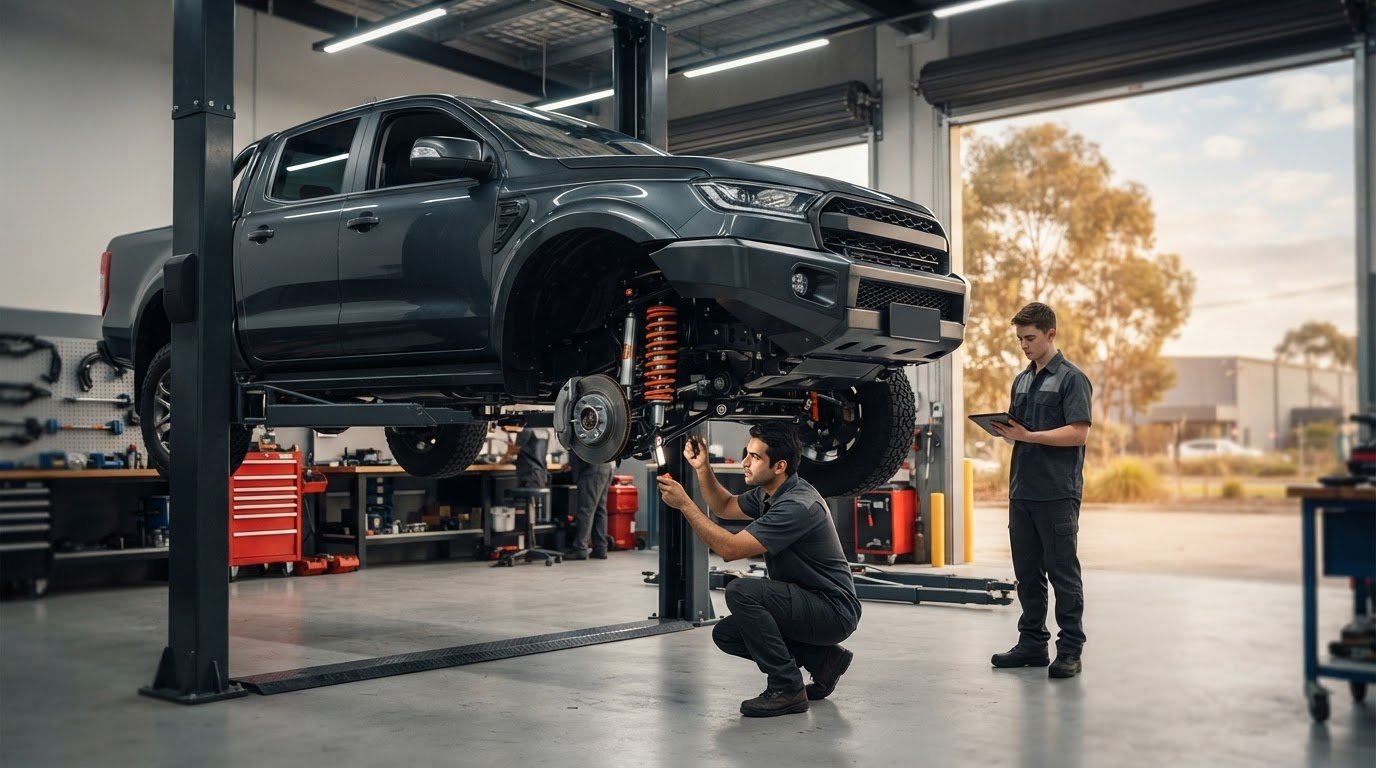
During fitting, suspension components are removed and replaced according to the vehicle and kit requirements. The work should include checking component position, operation and clearance from nearby parts throughout suspension movement. A post-installation inspection can identify issues such as loose fasteners, incorrect seating or contact between components.
Suspension changes can affect wheel alignment. Ask for alignment to be assessed after fitting and pay attention to how the vehicle steers. If it pulls, the steering wheel sits off-centre or the tyres wear unevenly, arrange an inspection rather than assuming the new stance is normal.
After-service care
Drive gently at first and listen for new knocks or squeaks, or changes in steering response. Recheck the suspension after the vehicle has carried its usual load, such as work tools or touring equipment. Keep the kit details and installation records with the vehicle’s service documents.
Which Carrum Downs 4×4 lift kit installers offer alignment, warranties, and customer reviews? Look for an installer that explains alignment checks, provides clear written warranty terms and has customer reviews you can assess. These are separate considerations: alignment relates to the finished setup, warranty terms describe cover, and reviews offer feedback about customer experience.
For Australian 4WD owners, aftercare also means tracking changes in load and use. Adding a canopy or regularly carrying heavier equipment can alter how the suspension behaves. Record those changes and arrange an inspection if handling, ride height or tyre wear shifts after the installation.
Ground clearance and off-road capability
A lift kit raises a vehicle’s overall height and can be especially useful for off-road driving. The practical gain depends on which parts sit lowest, how the suspension moves, and whether the vehicle carries touring equipment. For a 4WD crossing ruts or uneven tracks, assess the vulnerable underbody points rather than judging clearance by its stance alone.
Ground clearance is the space between the ground and the vehicle’s lowest components. Check areas such as the differential housings, underbody protection and tow equipment before planning a change. A higher body does not automatically raise every component by the same amount, so identify what might contact obstacles on your usual tracks.
Formula leaf springs are stated to provide lift heights from 20 mm to 80 mm. That range helps frame a setup discussion, but lift height alone doesn’t determine off-road ability. Tyre size, suspension movement, load and vehicle design also affect how a 4WD meets obstacles. A touring vehicle carrying a rear load, for example, may sit differently from the same vehicle unloaded.
Match Clearance to the Terrain
Think about the obstacles you encounter. A rocky track may bring the underbody close to sharp edges, while deep ruts can challenge clearance beneath the vehicle’s centre. Note the terrain and contact points you want to address, then use them to guide your suspension choices.
Clearance works alongside approach, departure and breakover angles. These describe how the front, rear and middle of a vehicle pass over an incline or crest. Vehicle shape and wheelbase affect each angle, so a lift cannot clear every obstacle. Careful line choice still matters.
Keep Traction and Suspension Movement in View
Off-road capability depends on tyres maintaining contact with the ground as the vehicle crosses uneven surfaces. Suspension movement helps wheels follow changes in terrain; a setup that suits the vehicle’s use can support controlled progress. For example, a 4WD used on corrugated access roads has different demands from one built for slow, rocky tracks.
Before an off-road trip, check tyre condition, suspension components and cargo security. Gear loaded unevenly can affect how the vehicle behaves over bumps, while excess weight can reduce available suspension movement. Reassess the setup if you add accessories or change the vehicle’s usual load.
Use a simple planning sequence: identify the lowest components, note the terrain, account for the usual load, then compare the clearance you need with the vehicle’s suspension design. This gives you a more useful target than choosing the tallest stance. A lift can help you tackle terrain with greater confidence, but driving technique and a suitable vehicle setup remain central to safe off-road progress.
Lift kits for popular 4WDs and utes
Lift kit fitment depends on the exact vehicle, model series and production period. A Nissan Patrol GU Y61 cab chassis, for example, needs a kit listed for that configuration, not simply a product labelled “Patrol”. The examples below show how model-specific listings identify compatible vehicles and lift formats.
Compare Listings by Exact Model
A Bilstein 4×4 2-inch/50mm lift kit is listed for Nissan Patrol GU Y61 cab chassis models from 1997-2000. Check the cab-chassis detail and year range against the vehicle before considering this option. Those identifiers are part of the fitment, not minor catalogue notes.
For Discovery owners, a Dobinsons lift kit is listed for Discovery Series II models from 03/1999 to 2004. LandCruiser listings also vary by series: Dobinsons options cover 70 Series models from 1990 to 1999 and 100 Series models from 1998 to 11/2007. The shared LandCruiser name isn’t enough to identify the correct kit.
Ute owners can compare a Dobinsons lift kit listed for Toyota Hilux Revo N80 models from 2015 onwards with a Bilstein 4×4 40mm Ready Strut lift kit listed for Nissan Navara NP300 1 and 2 Series models from 2015-2017. The names, series and year spans distinguish these applications.
Read the Kit Format Carefully
Kit descriptions can specify a lift measurement or component format. For example, the Bilstein 4×4 2-inch/50mm Ready Strut lift kit is listed for Toyota Prado 120 Series models from 2002-2010 and FJ Cruiser models from 2006-2009. Its listing names both vehicle applications, so match the exact model before comparing it with another option.
A separate Bilstein 4×4 30mm lift kit is listed for Jeep Wrangler TJ Series models from 1996-2007. The 30mm description differs from the 50mm Prado and FJ Cruiser listing. Treat each measurement as a kit-specific detail, rather than assuming the same format suits every 4WD.
Use a Fitment Checklist
Before choosing a kit, record the make, model series, body style and build year. Compare these details with the kit application, including any cab-chassis or Ready Strut wording. This straightforward match helps narrow the options without relying on a broad badge name.
Next, connect the fitment to the vehicle’s actual job. A Hilux Revo N80 used as a work ute and a Prado 120 set up for touring may need different suspension considerations. Include permanent accessories and regular cargo in the installation plan, then assess the kit as part of the complete vehicle setup.
For a vehicle-specific fitment discussion, plan your 4WD lift kit installation around your model and intended use.
Veloce Tuning: Log Book Servcing
Veloce Tuning can help bring your suspension plans into action with its Suspension and Lift Kits offering. Turn to the team when you’re ready to match a lift kit to your vehicle, its load and your driving needs. A considered setup connects the practical details, from the vehicle’s model and accessories to the terrain it regularly tackles.
After installation, logbook servicing can support your vehicle’s ongoing maintenance and protect its new-car warranty. Businesses managing work vehicles can also use Veloce Tuning’s Fleet Servicing. Custom ECU Tuning addresses a separate performance upgrade need. Each service has a different role, so choose the one that fits your next step.
To discuss suspension and lift kit installation for your 4WD, contact Veloce Tuning.
Make your next 4WD upgrade count
The strongest build is planned around where you want to take your vehicle next. Before installation, note any upcoming changes, such as touring equipment, work gear or a different driving routine. Sharing that plan helps align the suspension choice with how you expect to use your 4WD, rather than just how it sits today.
For 4×4 lift kits in Carrum Downs, Veloce Tuning offers Suspension and Lift Kits, alongside Log Book Servcing and Fleet Vehicle Management. That means you can consider the upgrade in the context of your vehicle’s ongoing maintenance or your business fleet needs, too.
Ready to discuss a setup for your vehicle and driving plans? Contact Veloce Tuning to discuss your lift kit, and take the next step towards a 4WD built for the roads and tracks ahead.
Frequently Asked Questions
What 4×4 lift kit brands and options are available in Carrum Downs?
Options include vehicle-specific suspension kits from brands such as Bilstein and Dobinsons, with fitment varying by model and year. For a search like “4×4 lift kits Carrum Downs”, compare the exact vehicle application, load rating and intended use rather than relying on brand alone. Veloce Tuning offers Suspension and Lift Kits, with choices guided by your vehicle’s configuration and driving needs.
How long does 4×4 lift kit installation take, and what is included?
Installation time depends on the vehicle’s suspension layout, kit complexity and work needed to fit the components. The process generally includes removing relevant existing parts, fitting the selected components and inspecting their operation. For anyone searching “4×4 lift kits Carrum Downs”, having vehicle details and an accessory list ready helps define the installation scope. Wheel alignment may also need assessment after suspension changes.
What are the risks and handling or warranty effects of lifting a 4×4?
A lift can change steering response, ride behaviour and cornering feel, particularly when the vehicle is loaded. Poorly matched components or missed post-fitment checks can contribute to uneven tyre wear or new noises. Warranty coverage depends on the relevant terms and how a modification relates to a claim. Keep installation records and monitor handling after fitting; Veloce Tuning also provides logbook servicing to help maintain your vehicle.