
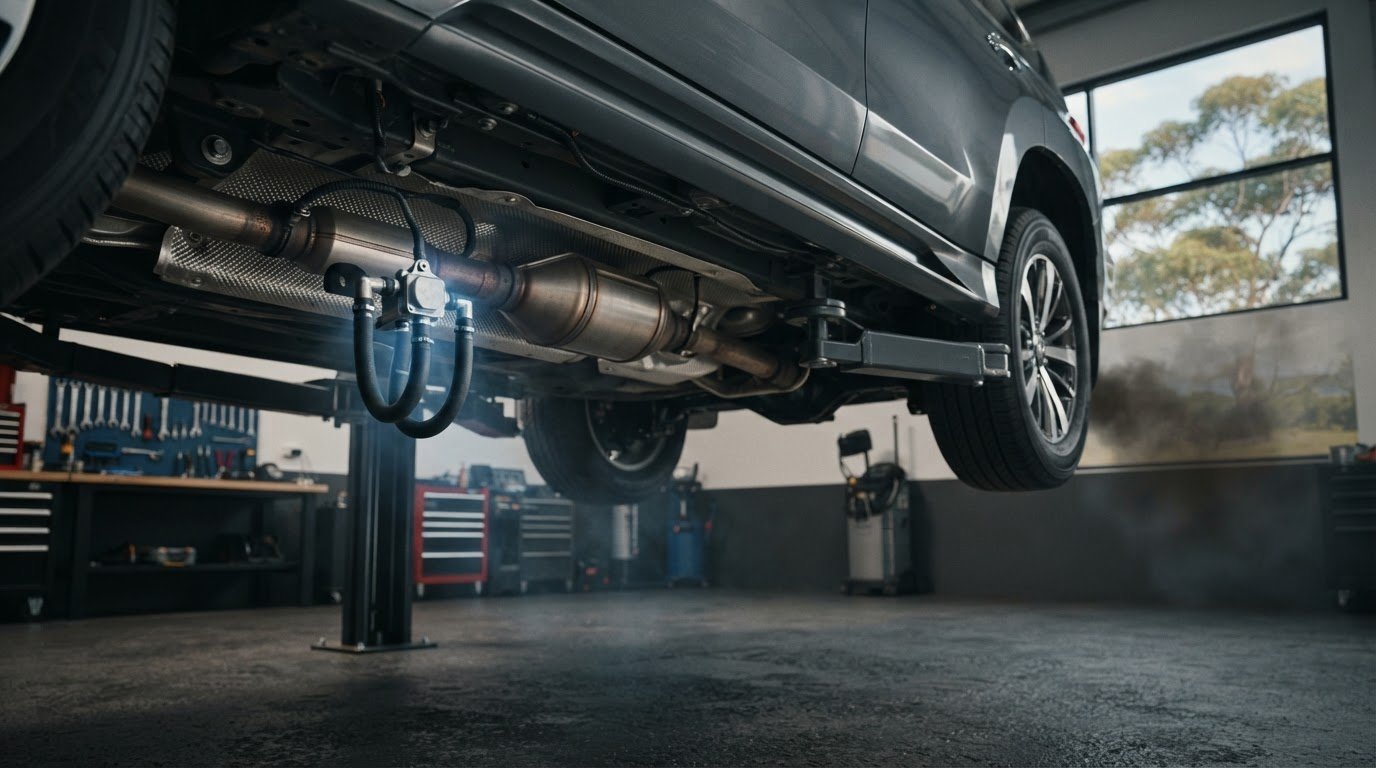
A DPF warning light can point to more than a blocked filter. The symptoms of a failing DPF sensor may include warning lights or fault codes, increased black smoke, reduced engine performance and disrupted regeneration, which can affect fuel economy and soot monitoring. The sensor helps the engine computer assess pressure across the filter and decide when regeneration is needed, so inaccurate readings can disrupt that process.
It’s easy to assume the filter itself is clogged when a warning appears, because sensor faults and DPF blockages can cause similar signs. The distinction matters: replacing or cleaning the wrong component may not fix the underlying issue. This article explains what the sensor monitors, how a fault can show up in warning lights, exhaust smoke, acceleration and fuel use, and why diagnosis needs to distinguish a sensor problem from a blocked filter. You’ll also learn how soot readings and regeneration fit into the picture, helping you understand what your vehicle’s symptoms may indicate.
Key Takeaways
- Warning lights, fault codes and black smoke can point to a sensor issue, but similar signs may also come from a blocked DPF.
- Watch for changes in engine response and fuel use; unreliable pressure readings can disrupt regeneration.
- Learn how pressure across the filter helps the engine computer monitor soot and decide when regeneration is needed.
- Understand why checking backpressure and sensor readings together can help distinguish a sensor fault from filter restriction.
Black smoke, warning lights and fault codes
Common symptoms of a failing DPF pressure sensor include black exhaust smoke, a DPF warning light and fault codes. These signs can also indicate a blocked filter, so diagnosis needs to distinguish between the sensor and the DPF.
Black smoke as a symptom
Black smoke can be a sign that a faulty DPF differential pressure sensor is disrupting the vehicle’s soot monitoring. The sensor’s readings help the engine computer decide when the particulate filter should regenerate; inaccurate readings can lead to incorrect regeneration and soot accumulation. Watch for smoke alongside a DPF warning light or a change in how the vehicle runs. Smoke alone won’t identify the failed component, because a clogged DPF can cause similar symptoms. The combination is the more useful clue.
Warning light indications
A DPF warning light can signal that the filter’s soot load or regeneration process needs attention. A faulty pressure sensor may give the engine computer misleading information, affecting its decision to regenerate. Note when the light appears and whether black smoke or another warning occurs at the same time. That sequence gives a clearer picture than treating the light as a diagnosis. The cause could be a sensor fault or a clogged filter, so identifying the underlying issue matters.
Fault codes linked to sensor problems
Engine performance and fuel economy symptoms
A failing DPF differential pressure sensor can affect how the engine responds under load. If its readings mislead the engine computer, regeneration may happen incorrectly, soot can accumulate and performance may suffer. The symptoms of a failing DPF sensor can include a gradual loss of pull or a sudden drop in acceleration. Fuel use may also change when soot monitoring and regeneration are disrupted.
A faulty sensor can cause the engine to enter protection mode, limiting power and making acceleration difficult. You might notice the vehicle struggling to gain speed while merging, climbing a hill or carrying a load. A clogged DPF can also restrict performance, so reduced power alone doesn’t identify the sensor as the cause. Consider the symptoms of a failing DPF sensor alongside pressure readings, filter condition and diagnostic information.
In a truck, a clogged DPF can lead to derating and limp mode at as little as 5 MPH. That’s a severe example of restriction, not a normal threshold for every vehicle. A sensor fault can contribute to incorrect regeneration and soot buildup, but the vehicle’s response depends on the readings and the filter’s condition. Limp mode by itself doesn’t prove the sensor has failed.
To make performance changes more useful for diagnosis, note the conditions around each one:
- Record whether power drops during acceleration, under load or in particular driving conditions.
- Notice whether fuel use changes alongside reduced performance or a DPF warning.
- Track whether the vehicle returns to normal or remains in a restricted mode.
These details help connect performance changes with the vehicle’s soot monitoring and regeneration. A diagnostic assessment can distinguish a pressure-sensor problem from filter blockage before parts are replaced. If the evidence points to a DPF fault, DPF servicing and repairs can address the issue affecting engine performance.
What happens when the differential pressure sensor of the particulate filter (DPF) fails?
The sensor compares pressure before and after the DPF, giving the engine computer information for soot monitoring and regeneration. If its readings are inaccurate, diagnosis needs to distinguish a sensor fault from filter restriction.
Sensor function and pressure readings
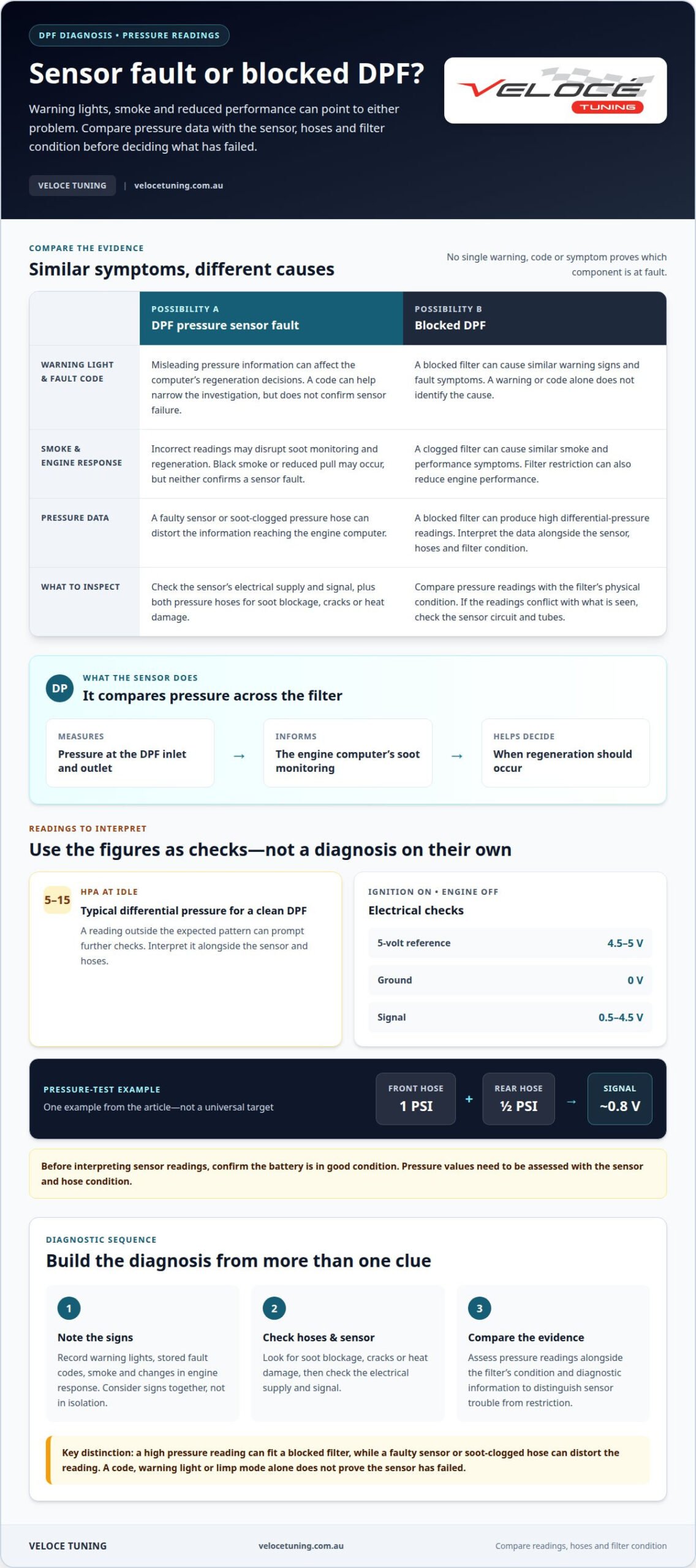
The DPF differential pressure sensor measures the pressure difference between the filter inlet and outlet. Usually near the particulate filter, it connects to pressure tubes on both sides. The engine computer uses its readings to determine when regeneration should occur. At idle, a clean DPF typically shows a differential pressure of 5 to 15 hPa. A reading outside the expected pattern can prompt further checks, but pressure needs interpreting alongside the sensor and hoses.
Faulty sensor versus blocked DPF
To distinguish a faulty sensor from a blocked DPF, compare pressure data with the condition of the sensor and its hoses. A blocked filter can produce high differential pressure readings, while a faulty sensor or soot-clogged hose can distort the information reaching the computer. Neither a warning nor a code alone proves which component has failed. For example, if a pressure reading conflicts with the filter’s physical condition, check the sensor circuit and tubes before deciding on a repair.
Testing the sensor and its hoses
Bypassing or deleting the sensor isn’t a sound repair: the ECU loses pressure feedback for soot monitoring. Don’t assume a modified emissions system is legal for Australian road use; have the fault diagnosed and repaired while retaining the sensor.
Monitoring exhaust backpressure and soot buildup
Exhaust backpressure helps show how freely gas passes through the DPF. As soot accumulates, pressure across the filter can rise; high differential pressure readings may indicate saturation and possible blockage. A faulty sensor can also report pressure inaccurately, so readings need to be considered alongside filter condition. The distinction matters: excess soot calls for attention to the restriction, while unreliable monitoring can disrupt regeneration.
A backpressure gauge measuring between 0 and 15 PSI can provide a more accurate pressure measurement. The reading gives a view of exhaust restriction, while the differential pressure sensor reports the pressure change across the filter to the vehicle’s computer. Together, these checks help clarify whether rising pressure reflects soot loading or a sensor or hose problem. A single reading shouldn’t be treated as the whole diagnosis.
Soot buildup can cause problems beyond a DPF warning. Unresolved pressure-sensor issues can contribute to a clogged filter, turbocharger damage, a clogged EGR system or injection problems. These faults affect more than the exhaust: restriction can interfere with engine breathing and performance. If pressure readings rise while soot monitoring or regeneration is disrupted, the exhaust system needs attention before the restriction worsens.
Driving patterns also influence regeneration. Constant short trips can limit the conditions needed for the DPF to regenerate, while longer journeys can aid the process. However, longer journeys aren’t a substitute for diagnosing a faulty sensor or a blocked filter. Keep a note of recurring warning lights, reduced performance and the type of journeys you make; that context helps connect soot accumulation with the vehicle’s pressure data.
- Compare backpressure measurements with sensor readings and the DPF’s condition.
- Take repeated warning signs seriously, especially alongside reduced engine performance.
- Consider whether frequent short trips are interrupting the vehicle’s regeneration pattern.
If soot buildup or exhaust restriction is affecting your vehicle, arrange DPF servicing and repairs to address the fault.
Veloce Tuning: Log Book Servcing
Veloce Tuning provides logbook servicing to help keep scheduled vehicle maintenance organised. If a DPF warning or change in engine performance appears between services, note when it started and what you observed. That record provides useful context during routine maintenance, although a logbook service isn’t a diagnosis of a sensor fault.
For drivers managing regular servicing, keeping maintenance records up to date gives a clearer picture of the vehicle’s ongoing care. Mention warning lights, smoke or performance changes when discussing the vehicle’s service needs. This helps ensure the symptoms are considered alongside its maintenance history.
To discuss Log Book Servcing for your vehicle, contact Veloce Tuning or visit the website.
Get the next drive back on track
The symptoms of a failing DPF sensor are a reason to act on what your vehicle is telling you, not to guess which part needs replacing. A clear diagnosis helps identify the repair needed and prevents uncertainty from leading to unnecessary work. Keep a record of changes in how the vehicle runs, and share those details when arranging an assessment.
Veloce Tuning provides DPF servicing and repairs for drivers dealing with particulate-filter concerns in Carrum Downs and across the local area, including Frankston, Patterson Lakes, Mornington, Skye, Seaford and Sandhurst. Fleet vehicle management supports businesses managing vehicle maintenance, while suspension and lift kits suit drivers planning broader vehicle changes. Choose the service that fits your immediate need and keep the focus on restoring dependable operation.
Take the next step towards a properly assessed DPF concern: contact Veloce Tuning for help. A considered repair can put you back in control and ready for the road ahead.
Frequently Asked Questions
What happens if you ignore sensor problems?
Ignoring a DPF pressure sensor problem can leave the engine computer relying on unreliable exhaust pressure information. This may disrupt regeneration and allow soot loading to continue. As restriction builds, exhaust flow and engine operation may worsen. The consequences can extend beyond the filter, including turbocharger damage, EGR blockage or injection problems. Have persistent warnings assessed before other components are affected.
What is its role in the engine?
The sensor supplies pressure information that helps the engine computer manage the DPF’s regeneration cycle. It doesn’t remove soot or clean the filter; it provides feedback the computer uses to judge when regeneration is needed. For example, if the sensor signal doesn’t reflect changes in pressure across the filter, regeneration decisions may not match the filter’s actual condition.
Where is it located in the vehicle?
The DPF differential pressure sensor is usually positioned near the particulate filter, with pressure tubes connected before and after it. The tubes carry pressure from each side of the filter to the sensor. The exact layout varies by vehicle, so look for the sensor and its paired hoses around the exhaust after-treatment assembly rather than assuming it sits in one fixed spot.
Why does it generate errors in the exhaust system?
A sensor fault can trigger exhaust-system errors when the signal reaching the engine computer is inaccurate or inconsistent. Road vibration and extreme heat can affect the sensor, while soot-clogged hoses can obstruct pressure readings. For instance, a blocked hose may prevent the sensor from registering a pressure change correctly. The computer may then record a fault because the expected exhaust data doesn’t match the signal.
What does a DPF pressure sensor do?
A DPF pressure sensor reports the pressure difference across the particulate filter so the vehicle’s engine computer can monitor the exhaust system. It helps the computer decide when the filter should regenerate, but it doesn’t directly measure or remove soot. This distinction is useful: a sensor issue affects the information used to manage the filter, while accumulated soot is a condition within the filter itself.
Can a faulty DPF sensor cause the DPF warning light or check engine light?
Yes, a faulty DPF pressure sensor can be associated with a DPF warning light or check engine light, as the engine computer may detect abnormal pressure information and store a fault code. Which warning appears depends on the vehicle’s diagnostic system. Note when the light appears and any accompanying symptoms, as those details can help pinpoint the fault.