A blocked DPF can do more than trigger a warning light. Rising exhaust back pressure can reduce engine performance and place extra stress on engine and turbocharger components. A forced DPF regeneration service in Mornington can burn accumulated soot when the filter is suitable, but it won’t repair internal damage or resolve an underlying fault that keeps causing blockages.
It’s understandable to want a clear answer when your car feels flat or the warning light returns. Short trips and stop-start driving can interrupt the DPF’s normal regeneration cycle, allowing soot to build up and restrict exhaust flow. Regeneration may help, but it isn’t the right fix for every blocked filter.
Here, you’ll learn what forced regeneration involves, what affects the time it takes, and how regular servicing, the correct engine oil and occasional extended highway-speed driving can help reduce repeat blockages. You’ll also learn when heavy ash contamination or internal damage means regeneration may not resolve the problem.
Key Takeaways
- A forced regeneration is a process for clearing soot from a suitable filter; diagnosis helps determine whether it’s the right step.
- The time required depends on the vehicle’s condition and how the regeneration progresses, so the process can vary.
- Understand which driving and maintenance habits support the DPF’s normal cleaning cycle and help reduce repeat restrictions.
- If a filter is damaged or heavily contaminated with ash, further repair may be needed; Veloce Tuning’s DPF servicing and repairs can help address the next step.
Forced DPF regeneration
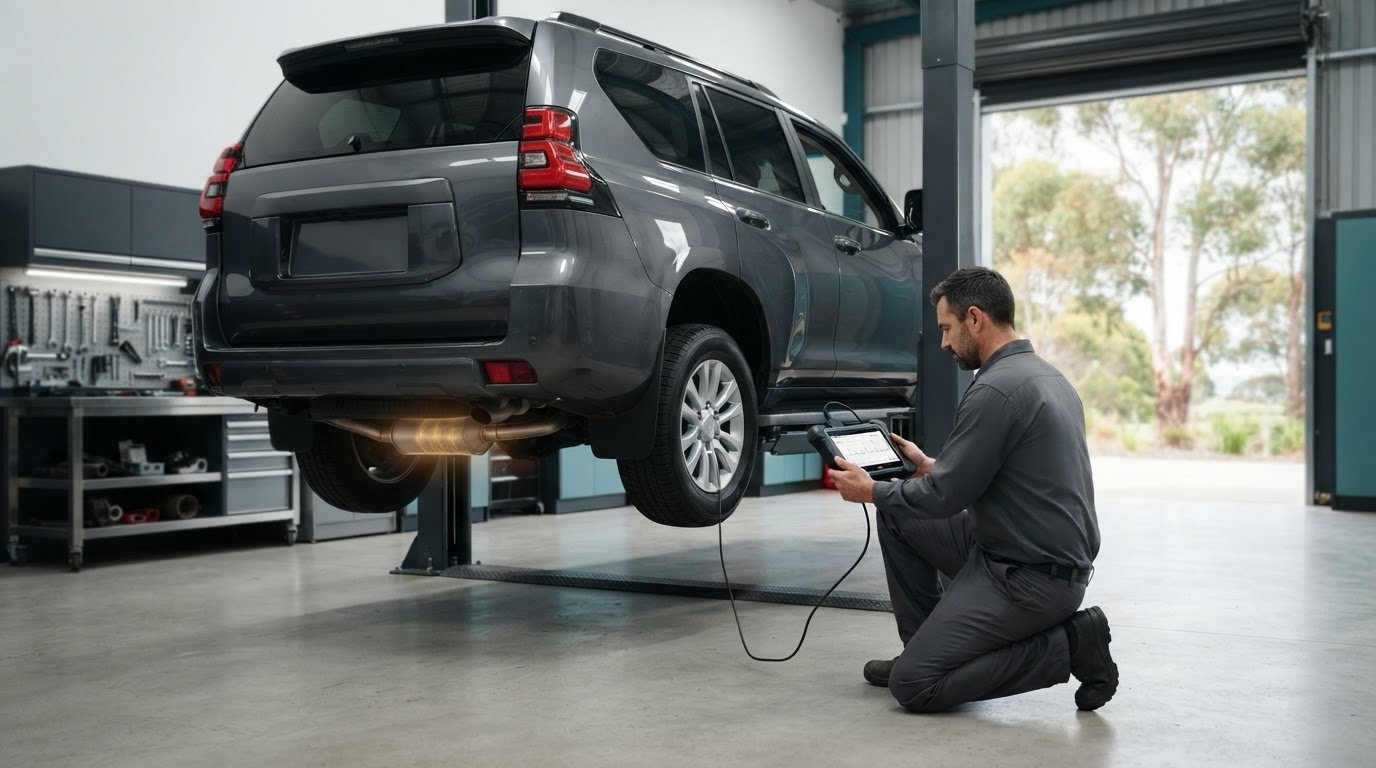
A forced DPF regeneration uses vehicle diagnostics to start a cleaning cycle when normal driving hasn’t cleared accumulated soot. A forced DPF regeneration service in Mornington starts with an assessment of whether the filter and engine are suitable for the cycle.
During regeneration, exhaust temperatures rise so trapped soot can burn away. The technician monitors the vehicle’s data and the process, rather than treating the warning light alone as proof that regeneration is suitable.
For drivers near Mornington, Veloce Tuning in Carrum Downs provides DPF servicing and repairs, including diagnosis, regeneration, cleaning and repair of diesel particulate filters. The process begins with assessing the fault, not simply initiating a regeneration.
Signs a vehicle may need regeneration
A DPF warning light, reduced engine power or limp mode can indicate restricted exhaust flow. Some vehicles also display a regeneration message or repeatedly interrupt their normal cleaning cycle. These signs call for diagnosis, but don’t automatically mean forced regeneration is the answer. Note when the warning appeared and whether performance changed, as those details help explain the symptoms during assessment.
Checks before regeneration
Before starting, a mechanic should scan for fault codes and review DPF soot-loading and pressure readings. They should also assess relevant sensors and engine systems that affect exhaust temperature. A faulty temperature or pressure sensor can affect the readings used to control regeneration. These checks help distinguish soot accumulation from another fault, so the process addresses the cause rather than masking a warning.
The process varies across makes and models. It depends on the vehicle’s DPF design, diagnostic access and whether the equipment supports its system. Share the make, model and year when arranging an assessment so the required diagnostic process can be established.
A forced cycle requires compatible diagnostic equipment that can command regeneration; ordinary driving or a basic code reader isn’t the same procedure. A workshop setting lets the technician monitor the cycle and respond to faults or abnormal readings. Don’t attempt to trigger regeneration without the required equipment and vehicle checks.
Preventing future DPF blockages
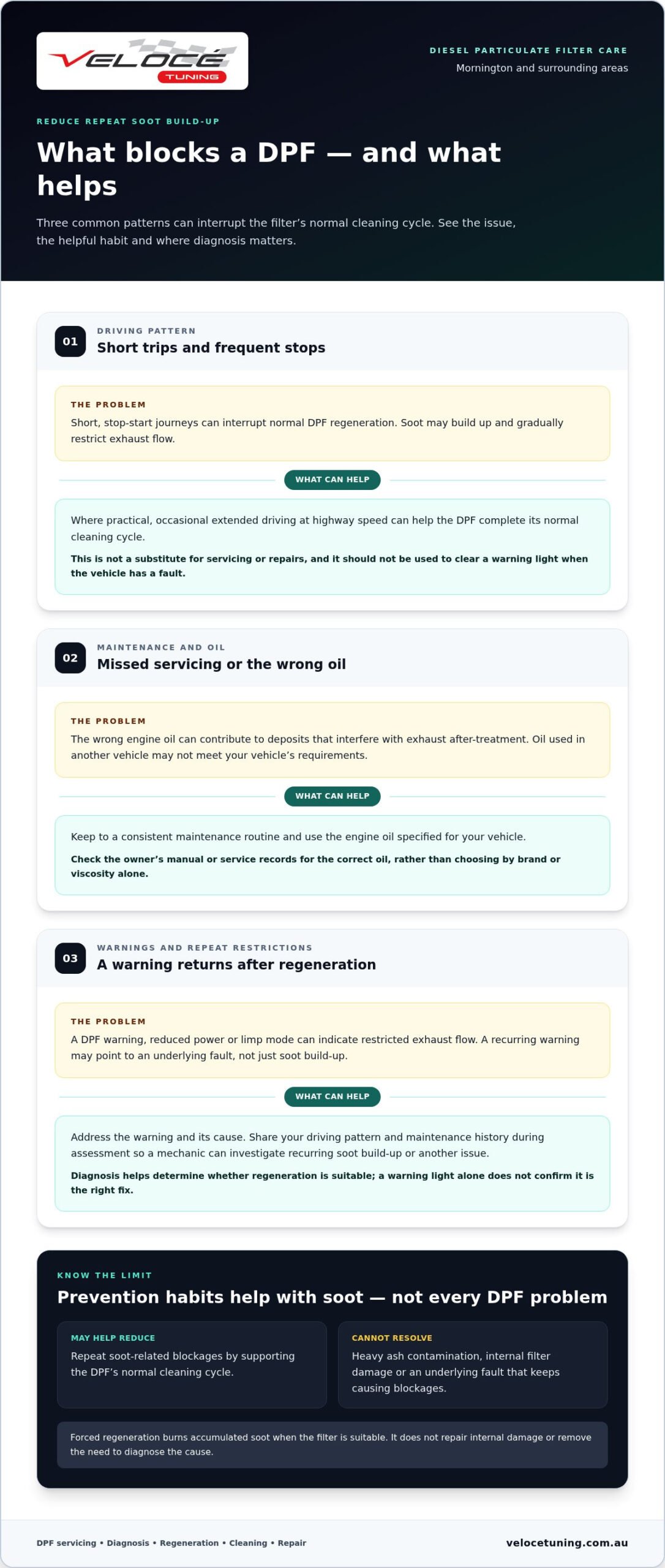
Short trips and stop-start driving can leave a diesel particulate filter without enough opportunity to complete its normal regeneration cycle. Soot then accumulates, gradually restricting exhaust flow. If your routine around Mornington involves brief errands, the engine and exhaust may not stay at operating conditions long enough for the cycle to finish.
Where practical, include occasional extended driving at highway speed. This can help the DPF complete its normal cleaning cycle, unlike a series of short journeys with frequent stops. It isn’t a substitute for repairs or servicing, and it shouldn’t be used to clear a warning light when the vehicle has a fault.
Regular servicing also supports DPF function. Follow a consistent maintenance routine and use the engine oil specified for your vehicle. Oil selection matters because the wrong type can contribute to deposits that interfere with exhaust after-treatment. Check the owner’s manual or service records to identify the correct oil, rather than choosing by brand or viscosity alone.
- Review your driving pattern: note whether most trips involve short distances, repeated stops or longer highway runs.
- Keep servicing current: arrange routine maintenance and mention recurring DPF warnings or interrupted regeneration.
- Use the correct oil: match the oil to the vehicle’s requirements, not simply what was used in another car.
For example, a diesel used mainly for short local trips may benefit from occasional longer highway-speed driving when conditions allow. If the vehicle already shows a DPF warning, address the warning and its cause. Continuing to drive without resolving a fault can leave the restriction in place.
These habits can reduce repeat soot-related blockages, but they can’t remove ash or repair a damaged filter. If the warning returns after regeneration, note your driving pattern and maintenance history. This information helps a mechanic distinguish recurring soot build-up from an issue requiring further diagnosis.
Typical forced-regeneration duration
There’s no fixed duration for every forced DPF regeneration. The time depends on the vehicle’s soot load, engine condition, exhaust temperature and how its engine control system manages the cycle. A lightly loaded filter in a vehicle operating correctly may progress differently from one with substantial soot accumulation or an unresolved fault.
A workshop visit involves more than the active regeneration. The mechanic needs to assess diagnostic information, confirm the vehicle is suitable, run the cycle and review the results. A fault found during the initial scan can change the next step, because regeneration won’t address a faulty sensor or another underlying engine problem.
During the cycle, the vehicle’s systems raise exhaust temperature to burn soot held in the DPF. The technician monitors diagnostic data, including readings that show how the filter is responding. If the cycle pauses, fails to progress or reveals another fault, that affects the overall time and may require further diagnosis.
- Before the cycle: diagnostic assessment identifies fault codes and relevant DPF readings.
- During regeneration: the technician monitors the vehicle’s progress and system data.
- Afterward: results are reviewed to assess whether the cycle completed and the readings changed as expected.
For example, a vehicle with a warning light and a sensor fault may need that fault addressed before regeneration can proceed appropriately. Even if the filter completes the cycle, the results need assessment. The warning light alone doesn’t show that the underlying issue has been resolved.
When planning, allow time for the assessment and result checks as well as the regeneration itself. The time varies with the vehicle’s condition and how its system responds, so an estimate based only on the active cycle can miss important workshop steps. The key measure isn’t speed alone, but whether the process completes and the vehicle’s readings support that outcome.
When regeneration may not work
A forced regeneration burns soot, but it can’t resolve every DPF problem. Heavy ash contamination or internal damage can make a filter unsuitable for regeneration and may require replacement.
Reasons regeneration may not work
A severely blocked DPF can increase exhaust back pressure, reduce engine performance and place extra stress on engine and turbocharger components. In this condition, starting another cleaning cycle won’t address the underlying restriction. Ash is different from soot: regeneration burns soot, while heavy ash contamination can remain in the filter.
Internal damage also changes the repair path. A cracked or otherwise damaged filter can’t be repaired simply by burning accumulated soot. Diagnostic readings, inspection findings and the vehicle’s response help distinguish soot loading from ash build-up, physical damage or a separate engine fault. The next step depends on what those checks reveal.
Responding to a returning warning light
If the DPF warning light returns after regeneration, arrange further diagnosis rather than treating the light as a prompt for repeated cycles. Record when it reappeared, whether engine performance changed and whether other warning lights appeared. These details help connect the warning to the vehicle’s symptoms and recent repair.
A mechanic can rescan fault codes, review DPF pressure readings and assess related sensors and engine systems. For example, a recurring sensor fault or restricted filter can bring the warning back even after a regeneration cycle. Reduced power or limp mode alongside the warning makes prompt assessment important, as continued restriction can add stress to engine and turbocharger components.
If a returning DPF fault leaves you stranded, use the 24/7 Breakdown Service for emergency assistance. For a vehicle that remains driveable, organise diagnosis to identify whether soot, ash, damage or another fault is behind the warning. A confirmed cause guides the next repair step.
Veloce Tuning: Log Book Servcing
Veloce Tuning provides logbook servicing to help keep your vehicle’s scheduled maintenance on track. If DPF warnings return, or your diesel is due for routine servicing, keeping up with its service schedule is a practical step alongside investigating the filter fault.
Mention recurring warning lights, changes in performance and your usual driving pattern when arranging servicing. These details put the vehicle’s maintenance needs in context. Logbook servicing supports ongoing vehicle care, while a blocked, ash-contaminated or damaged DPF still needs the appropriate repair.
Contact Veloce Tuning to discuss logbook servicing for your vehicle.
Keep your diesel ready for the road ahead
Make the next step a clear conversation about your vehicle’s DPF symptoms and service history. A forced DPF regeneration service in Mornington is one part of addressing a blocked filter; ongoing maintenance can help you monitor changes and respond before they disrupt your plans. Keep a note of warning lights, performance changes and recent servicing to give the workshop useful context.
Veloce Tuning provides DPF servicing and repairs, as well as logbook servicing for scheduled maintenance. Other services include fleet vehicle management and suspension and lift kits for different vehicle and fleet needs. If a DPF warning has returned or your vehicle feels down on power, discuss the symptoms and an appropriate next step rather than relying on another regeneration alone.
Contact Veloce Tuning to discuss your DPF and get the next step underway with confidence.
Frequently Asked Questions
Can a blocked DPF damage my engine?
Yes. A severely blocked DPF can increase exhaust back pressure and place extra stress on engine and turbocharger components. Reduced performance is a warning to take seriously, particularly if the vehicle also enters limp mode. Don’t treat repeated warning lights as routine; arrange diagnosis to find out whether a restriction or another fault is affecting the exhaust system.
How can I prevent future DPF problems?
Build DPF-friendly habits into your vehicle’s maintenance and driving routine. Keep service records, use the engine oil specified for your vehicle, and consider whether regular short trips dominate your travel around Mornington. Where practical, plan occasional longer highway-speed drives. If a warning returns, note the circumstances and discuss them during servicing instead of relying on driving changes alone.
What causes a DPF to become blocked?
A DPF becomes restricted when soot accumulates faster than its normal regeneration cycle can clear it. For example, repeated short trips may interrupt the cycle before enough soot burns away. Ash can also build up in the filter, while internal damage or an engine fault may contribute to ongoing problems. Diagnosis helps identify what’s behind the restriction.
What is DPF regeneration?
DPF regeneration is the cleaning process that burns soot trapped in the filter, reducing material that restricts exhaust flow. The vehicle can normally manage this process as part of its operation. A forced regeneration uses diagnostic equipment to initiate the cycle when needed. It addresses soot, not physical filter damage or heavy ash contamination, so the filter’s condition matters.
How long does a forced DPF regeneration service take?
There’s no single duration that applies to every vehicle. The time depends on the DPF’s soot loading, the vehicle’s condition and how its control system progresses through the cycle. Workshop time also includes assessment beforehand and a review of results afterwards. A diagnostic fault or a cycle that doesn’t progress as expected can change the work required.
What are the risks of forced DPF regeneration if the filter is damaged or heavily blocked?
Regeneration may not clear a heavily ash-contaminated filter or repair internal damage, so the blockage can remain unresolved. Severe restriction can raise exhaust back pressure and reduce engine performance, adding stress to engine and turbocharger components. That’s why assessment matters before starting: it helps distinguish soot that can be burned from a condition requiring another repair.