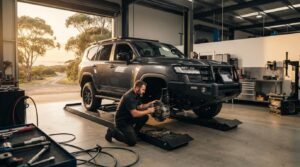
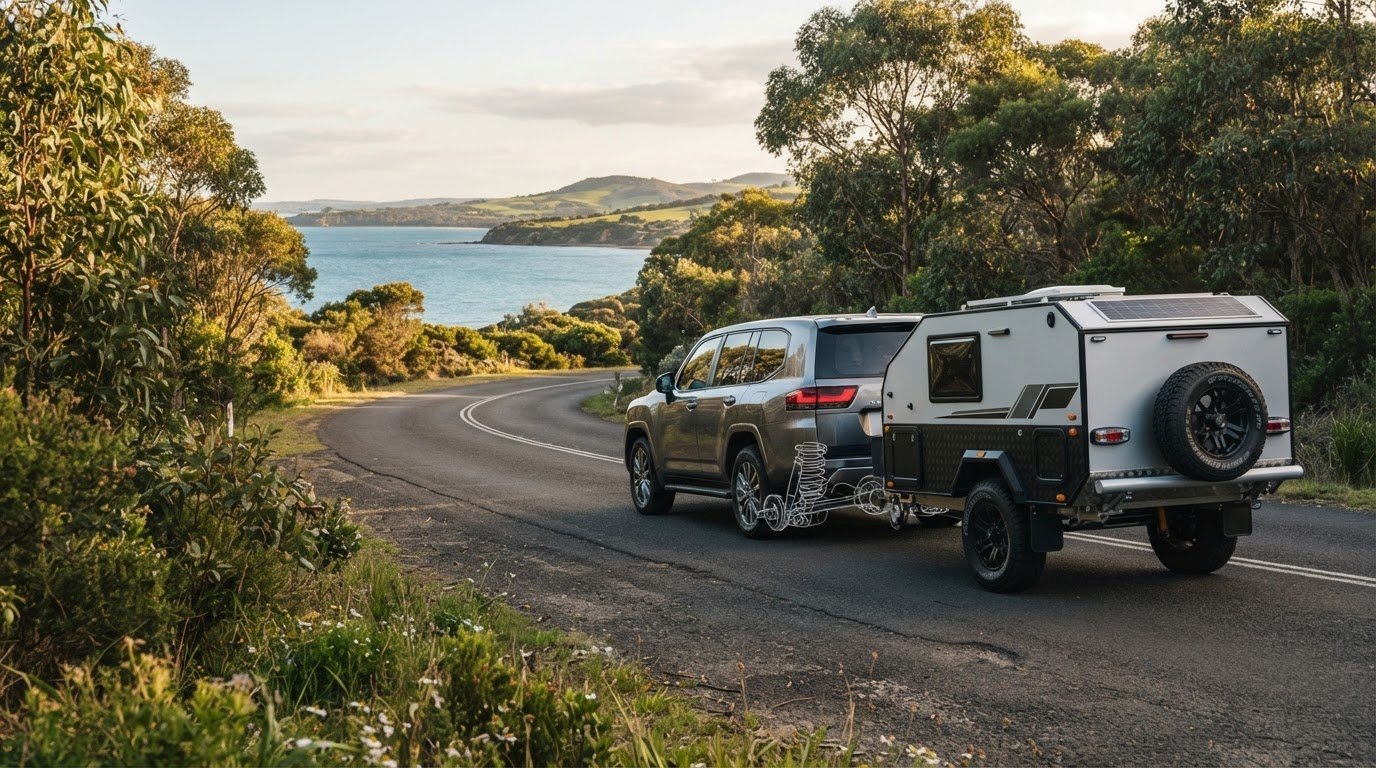
A towing suspension package in Mornington should match how you load and use your vehicle. A suspension kit may suit regular towing or touring, while Load Plus helper springs may provide extra support for heavier loads. The right option depends on your vehicle, its usual load and how you drive. A bigger upgrade is not automatically a better fit.
It makes sense to want a setup that feels composed under load without changing the way your vehicle drives when it’s empty. This guide explains how suspension kits and helper springs differ, what to consider for towing and touring, and which details affect a personalised quote.
Start by considering your load pattern, the suspension changes involved and the details to resolve before choosing a package. This helps you compare options based on how they suit your vehicle and plans, rather than choosing by name alone.
Key Takeaways
- Match a suspension kit to your vehicle, towing setup and regular touring load rather than choosing an upgrade by name alone.
- Compare a full suspension kit with Load Plus helper springs in light of how often you carry extra weight.
- Personalised pricing depends on your vehicle, chosen upgrade and the work involved; share your setup and intended use when requesting a quote.
- Check that the proposed package suits your vehicle and the way you tow or tour before settling on an upgrade.
- Veloce Tuning offers suspension and lift kits for drivers considering an upgrade for their vehicle.
Suspension kits for added vehicle and towing loads
Choose suspension based on the load your vehicle carries, the trailer it tows and the terrain it travels. Component choice matters, but so do vehicle ratings, fitment and how you use the setup.
Towing and vehicle load applications
Start with your vehicle’s usual load. A touring four-wheel drive carrying accessories needs a different assessment from a lightly loaded car that tows occasionally. Low-clearance vehicles may need specialised towing equipment to avoid underbody contact. For a vehicle that can’t be driven, the operator also considers its condition and how to load it safely.
Car, motorcycle and heavy-vehicle towing each involve different dimensions, loading points and transport needs. A motorcycle, for example, needs stable restraint, while a damaged car may need winching onto a transporter. Tell the towing operator what vehicle you have, whether it moves, and what accessories or cargo it carries. These details help identify the relevant equipment and suspension requirements.
Suspension component options
Air suspension allows pressure adjustment to help level a vehicle as loads change, while heavy-duty springs provide a fixed change in spring rate. Shock absorbers control suspension movement, but don’t increase legal capacity. The right combination depends on the vehicle, trailer ball load, cargo and whether you usually drive empty or loaded.
Torsion bars may also need consideration when added accessories increase front-end weight. A bull bar or winch, for example, adds load that can affect ride height and suspension behaviour. Assess the whole setup, including springs, shocks and accessories, rather than choosing a single part in isolation. This gives you a clearer basis for comparing a towing suspension package in Mornington.
Capacity and compliance considerations
A suspension upgrade doesn’t automatically increase your vehicle’s legal towing capacity or payload. Those limits are set by the vehicle’s ratings, and fitting different springs or shocks doesn’t change them by itself.
In Victoria, consider towing capacity, gross vehicle mass (GVM) and axle loads against the vehicle’s specified ratings. The loaded vehicle and trailer must stay within their applicable limits. Vehicle modifications also need to meet relevant requirements, so an upgrade shouldn’t be treated as approval to exceed a rating. Before choosing components, identify the vehicle’s towing rating, GVM, axle ratings and the weight of passengers, accessories and cargo. This helps show which limit could be reached first.
Fitment, timing and certification
A suitable package depends on the vehicle’s suspension design, condition, load and intended use. Installation time varies with the vehicle and components, so no single duration applies to every job. The work may involve replacing springs and shocks or fitting other compatible components.
Certification requirements depend on the modification and whether it needs formal approval. Incorrect fitment can cause poor handling, uneven ride height or premature component wear. Overloading can also strain suspension parts and reduce vehicle control. Give the installer your vehicle details, accessory list, typical cargo and trailer information. This provides a practical starting point for choosing and fitting a setup suited to the vehicle’s actual use.
Load Plus helper springs for occasional or permanent loads
Load Plus helper springs are worth considering if your vehicle regularly carries extra weight or occasionally takes on a heavier touring load. They provide additional support alongside the existing suspension, but don’t remove the need to match components to the vehicle. Start by outlining how you use it for everyday driving, towing and fully loaded trips.
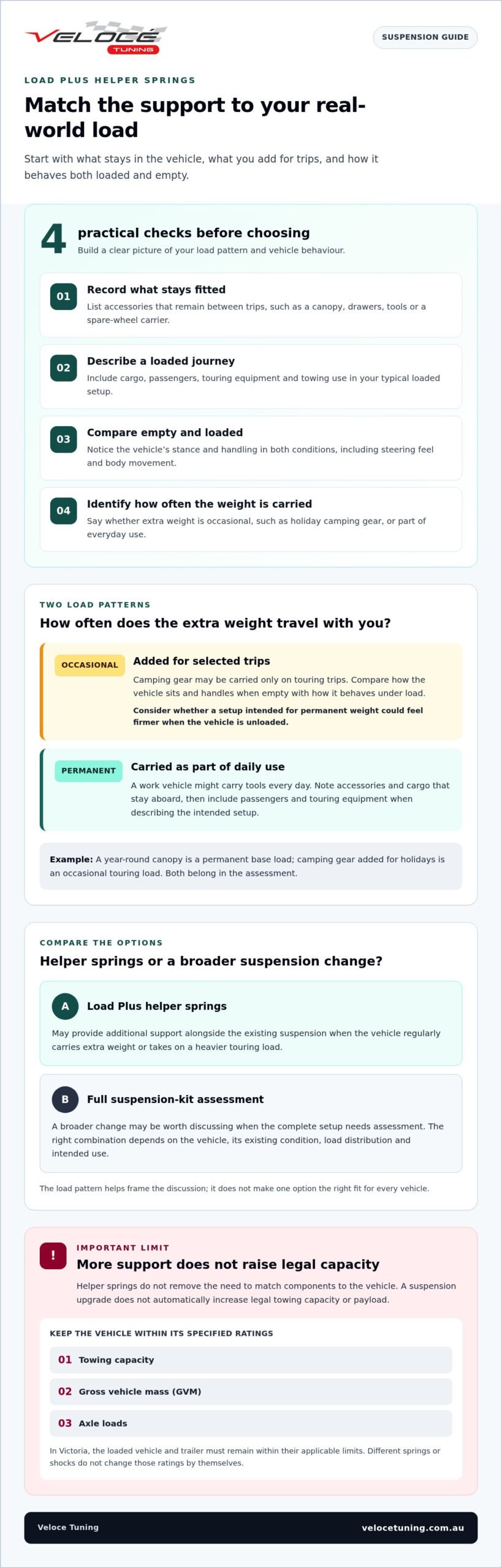
For occasional loads, compare how your vehicle sits and handles when empty with how it behaves under load. A touring vehicle may carry camping gear only on selected trips, while a work vehicle could carry tools every day. This difference matters: a setup designed around permanent weight may feel firmer when the vehicle is unloaded. Note your load pattern before choosing helper springs.
For permanent loads, list the accessories and cargo that stay aboard, such as a canopy, drawers, tools or a spare-wheel carrier. Include passengers and touring equipment when describing the intended setup. These details make it easier to discuss whether helper springs suit your regular use or whether a broader suspension change is worth considering.
Handling matters just as much as ride height. A vehicle that sits lower at the rear under trailer ball load may feel different through corners or on uneven roads. Helper springs can support an added load, but the complete suspension and loaded vehicle still need assessment. Consider steering feel, body movement and how the vehicle behaves both loaded and empty.
Before choosing, work through these practical steps:
- Record which accessories remain fitted between trips.
- List cargo, passengers and towing use for a typical loaded journey.
- Compare the vehicle’s stance and handling when empty and loaded.
- Describe whether the extra weight is occasional or part of daily use.
For example, a vehicle carrying a canopy year-round but adding camping gear for holidays has a permanent base load and an occasional touring load. A vehicle used for weekend towing may have a different load pattern. These examples help distinguish a helper-spring discussion from a full suspension-kit assessment, without assuming one solution suits every vehicle.
Keep expectations grounded in the vehicle’s complete setup. Springs work alongside other suspension components, so the vehicle’s existing condition and load distribution matter. A well-described load pattern gives the assessment a practical starting point. For a broader look at suspension upgrade considerations, bring together the vehicle details, accessories and typical use before settling on a package.
Upgrade pricing and personalised quotes
Pricing depends on the vehicle, selected components and installation work, and is provided after a quote request. Fitting helper springs is different from installing a broader suspension kit. The specific setup, existing suspension condition and intended towing or touring use all shape the work involved. A personalised quote reflects those details rather than a generic figure that may not suit your vehicle.
Make a quote request more useful by sharing clear vehicle and load details. Include the make, model, year and any suspension changes already fitted. Describe the trailer and typical cargo, along with accessories such as a canopy, bull bar or drawers. A touring vehicle with permanent accessories and holiday gear, for example, has a different load pattern from one that tows occasionally.
The quote also depends on the components selected and the work needed to fit them. A package may involve different parts from a helper-spring setup, and the vehicle’s current condition can affect the work. Be specific about handling concerns, changes in ride height and whether the vehicle feels different when loaded. These details help connect the proposed components to the issue you want addressed.
Before requesting a quote, prepare the details that describe your actual setup:
- Vehicle make, model, year and current suspension changes.
- Accessories that stay fitted, such as a canopy or drawers.
- Typical passengers, cargo and trailer use.
- Whether extra weight is permanent, occasional or seasonal.
- Any observed changes in ride height or handling under load.
Photos can show the vehicle’s stance and fitted accessories, while a concise load description explains how you use it. If it carries work equipment during the week and touring gear on trips, mention both. This can affect which components are considered and whether the quote covers everyday driving as well as towing.
When comparing quotes, look at the proposed components, installation work and how each relates to your vehicle’s use. A narrower scope that leaves out a required component may not be comparable with a more complete setup. Ask for the proposal to identify the parts and work included, and note any assumptions about your vehicle’s condition or load pattern.
Keep the vehicle’s towing and load ratings separate from upgrade pricing. A suspension package doesn’t, by itself, increase legal towing capacity or payload. Sharing your intended load helps shape a suitable quote, but the vehicle must still operate within its applicable ratings. This gives you a clearer basis for assessing the upgrade and how it fits your plans.
Which vehicles can have a towing suspension package fitted in Mornington?
Vehicle type alone doesn’t determine the right suspension package. Fitment depends on the suspension design, current condition, accessories and intended towing or touring load. A ute carrying a canopy and tools needs a different assessment from a family SUV towing a caravan. Assess the individual vehicle, not just its badge.
Utes, four-wheel drives, SUVs and passenger vehicles can all be assessed for suspension upgrades. Suitable components depend on the suspension layout and the loads the vehicle regularly carries. A work ute with permanent equipment, for example, has a different load pattern from a wagon carrying camping gear for occasional trips. Identify both the vehicle and how you use it day to day.
Before arranging an assessment, gather these details:
- Make, model, year and current suspension configuration.
- Accessories fitted, such as a bull bar, canopy, drawers or winch.
- Typical passengers, cargo and trailer type.
- Whether the vehicle is loaded daily or mainly during trips.
- Any changes in ride height or handling when towing.
Existing modifications matter. If your vehicle already has a lift, its current components need to be considered alongside the proposed upgrade. Suspension condition also affects the decision: worn or damaged parts can change how the vehicle responds under load. Provide a clear picture of existing changes rather than treating a new package as a stand-alone addition.
For fleets, consistency across the work matters too. A business running several utes can record each vehicle’s accessories, cargo and towing role. One may carry tools while another tows equipment. Those differences can affect the suspension choice, even when the vehicles share a model. A fleet record helps keep each vehicle’s actual use in view.
Local driving conditions and planned travel also help define the setup. A vehicle used for suburban towing around Mornington may carry a different load from one that regularly tours on unsealed roads. Describe your routes, trailer and cargo so the assessment reflects how the vehicle is used, not just how it sits in the driveway.
Keep capacity separate from component fitment. A suspension upgrade doesn’t, by itself, change your vehicle’s towing capacity or payload. The vehicle’s applicable ratings remain central to the load assessment. Share the relevant vehicle information and intended use, then choose components that suit the vehicle and its demands. That’s the practical way to plan a package around your vehicle rather than a generic fit.
Which local workshops install towing suspension packages near Mornington?
For a towing setup in Mornington, choose a workshop that can fit suspension components and assess the vehicle’s intended load. A ute with a canopy and trailer calls for a different discussion from a four-wheel drive carrying touring accessories. The workshop should understand the vehicle’s current suspension, the components under consideration and how you use it.
Use practical details to explain what the job involves. Share the vehicle’s make, model and year, describe existing modifications, and outline your regular towing or touring use. If it carries work equipment during the week and camping gear on trips, include both patterns. This gives the suspension assessment a useful starting point.
Look for a clear explanation of the proposed work. The discussion should connect the chosen components to your vehicle and load, rather than treating every towing setup as identical. For example, a workshop may need to distinguish between a vehicle that sits low under trailer load and one carrying permanent accessories. Ask for the package and fitting work to be described plainly.
Before arranging an installation, prepare these details:
- Vehicle identification and current suspension changes.
- Accessories, cargo and passenger load in normal use.
- Trailer type and how frequently you tow.
- Handling or ride-height changes you’ve noticed.
- Your preference for occasional or permanent load support.
These details keep the discussion specific. A vehicle with a bull bar, canopy and drawers has different components to consider from a standard vehicle used for occasional towing. Be clear about modifications already fitted, as they form part of the existing setup. If you manage several work vehicles, record each one’s equipment and towing role separately.
Pricing should reflect the vehicle and work involved, not a one-size-fits-all estimate. A personalised quote depends on the selected components, vehicle condition and fitting requirements. Compare the scope of the proposed work, including the parts covered, rather than comparing figures without context. Your vehicle and intended use determine what belongs in the package.
A suspension and lift kit workshop is a relevant next step if you’re ready to discuss a towing setup. Share your vehicle details, accessory list and typical load when requesting personalised upgrade pricing. For a suspension assessment and package discussion, request towing suspension upgrade pricing.
Veloce Tuning: Log Book Servcing
Veloce Tuning offers Log Book Servcing and Suspension and Lift Kits for drivers planning towing or touring upgrades. Talk with the workshop when you’re ready to discuss how your vehicle’s suspension can suit its regular load, accessories and towing use. Sharing these details keeps the upgrade discussion focused on your vehicle, not a generic package.
For businesses managing work vehicles, Fleet Vehicle Management can support vehicle oversight. Custom ECU Tuning is also available for drivers considering a separate performance upgrade. Keep the suspension discussion focused on your vehicle’s load, intended use and proposed components.
Contact Veloce Tuning to discuss suspension options for your vehicle.
Set up your next towing upgrade with purpose
Turn your plans into a clear brief: describe your vehicle, its usual load and the towing or touring you have in mind. This gives the upgrade discussion a practical starting point and keeps the focus on what you want the vehicle to do, rather than adding components without a defined purpose. For a towing suspension package in Mornington, personalised pricing follows a quote request and depends on the vehicle, selected upgrade and work involved.
Veloce Tuning offers Suspension and Lift Kits, alongside Log Book Servcing and Fleet Vehicle Management. If you’re preparing a vehicle for a new touring setup or reviewing the needs of work vehicles, share the relevant details and intended use.
Contact Veloce Tuning for a quote and take the next step towards a setup that suits your plans.
Frequently Asked Questions
Can you help me choose the right upgrades for towing or touring?
Yes. Veloce Tuning offers Suspension and Lift Kits, and the discussion starts with your vehicle and intended use. Describe whether you tow a caravan, carry touring gear or use the vehicle for work around Mornington, Frankston or Carrum Downs. Include fitted accessories and how the vehicle behaves under load. These details help focus the upgrade discussion on your actual setup.
What does a towing suspension package include?
A towing suspension package is a selection of suspension components chosen for a vehicle’s towing and load needs. The combination can vary by vehicle rather than being one fixed set of parts. For instance, a vehicle used for occasional caravan trips may need different components from a ute carrying equipment every day. The proposed work should clearly identify the suspension parts included and how they relate to your vehicle.
How much does a towing suspension upgrade cost in Mornington, Victoria?
The price depends on your vehicle, the suspension components selected and the installation work involved, and is provided after a quote request. A vehicle with existing modifications may need a different scope from a standard setup. For a personalised quote, share your vehicle details, fitted accessories, towing use and any suspension changes. This gives the pricing discussion a clear basis instead of relying on a generic estimate.
What suspension upgrades are best for towing a caravan or trailer?
The best option depends on your vehicle’s load pattern and how it handles the caravan or trailer. A vehicle carrying permanent accessories may suit a different suspension approach from one that carries extra weight only on holiday. Describe the trailer, regular cargo and accessories, then consider whether the vehicle needs support for a consistent load or occasional trips. Choose components based on how you use the vehicle, not just the trailer type.
How can I choose the right towing suspension package for my vehicle and trailer?
Start by matching the package to your vehicle, trailer and real-world load. Gather the make, model and year, list fitted accessories, and note what goes aboard on a typical trip. Include trailer details and whether you tow regularly or occasionally. For a towing suspension package in Mornington, this information gives the discussion a practical direction and helps distinguish everyday vehicle needs from holiday-only loads.