
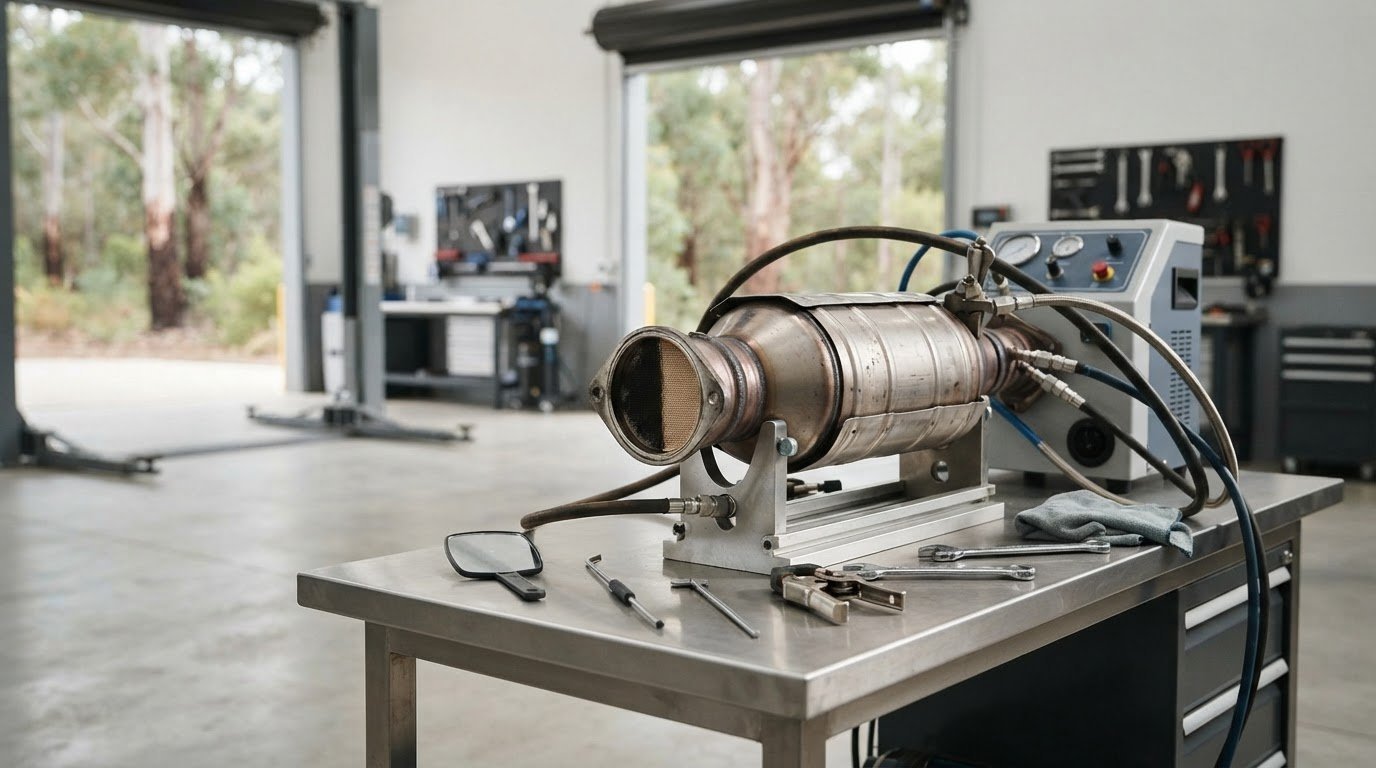
A DPF warning light doesn’t automatically mean the filter needs replacing. If soot or ash has blocked a filter that’s still structurally sound, the answer to “is DPF cleaning worth it?” is yes: cleaning can restore its flow and function. Cracked, melted or badly deteriorated internals are different; cleaning can’t repair structural damage, so replacement may be needed.
A warning light can make an expensive repair seem inevitable. But the right fix depends on what caused the blockage and the filter’s condition, not just the dashboard alert.
This guide explains what a DPF warning light can mean, when cleaning makes sense and why the method matters. It also covers off-vehicle methods such as “bake and blow” and aqueous cleaning, and the tests that help assess the filter before and after treatment.
Key Takeaways
- Cleaning can be worthwhile when soot or ash restricts a structurally sound filter; damaged internals may need replacement instead.
- Treat a DPF warning light as a prompt to diagnose the cause, since unresolved faults can lead to another blockage.
- For moderate to severe build-up, deep cleaning may restore exhaust flow when the filter remains in good condition.
- Off-vehicle methods differ, so look for a process that includes inspection and flow-rate testing before and after cleaning.
1. Is DPF cleaning expensive?
The key distinction is the filter’s condition: cleaning can remove accumulated material, but it can’t repair cracked, melted or broken-down internals. If the substrate is structurally damaged, replacement may be necessary.
There isn’t one cleaning price for every vehicle. The cost depends on the filter, the level of blockage, and whether diagnosis, removal and refitting are needed. The price depends on the case and is given after a quote request; the filter condition and work required shape the quote. Compare the proposed cleaning with replacement only after the blockage’s cause and the filter’s condition have been assessed.
Before spending money, establish why the filter has blocked. Repeated short trips can interrupt regeneration, while sensor faults, regeneration problems or broader engine issues can also contribute. High oil consumption adds ash and soot, and a faulty EGR valve can increase soot in the exhaust system. If the cause isn’t addressed, the blockage may return after cleaning.
Removing a DPF is illegal in Australia and can attract hefty fines. That rule concerns removal; it shouldn’t be treated as a blanket ruling on every repair or modification. Cleaning a blocked filter and deleting it are not the same action.
2. Consequences of ignoring a DPF warning light
A DPF warning light means the vehicle’s emissions system has detected a problem, but the light alone doesn’t identify the cause. The filter may be accumulating soot, regeneration may not be completing, or a sensor fault may be affecting readings. Treat the warning as a prompt to investigate, not proof that the filter needs replacing.
As ash builds up, it takes space that soot would otherwise occupy and restricts exhaust gas flow. A DPF clogged with ash may increase fuel consumption by around 10%. That extra fuel use can turn a warning you’ve been putting off into a regular cost, particularly if the vehicle makes frequent trips.
Pay attention to changes alongside the dashboard alert. For example, a warning that returns after a regeneration attempt may mean the underlying cause is still active. Note when the light appears, whether it stays on, and whether the vehicle’s performance or fuel use changes. These details can help distinguish a filter restriction from a sensor or engine issue.
Leaving the cause unresolved can make the blockage return after cleaning. Repeated short trips, regeneration problems, sensor faults and broader engine issues can all contribute, so a clean filter alone may not address the problem. For instance, if a faulty sensor prevents the system from managing regeneration properly, the same warning may reappear. Act promptly, record the warning and symptoms, then have the fault identified before deciding on cleaning or replacement. That sequence helps focus attention on the cause, not just the light.
3. Deep cleaning for moderate to severe build-up
Regeneration burns soot from a diesel particulate filter, but it doesn’t clear accumulated ash. As ash builds up inside the filter, it reduces the space available for soot and restricts exhaust flow. For moderate or heavier build-up, deep cleaning can remove deposits that normal regeneration leaves behind.
Professional cleaning can restore flow and function when the filter is blocked but its casing, substrate and internals remain in good condition. Removing ash also frees space for soot, helping restore the filter’s capacity to capture it. The result depends on the filter’s condition and whether cleaning reaches the affected channels.
A sound assessment starts with the blockage, not just the warning light. The technician needs to distinguish ash and soot build-up from a fault elsewhere in the vehicle. A filter with restricted flow but intact internals is a different repair prospect from one with a cracked or melted substrate. Cleaning removes deposits; it can’t rebuild damaged ceramic channels.
Before choosing deep cleaning, consider what caused the build-up. Repeated short trips can interrupt regeneration, while sensor faults, regeneration problems or broader engine issues can also lead to blockage. High oil consumption and a faulty EGR valve can contribute to further soot or ash accumulation. If these causes remain, the filter may block again after cleaning.
Use the filter’s condition and test results to guide the decision. A before-and-after flow-rate test helps show whether cleaning has improved exhaust flow. Inspection matters too: a clean-looking exterior doesn’t prove the substrate is intact. When the filter is structurally sound, deep cleaning can be a practical alternative to replacement. If its internals are cracked, melted or broken down, replacement may be needed.

4. Off-vehicle DPF cleaning methods
Off-vehicle cleaning removes the diesel particulate filter for controlled treatment, rather than relying on in-vehicle regeneration. It can tackle ash lodged in the filter substrate, but the process should suit the filter’s condition and include checks before and after cleaning.
Two methods use different approaches. “Bake and blow” heats the filter to oxidise remaining soot, then uses compressed air to remove ash. Aqueous cleaning washes ash from the substrate with water and surfactant, then dries the filter in a special cabinet. Both methods require proper handling and equipment.
Ultrasonic cleaning uses vibration to dislodge deposits, but the vibration can risk damaging the filter. Some cleaning chemicals are toxic, and the resulting waste should be handled and disposed of as hazardous waste. Home experiments with spray-in chemicals are no substitute for a controlled process. Fuel-tank additives and sprays can’t remove ash build-up.
Can a blocked DPF be cleaned at home, and what are the risks? Home additives or sprays won’t remove ash, while incorrect handling of toxic chemicals and contaminated waste creates additional hazards. A specialist process should include inspection and testing, not simply a cleaning cycle.
Look for a clear sequence: weigh and inspect the filter, clean it using an appropriate method, then dry and flow-test it. Comparing flow-rate results before and after treatment helps show whether cleaning has restored exhaust flow. Inspection can also identify damage that cleaning can’t fix.
Which vehicles and driving patterns are most likely to benefit? Diesel vehicles used mainly for short, stop-start trips may experience interrupted regeneration and soot build-up. A filter with restricted flow but intact internals is a stronger candidate than one with a damaged substrate, and the cleaning method must address the actual deposits.
For operators coordinating maintenance across several vehicles, manage fleet vehicle maintenance as part of a planned approach to DPF issues.
Veloce Tuning: Log Book Servcing
Veloce Tuning provides Logbook & General Servicing to help keep scheduled vehicle maintenance on track. If a warning light appears, treat it as a separate issue from routine servicing: identify the cause before deciding on a repair.
For businesses managing several vehicles, Fleet Servicing can support a more organised approach to fleet upkeep. Keeping service records and maintenance planning in view helps owners and operators stay on top of each vehicle’s needs, rather than reacting only when a dashboard alert appears.
Whether you’re maintaining a personal vehicle or coordinating a fleet, choose the next step based on the issue at hand. Contact Veloce Tuning to discuss Log Book Servcing or Fleet Vehicle Management.
Make the next repair decision with confidence
Is DPF cleaning worth it? The decision should leave you with more than a cleared warning: keep a record of the diagnosis, chosen repair and post-repair test results. This creates a useful baseline for future servicing and makes a returning fault easier to compare with the original issue. Note any changes in how the vehicle is used, too, so maintenance decisions reflect its real workload.
Veloce Tuning provides DPF Servicing and Repairs for drivers who need a considered next step after a warning or diagnosis. Use the findings to guide the repair discussion, rather than choosing a cleaning method before the cause is understood. A clear maintenance record can help keep that decision connected to the vehicle’s ongoing care.
Contact Veloce Tuning about DPF servicing and repairs, and take the next step with a clearer picture of your vehicle’s needs.
Frequently Asked Questions
Do DPF systems actually work?
Yes, a properly functioning diesel particulate filter captures soot in the exhaust before it reaches the air. The system uses regeneration to burn accumulated soot, then continues filtering exhaust particles. A DPF’s performance depends on its condition and the vehicle’s emissions system working as intended. A warning or fault code calls for diagnosis because it may point to a problem beyond the filter itself.
Is DPF cleaning worth the cost?
Cleaning can be worthwhile if deposits restrict the filter but it remains intact. Consider the diagnosis, filter condition and cleaning results alongside replacement. For example, if the vehicle’s fault has been identified and addressed, cleaning may help restore the filter’s operation. If its substrate is damaged, cleaning won’t repair it. Base the decision on evidence about both the filter and the cause.
How can I prevent my DPF from getting clogged?
Use the engine oil specified for your vehicle and have faults addressed promptly. Correct oil helps reduce particle production, while unresolved engine or sensor problems can interfere with DPF operation. If you regularly drive short trips, discuss the vehicle’s regeneration needs during servicing. Keep a note of warning lights, driving conditions and maintenance; these details can help reveal a recurring issue.
Is DPF cleaning expensive?
Cleaning costs vary with the filter, blockage and work involved, such as removal and refitting. Compare the quote with the filter’s condition and the replacement alternative. Diagnosis matters: paying for cleaning before identifying the underlying fault can leave the original problem unresolved.
Is it better to clean or delete a DPF?
Cleaning or repairing the system is the appropriate option; removing a DPF is illegal in Australia and can attract hefty fines. Deletion removes the emissions-control component rather than restoring its function. If the filter has structural damage, replacement may be necessary. Base the decision on the filter’s condition and the identified fault, rather than bypassing the system.
What are the signs of a clogged DPF?
A DPF warning light is one signal, but it doesn’t reveal the cause on its own. Changes in fuel use or engine response can also indicate a problem. A DPF clogged with ash may increase fuel consumption by around 10%. Note when the light appears and what the vehicle is doing; that context can help diagnosis for drivers around Carrum Downs, Frankston, Patterson Lakes, Mornington, Skye, Seaford and Sandhurst.