

A missed logbook service can leave wear and developing faults unchecked. If you’re wondering what happens if you skip a log book service, the effects can include more costly repairs, a warranty claim being disputed, and a service history that raises questions at resale. Your next service is due at the manufacturer’s time or kilometre interval, whichever comes first, and there’s no official grace period for being late.
It’s easy to assume a car is fine when it starts smoothly and feels responsive on the road. But some wear develops without obvious symptoms. That’s why a logbook service follows the manufacturer’s schedule rather than relying on how the car feels.
This article explains what a logbook service involves, how to find out when yours is due, and what a missed interval could mean for your car’s condition, warranty and resale value. You’ll also learn why getting back on schedule matters and how professional servicing can help keep maintenance and records in order.
Key Takeaways
- Use your vehicle’s manufacturer schedule to identify the service interval, which is based on time or kilometres, whichever comes first.
- A missed inspection can leave developing wear or faults unnoticed, so getting the car back onto its service schedule helps address issues earlier.
- For warranty servicing, an independent workshop can be used when it follows the manufacturer’s requirements and keeps detailed records.
- Keep service entries complete and up to date; a clear history can reassure prospective buyers about how the car has been maintained.
Preventing small problems from becoming expensive repairs
Logbook servicing helps a mechanic find wear before it develops into a larger fault. There’s no official grace period for a late service, so follow the manufacturer’s interval and arrange servicing promptly if you’ve missed it.
A vehicle can keep running while components wear internally. Changing the oil and filter helps maintain lubrication; skipped oil changes can allow sludge to build up and restrict oil pathways. Routine checks can also reveal brake pad wear, low coolant or fluid leaks before they affect other parts.
Long-term repair costs and reliability
Neglected maintenance can let small faults place extra strain on a vehicle, affecting reliability and potentially leading to more extensive repairs. A mechanic may spot early brake, coolant or suspension concerns during scheduled servicing. Addressing these signs early can help prevent a minor issue from developing into a more involved repair.
Delaying repairs and service
Delaying a logbook service or repair leaves scheduled checks or known faults unattended. For example, a small oil leak can go unnoticed until the engine loses lubrication. Worn brakes can affect stopping performance, while neglected fluids may accelerate wear. If a warning light appears or a new noise develops, arrange an inspection rather than waiting for the next scheduled service.
Preventative servicing is planned around the manufacturer’s schedule; reactive repairs begin after a fault appears or affects how the vehicle runs. The Competition and Consumer Act 2010 protects Australian car owners’ right to use a licensed mechanic for logbook servicing, according to the Federal Register of Legislation. A qualified independent mechanic can carry out the scheduled work, inspect essential components and record what was checked or replaced. This gives drivers a clearer maintenance trail and helps identify emerging issues before a breakdown interrupts a journey.
Having a professional check service intervals by date and kilometres
A professional uses the vehicle’s logbook and service history to identify the next due interval. Logbook service costs depend on make, model, scheduled work, parts and fluids; a price is provided after a quote request.
Time- and kilometre-based intervals
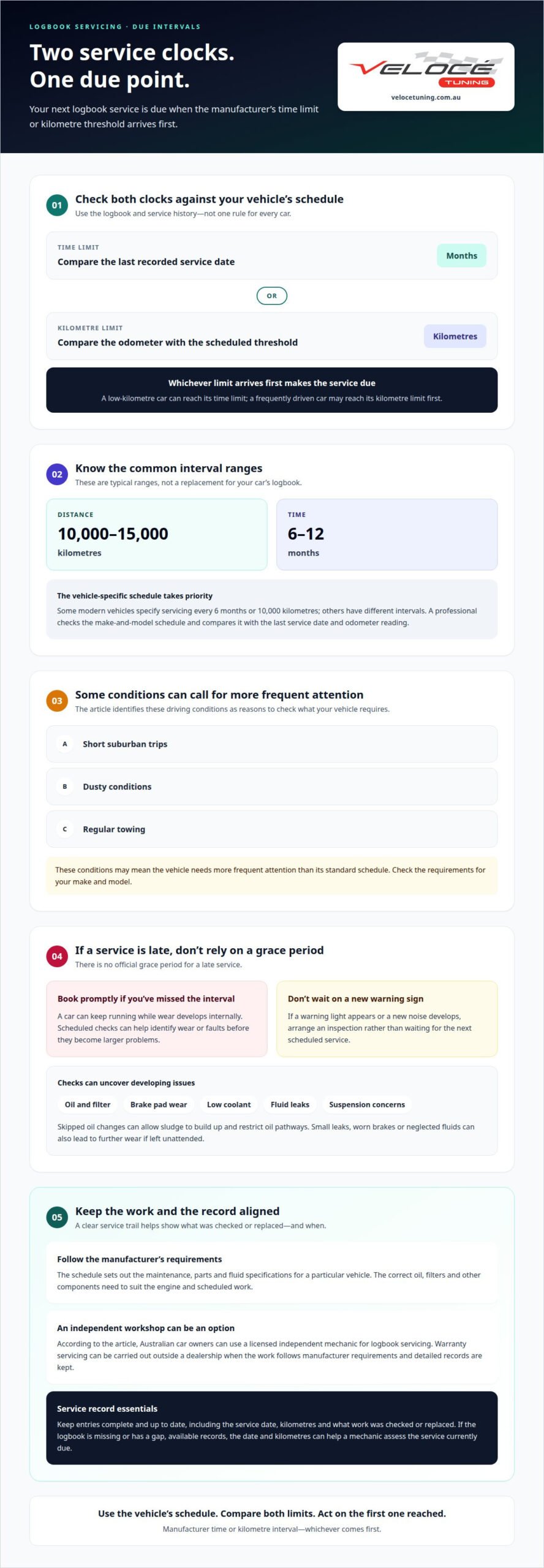
A service interval is the manufacturer’s time limit or kilometre threshold, whichever arrives first. Both matter: a low-kilometre vehicle can still reach its time limit, while a frequently driven car may hit its kilometre threshold first.
A mechanic can compare the last recorded service date and odometer reading with the schedule for that vehicle. For example, if a schedule sets a limit of 12 months or a specified kilometre threshold, reaching either one makes the service due. That check helps prevent drivers from relying only on annual routines or dashboard reminders.
Typical and recommended service intervals
Logbook intervals commonly fall between 10,000 and 15,000 kilometres, or every 6 to 12 months, depending on the vehicle. These are typical ranges, not a substitute for the schedule in a specific car’s logbook.
Some modern vehicles specify servicing every 6 months or 10,000 kilometres, while others have different intervals. A professional follows the make-and-model schedule, rather than applying one interval to every engine. Short suburban trips, dusty conditions and regular towing can also mean the vehicle needs more frequent attention than its standard schedule. For instance, towing overloaded trailers when moving house places extra strain on the brakes and transmission, which is why many drivers leave large furniture transport to Anspach Removals & Storage rather than risking unnecessary vehicle wear.
At the scheduled visit, a mechanic can follow the listed checks and replacement requirements, including oil, filters, brakes and brake pad condition where applicable. The dealership isn’t the only servicing option: Australian car owners can use an independent workshop when its work meets the manufacturer’s requirements. A clear service record helps establish which interval was completed and when the next one is due.
If the logbook is missing or has a gap, the mechanic can use the available service records, date and kilometres to assess the service currently due. This gives the engine and other scheduled components attention according to the vehicle’s requirements, helping reduce the risk of a preventable breakdown. For a professional logbook service, the schedule provides the starting point.
Manufacturer service schedules and compliant parts
A manufacturer’s schedule sets out the maintenance required for a particular vehicle. Following its intervals and parts and fluid specifications helps keep servicing aligned with the vehicle’s design and warranty conditions.
Manufacturer-recommended service intervals
Manufacturer-recommended intervals specify when maintenance is due by time or kilometres, whichever comes first. This distinction matters if you drive infrequently or cover long distances.
For example, manufacturer schedules may call for servicing every 10,000 or 15,000 kilometres, while some set a 12-month time limit. The correct interval depends on the make and model, so a workshop uses the vehicle’s logbook schedule rather than applying one rule to every car. Short trips, dusty conditions and towing may also call for more frequent servicing.
Manufacturer-specified parts and fluids
Manufacturer-specified parts and fluids meet the vehicle’s service requirements. Using the correct specifications matters because oil, filters and other components must suit the engine and the scheduled work.
An independent workshop can service a vehicle without automatically invalidating its warranty when it follows the manufacturer’s requirements. That includes using genuine parts or high-quality equivalents, the specified fluids, qualified mechanics and detailed service records. For example, an oil change using the appropriate oil specification is different from simply adding any available oil. The service record should also show what work was completed.
Following manufacturer service schedules
A manufacturer’s service schedule is the vehicle-specific plan for inspections, maintenance and replacement work. A general service may not cover every check or component scheduled for that model, so use the vehicle’s own requirements to guide the work.
The logbook can show whether an upcoming service requires more than an oil and filter change, such as brake or suspension inspections. A mechanic can use the schedule and service history to identify the work due now. Australian car owners can choose an independent workshop for logbook servicing; warranty conditions still depend on whether the work meets the manufacturer’s requirements.
If a scheduled interval is missed and a related fault develops, the manufacturer may dispute a warranty claim. Keeping servicing aligned with the correct schedule, parts and fluids helps maintain a clear record of the vehicle’s care. Alongside routine servicing to protect your car’s mechanical condition, maintaining appropriate auto cover through Verdant Insurance helps safeguard your vehicle against unexpected road incidents and damage.
Service history and resale value
A complete service history gives a prospective buyer evidence of how a vehicle has been maintained. Each logbook entry records work performed, including what the mechanic checked, replaced or repaired. This distinguishes documented routine care from claims of servicing without supporting records.
Gaps can affect how buyers view the car’s condition. For example, a used vehicle with 18 months between services may appear neglected, even if it drives normally. An incomplete history can make a car harder to sell or trade in, and may lead a seller to reduce the asking price by thousands of dollars. A detailed record can instead reassure buyers and help support a stronger sale.
After a service, the workshop can stamp the logbook and record the work completed. Check that the entry includes the service details, and keep related invoices with the vehicle’s records. If the logbook has a gap, a later service can still be recorded. The missing entry remains a gap, but the new record shows what was done and when.
Service records also matter while a manufacturer’s warranty applies. If a claim arises, the history can help show whether scheduled work followed the manufacturer’s specifications. Missing records may leave an owner without proof of servicing, while a documented entry shows the checks and repairs completed. That distinction can matter when a manufacturer assesses a warranty claim.
Keep the logbook and invoices together, and make sure each new service is recorded properly. A clear timeline gives the next buyer a more complete picture than unlabelled paperwork. It also helps the mechanic understand previous work and spot maintenance patterns, rather than treating every visit as an isolated inspection.
If your service history has gaps, arranging the next scheduled service creates a fresh, documented entry. Arrange a logbook service to have the work recorded as part of your vehicle’s maintenance history.
Veloce Tuning: Log Book Servcing
Veloce Tuning provides logbook servicing for drivers whose vehicles are due for scheduled maintenance or have missed an interval. A professional service is a practical next step to bring your car’s maintenance back into focus and address the work currently due.
Logbook servicing follows the vehicle manufacturer’s schedule, with requirements that vary by make and model. If you’re unsure what a missed service means for your maintenance routine, the logbook and service history show what’s recorded and what needs attention. Veloce also provides fleet servicing for businesses managing multiple vehicles.
For a scheduled service or to discuss your vehicle’s maintenance, contact Veloce Tuning.
Put your next service in motion
If you’re asking what happens if I skip a log book service, start by finding out what your vehicle needs now. Its current condition, service history and manufacturer’s schedule can help shape a clear maintenance plan. A missed interval doesn’t make taking action pointless; it’s a reason to bring the vehicle’s servicing back into focus.
Veloce Tuning provides logbook servicing for drivers ready to address scheduled maintenance. Businesses can also use Veloce’s fleet servicing to support ongoing vehicle maintenance. If your plans include changing ride height or suspension setup, Veloce also installs suspension and lift kits. Understanding what happens if I skip a log book service can help you decide when to discuss your car’s maintenance with a mechanic.
Take the next step at your pace. Talk with Veloce Tuning about servicing and move towards a better-informed plan for your vehicle.
Frequently Asked Questions
What Is Logbook Servicing?
Logbook servicing is maintenance carried out in line with the vehicle maker’s schedule, with the work recorded in the car’s logbook. The entry connects each visit to the vehicle’s age and odometer reading. For example, it can show whether a filter was inspected or replaced and when, giving the next mechanic useful context about the vehicle’s maintenance.
But What If the Car Seems Fine?
A car can feel fine while still being due for scheduled maintenance. Smooth acceleration and a quiet engine don’t show whether the vehicle has reached its time or kilometre limit. If you mainly make short trips, you may have fewer chances to notice changes during longer drives. The manufacturer’s schedule, not how the car feels, determines when servicing is due.
Can I still get my logbook stamped if I missed the last one?
Yes, a workshop can record the service it performs even if the logbook has a gap. The new entry records the work completed now; it doesn’t recreate or backdate a missed service. You don’t need to arrange missed services in sequence. The mechanic performs the service currently due, using the vehicle’s time and kilometres to determine the relevant interval.
Does a Log Book Service Have to Be Done at a Dealer?
No, Australian vehicle owners can choose an independent workshop rather than returning to a dealership. The important point is that the service follows the manufacturer’s specifications, uses suitable parts and fluids, and is recorded. For example, an independent mechanic servicing a car under warranty should document the scheduled maintenance completed, so there’s a clear record if a warranty claim arises.
Does a missed service affect your warranty?
A missed scheduled service can give a manufacturer grounds to dispute a warranty claim if a related fault develops. It doesn’t automatically mean every future claim will be rejected. The service schedule, the fault involved and the available maintenance records all matter. If your car is under warranty, keep invoices and logbook entries showing what work was performed and whether it followed the vehicle’s requirements.
What is a logbook service in Australia and what does it include?
In Australia, a logbook service follows the vehicle manufacturer’s maintenance schedule and records the work in the logbook. Depending on the model and interval, it may include an oil and filter change, brake and tyre checks, fluid maintenance, and steering or suspension inspections. For drivers around Carrum Downs, the exact requirements depend on the vehicle’s make, model and service history. Veloce Tuning provides logbook servicing in Carrum Downs for petrol and diesel vehicles.