
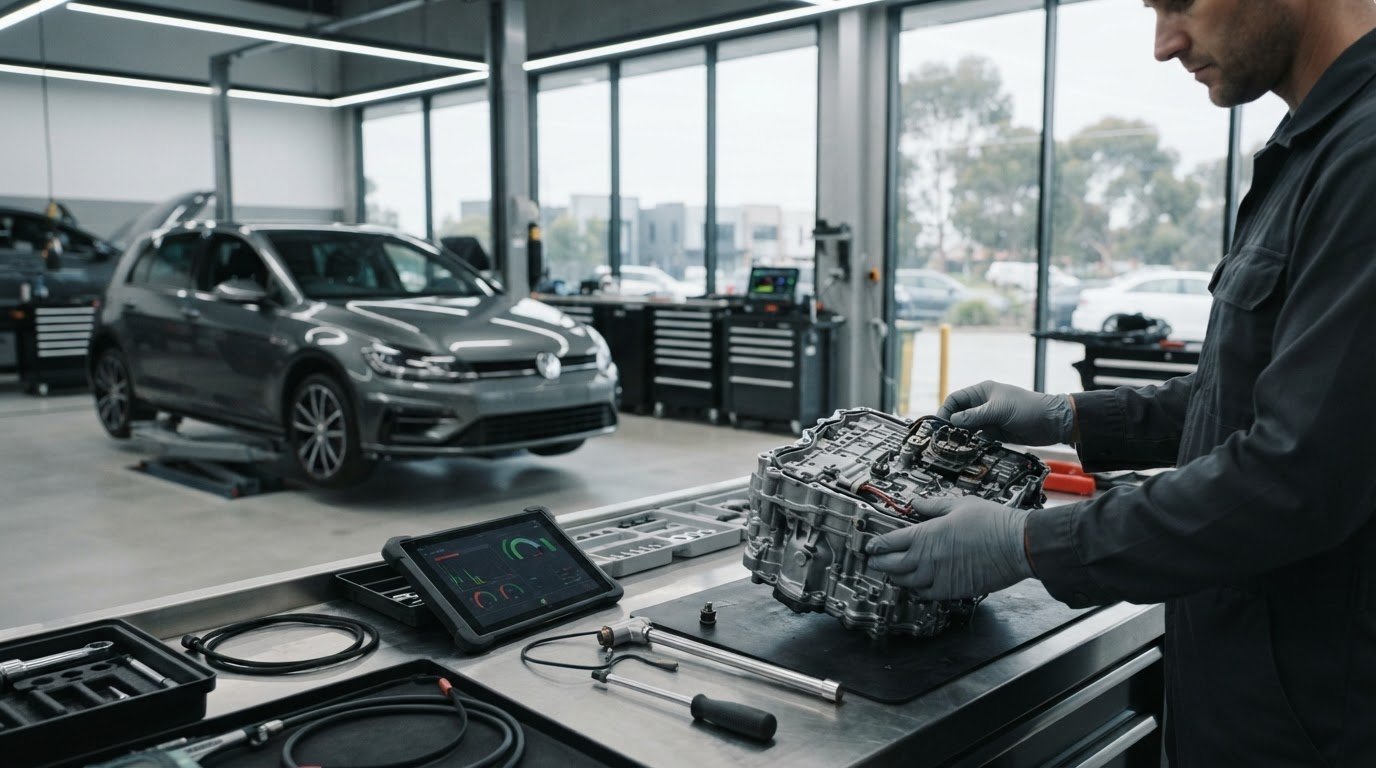
What if a rough gear change doesn’t mean your Skoda needs a whole new gearbox? A shudder as you pull away, hesitation at low speeds or a flashing gear indicator can point to a DSG fault, but the symptom alone won’t reveal the cause. If you’re searching for a Skoda DSG repair specialist Seaford drivers can turn to, look for a workshop that starts with diagnosis rather than guesswork.
It can be unsettling when your car’s shifts change suddenly. Continuing to drive with a developing fault could risk further damage, so take warning lights, slipping, clunky changes or limp mode seriously. Veloce Tuning provides DSG servicing and repairs from its Carrum Downs workshop for drivers in Seaford and nearby areas. This guide covers warning signs, how an assessment helps distinguish a targeted repair from a broader transmission problem, and what information to prepare before discussing repair options.
Key Takeaways
- Note when a DSG symptom occurs and how it affects the car. Those details help shape a useful assessment.
- Fault codes are clues, not a diagnosis on their own. Vehicle details, inspection and testing help build a clearer picture.
- Assessment findings guide whether DSG servicing, a component repair or broader transmission work is appropriate.
- Prepare your Skoda’s details and a clear symptom record before arranging an assessment with a Skoda DSG repair specialist Seaford drivers can access locally.
- Veloce Tuning provides DSG servicing and repairs from its Carrum Downs workshop for drivers in Seaford and nearby areas.
Skoda DSG problems near Seaford: symptoms that deserve attention
A gearbox shudder as you pull away, a pause before drive engages or a warning light appearing mid-trip can quickly unsettle a familiar drive. These signs deserve attention, but they don’t identify one fault by themselves. A DSG is an electronically controlled transmission, and similar symptoms can have different causes. The Direct-Shift Gearbox (DSG) overview explains the transmission’s design; identifying the cause of a particular symptom requires an assessment of the vehicle.
What are common signs of a Skoda DSG fault?
Pay attention to what the car does and when. Shuddering under acceleration, hesitant engagement when selecting drive or reverse, jerky or unexpected gear changes, and dashboard warnings can all indicate a problem that needs investigation. New clunks, whining or grinding noises, engine revs rising without the car gathering speed, or intermittent loss of drive also warrant prompt attention. None confirms that a specific component has failed. The same symptom can have more than one cause.
Can you keep driving with a DSG warning or shudder?
It depends on the warning, the severity and persistence of the symptom, and whether the car remains predictable and controllable. A brief, mild shudder is different from severe hesitation, slipping, a persistent warning or difficulty engaging a gear. Don’t repeatedly accelerate or select gears to see whether the fault returns. If a warning or unusual behaviour persists, arrange a professional assessment rather than ignoring it.
If the car loses drive, behaves unpredictably or becomes unsafe to control, pull over somewhere safe as soon as you can and seek roadside assistance. Don’t continue driving to a workshop if doing so could put you or others at risk. If the vehicle remains safe to move, note any warning displayed and the conditions in which the symptom occurred. That information can help guide the assessment.
Veloce Tuning provides DSG servicing and repairs from Carrum Downs for Skoda drivers in Seaford and surrounding areas, including Frankston, Patterson Lakes, Mornington, Skye and Sandhurst. When you describe the car’s symptoms, the workshop can use that information to guide the next step rather than relying on a single warning or sensation.
How a Skoda DSG specialist diagnoses gearbox faults
A sound repair decision starts with a clear picture of what the car is doing, not a parts list based on a hunch. An assessment considers the symptoms, the vehicle’s details and history, and the results of inspection and testing. This helps distinguish a fault that needs attention from a code or symptom that is only one clue.
What happens during a DSG diagnostic assessment?
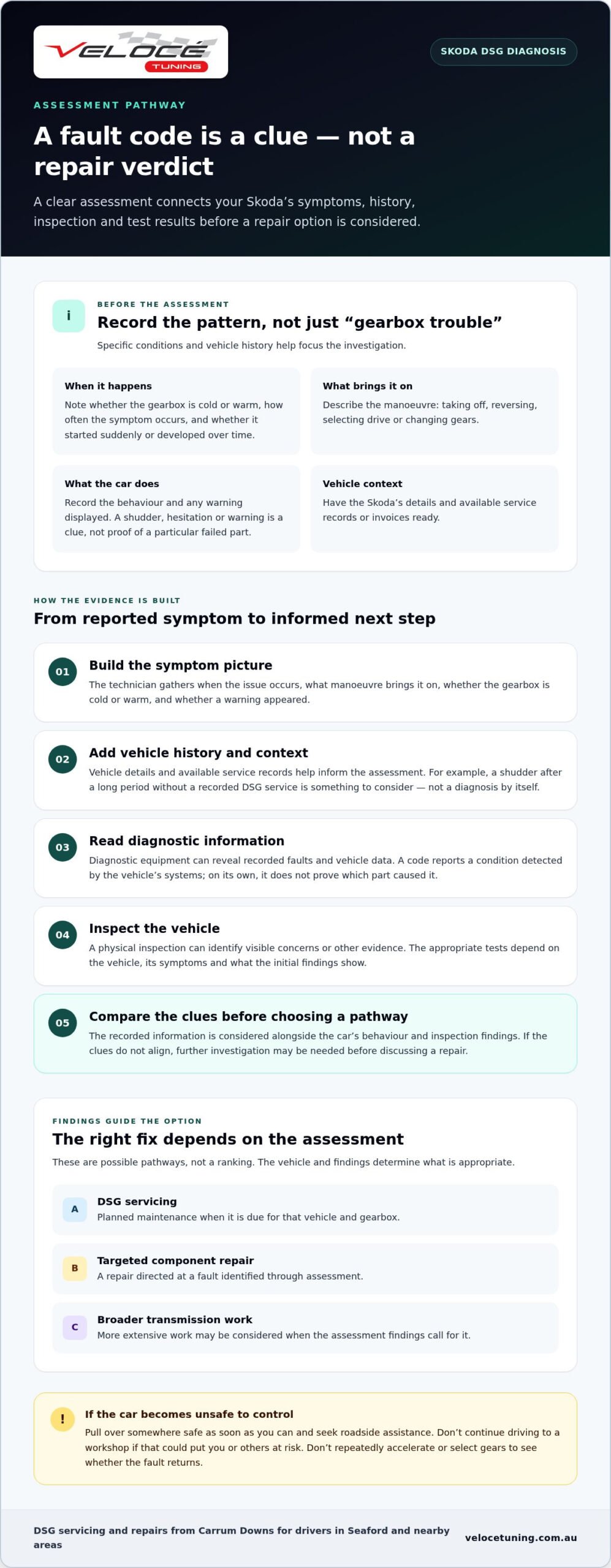
First, the technician gathers details about the issue: when it happens, whether the gearbox is cold or warm, which manoeuvre brings it on, and whether a warning appeared. Vehicle details and available service records add useful context. For example, a shudder after a long period without a recorded DSG service is part of the vehicle’s history to consider, not a diagnosis by itself.
Diagnostic equipment can reveal recorded faults and vehicle data, while a physical inspection can identify visible concerns or other evidence. These methods work together; neither should be treated as a shortcut to replacing a component. The appropriate tests depend on the vehicle, its symptoms and what the initial findings show.
Why fault codes do not tell the whole story
A fault code reports a condition detected by the vehicle’s systems. It doesn’t automatically prove which part caused it. The technician can compare the recorded information with the vehicle’s behaviour and inspection findings. If the clues don’t align, further investigation may be needed before a repair pathway is discussed. For wider context on dual-clutch technology, SAE International provides automotive engineering standards and related technical material.
A diagnostic code is evidence to investigate, not a repair verdict.
Your driving history can help make the investigation more focused. Describe whether the issue started suddenly or developed over time, how often it occurs, and whether it appears when taking off, reversing or changing gears. Service invoices or records can show what maintenance has been carried out and when. Even if a symptom is difficult to reproduce, describe it as accurately as you can. Specific patterns and conditions are more useful than a broad label such as “gearbox trouble”.
Veloce Tuning provides DSG servicing and repairs for Skoda drivers near Seaford from its Carrum Downs workshop. A Skoda DSG repair specialist Seaford drivers can access locally should explain how assessment findings inform the next step, rather than treating one code as a reason to replace a part. Explore Veloce Tuning’s DSG repair services to learn more.
Skoda DSG repair options near Seaford: match the fix to the fault
There isn’t one repair that suits every DSG concern. Depending on the vehicle and assessment findings, it may need scheduled servicing, a targeted component repair or more extensive transmission work. Starting with the evidence helps avoid treating a service need as a fault or assuming one component is responsible for every shifting issue.
When might DSG servicing be different from a repair?
Servicing is planned maintenance carried out according to the requirements for the vehicle and its gearbox. A repair addresses a fault identified through assessment. Servicing may be appropriate when maintenance is due, while a persistent symptom may need investigation even if the vehicle has been serviced. Fluid requirements and service timing can vary, so follow the information for your specific Skoda rather than relying on a universal interval. Keep service records available to give the vehicle’s history context.
Could a mechatronic or clutch issue be involved?
Areas for investigation may include the mechatronic unit, which controls gearbox operation, and the clutch components that engage and transfer drive. Put simply, the mechatronic unit is part of the gearbox’s control system, while the clutch helps connect engine power to the transmission. Shuddering, slipping or hesitant shifts can have different causes, so none should be treated as proof that a particular part has failed. A Skoda DSG repair specialist Seaford drivers consult should relate any proposed component work to the assessment findings.
For a deeper explanation of the mechatronic unit, look for the existing guide titled DSG mechatronic repair Melbourne. A component-level repair addresses an identified area, while broader transmission work may be considered if the findings indicate a wider problem. Neither option is automatically best. The evidence should guide the discussion.
Before deciding on work, ask for a clear explanation of the assessment findings, the proposed repair and how it relates to your Skoda’s symptoms. Veloce Tuning provides DSG servicing and repairs from its Carrum Downs workshop for drivers in Seaford and nearby areas. Its assessment helps connect the repair discussion to the vehicle’s condition, so you can understand the reasoning behind the recommended next step.
What to prepare before booking a Skoda DSG assessment near Seaford
A clear account of what your Skoda is doing gives the assessment a useful starting point. You don’t need to identify the fault yourself. Share what you’ve noticed and bring any relevant vehicle history so the technician can compare your observations with the assessment findings.
What information helps diagnose a Skoda DSG issue?
Before arranging an assessment, note when the symptom occurs and how often. Does it happen when selecting drive, reversing, accelerating or changing gears? Record any dashboard message or warning light, and note whether the behaviour has changed over time. If a warning appears, write down the message rather than relying on memory.
- Bring available service records and information about recent repairs.
- Describe changes in shifting, noises or vehicle behaviour, including when they began.
- Avoid clearing warnings or repeatedly resetting the vehicle before the assessment.
These details create a useful timeline. Don’t try to reproduce a serious symptom on the road. Report what has already happened and let the technician guide the next steps.
What should you expect during the repair process?
Your account and vehicle information help shape the assessment. The technician considers them alongside inspection and diagnostic findings, then discusses what the evidence indicates and which next steps suit the vehicle. The repair scope and timing depend on the fault identified and the Skoda’s condition, so they can be discussed once the vehicle has been assessed.
The discussion should make the reasoning clear: what was found, why a particular service or repair is being considered, and what happens next. If the findings point to a different issue than expected, the assessment helps guide the repair decision instead of relying on an assumption.
Veloce Tuning is based in Carrum Downs and provides Skoda DSG servicing and repairs for drivers in Seaford and surrounding areas. If you’re looking for a Skoda DSG repair specialist Seaford drivers can access, bring your notes and service history to help make the assessment more informed.
Arrange a Skoda DSG assessment with Veloce Tuning and take the next step towards understanding what your vehicle needs.
Choose Veloce Tuning for Skoda DSG repairs near Seaford
When a Skoda’s shifts stop feeling smooth, the useful next step is an assessment, not a guess about which part to replace. Veloce Tuning provides DSG servicing and repairs for drivers in Seaford and nearby areas. Based in Carrum Downs, the workshop is operated by a head engineer and an automotive enthusiast team.
Why use a DSG repair specialist for a Skoda?
A DSG fault can involve different parts of the transmission, and similar symptoms may have different causes. An assessment considers the reported behaviour and vehicle findings before repair options are discussed. This helps clarify what the findings indicate, why a particular next step may suit your Skoda, and whether servicing or repair is being considered. The repair decision should fit the evidence and the vehicle, not a one-size-fits-all assumption.
How to take the next step with Veloce Tuning
When making contact, describe your Skoda model and what you’ve noticed. Mention when the symptom occurs, whether it’s constant or intermittent, and any warning messages shown on the dashboard. Available service records can also provide helpful context. These details give the conversation a practical starting point, although they don’t replace an assessment.
Seaford-area drivers can visit Veloce Tuning’s workshop in nearby Carrum Downs for DSG servicing and repairs. After assessment, the findings can guide a discussion about suitable next steps for the vehicle. The aim is a clear path forward based on what the car shows.
If you’re looking for a Skoda DSG repair specialist Seaford drivers can access locally, get in touch with Veloce Tuning about your vehicle’s symptoms and arrange an assessment.
Book a Skoda DSG assessment with Veloce Tuning.
Take the next step towards a confident repair
A shudder, hesitant shift or dashboard warning is a reason to pay attention, not proof that one particular DSG component has failed. The clearest path forward starts with an assessment. Symptoms, vehicle history and diagnostic findings together help determine whether servicing, a targeted repair or further transmission work is appropriate.
If you’re looking for a Skoda DSG repair specialist Seaford drivers can access locally, Veloce Tuning provides DSG servicing and repairs from its Carrum Downs workshop for drivers in Seaford and surrounding areas. The workshop is operated by a head engineer and an automotive enthusiast team, with a focus on understanding the fault before discussing repair options.
Share your Skoda’s symptoms and any warning messages, then arrange an assessment to get a clearer picture of what your vehicle needs. Arrange a Skoda DSG assessment with Veloce Tuning and take the next step with confidence.
Frequently Asked Questions
What are the signs of a DSG gearbox problem in a Skoda?
Common signs include shuddering as you accelerate, hesitation when selecting drive or reverse, jerky or unexpected gear changes, and a dashboard warning. You might also notice unusual noises, slipping sensations or reduced drive. These symptoms can have different causes, so none confirms a specific failed part on its own. Note when the issue occurs and arrange an assessment if it persists or affects how the vehicle drives.
Can I drive my Skoda if the DSG warning light comes on?
Whether it’s safe to continue depends on the warning, how the car behaves and whether it remains predictable to control. Take persistent warnings or changing gearbox behaviour seriously, and avoid repeatedly testing the fault. If the vehicle loses drive, behaves unpredictably or feels unsafe, pull over somewhere safe and seek roadside assistance. If it remains safe to move, arrange a professional assessment rather than ignoring the warning.
How does a mechanic diagnose a Skoda DSG fault?
A mechanic starts by asking about the symptoms, when they happen and any dashboard messages, then considers the vehicle details and available service history. Diagnostic equipment can provide fault information, while inspection and testing add further evidence. A fault code guides the investigation but doesn’t automatically identify a failed component. The assessment findings help explain what may be causing the issue and which next steps suit the vehicle.
Can a DSG shudder be repaired without replacing the whole gearbox?
It may be possible, depending on what the assessment finds. A shudder can have different causes, so it doesn’t automatically mean the entire gearbox needs replacing. Servicing, a repair to an identified component or broader transmission work may be considered based on the fault and the vehicle’s condition. A Skoda DSG repair specialist Seaford drivers consult should explain how the findings relate to the proposed repair before work proceeds.
How much does Skoda DSG repair cost near Seaford?
The cost depends on the fault, the vehicle’s condition and the work needed, so there isn’t one reliable price for every Skoda DSG repair. Servicing and component-level repairs are different jobs, and a broader transmission issue may require a different repair pathway. An assessment helps identify the issue before options are discussed. Veloce Tuning provides DSG servicing and repairs from its Carrum Downs workshop for drivers near Seaford.
How long does a Skoda DSG repair take?
Repair time depends on the confirmed fault, the condition of the vehicle and the scope of work required. Servicing and a more involved transmission repair won’t necessarily take the same amount of time. The workshop can discuss expected timing after assessing the vehicle and identifying the appropriate next steps. Share any warning messages and symptom history to help inform the assessment.
Where can I get Skoda DSG repairs near Seaford?
Veloce Tuning provides DSG servicing and repairs from its Carrum Downs workshop for drivers in Seaford and surrounding areas. The business is operated by a head engineer and an automotive enthusiast team. When arranging an assessment, describe your Skoda model, symptoms and any warning messages to give the conversation a useful starting point. Carrum Downs is near Seaford, Frankston, Patterson Lakes, Mornington, Skye and Sandhurst.