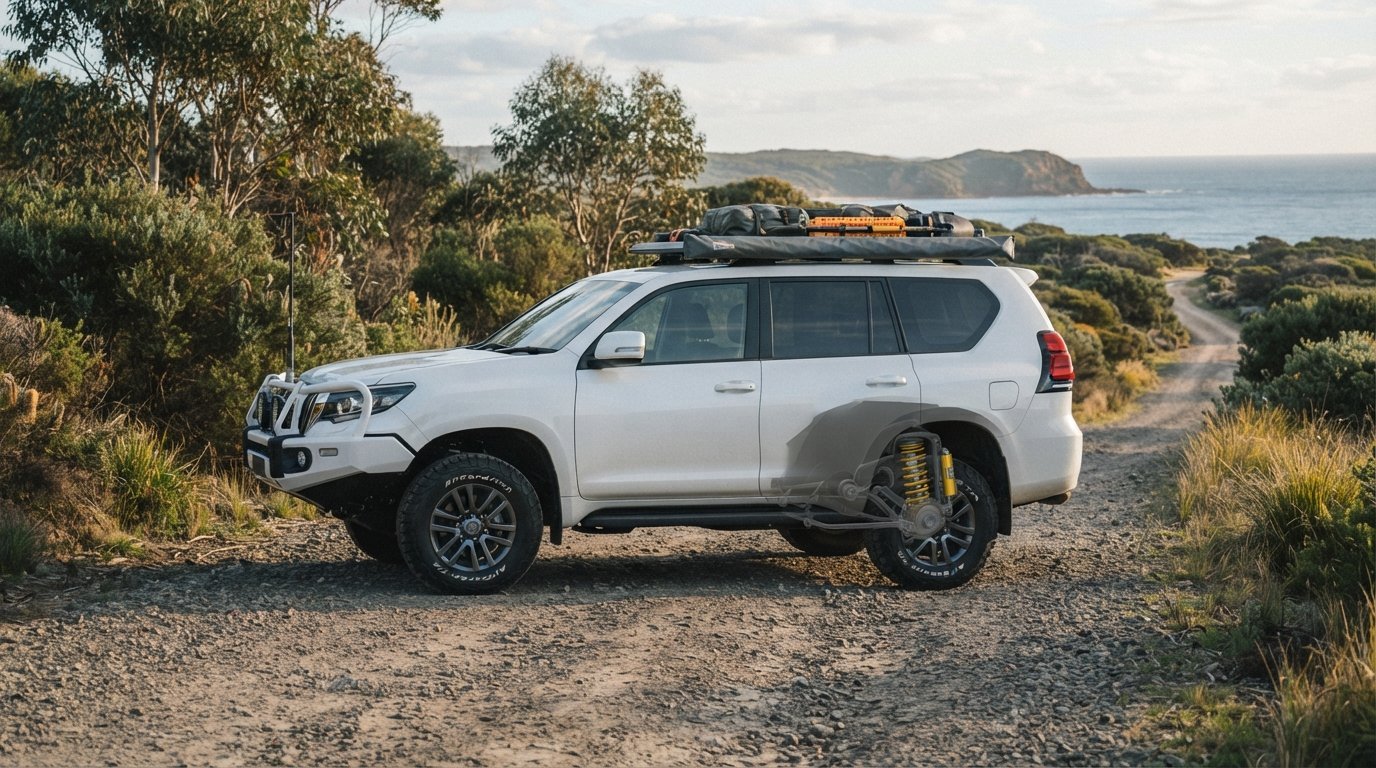
The biggest lift isn’t automatically the best Prado upgrade. For a Prado suspension upgrade in Seaford, a 40-45mm lift is a common choice for adding clearance while aiming to retain factory-like ride quality and geometry; the right setup depends on your Prado’s accessories, load, towing needs and driving conditions. Prado 150 Series lift heights typically range from 40mm (2 inches) up to 50mm, with a 50mm lift potentially accommodating tyres up to 33 inches.
It’s natural to focus on ride height when you want more underbody clearance or room for larger tyres. But compatibility matters just as much: the lift must suit your Prado’s model, existing suspension and regular load, or the result may not match the way you drive.
This guide explains how to choose a lift height and suspension setup around your load, touring and towing needs, off-road priorities and vehicle compatibility. You’ll also learn what to consider after fitting, so the upgrade supports everyday driving as well as the tracks ahead.
Key Takeaways
- Choose lift height around your Prado’s load, towing needs and driving conditions; a taller lift isn’t automatically the better fit.
- A 40-45mm lift is a common balance for clearance and factory-like ride quality, while a 50mm lift may accommodate tyres up to 33 inches.
- Accessories, touring gear and tow ball weight affect how the suspension behaves, particularly at the rear.
- Account for suspension geometry and component compatibility when changing ride height or fitting larger tyres.
- Plan a full four-wheel alignment after fitting suspension components or a lift kit.
What lift height should I choose for my Toyota Prado 150 Series?
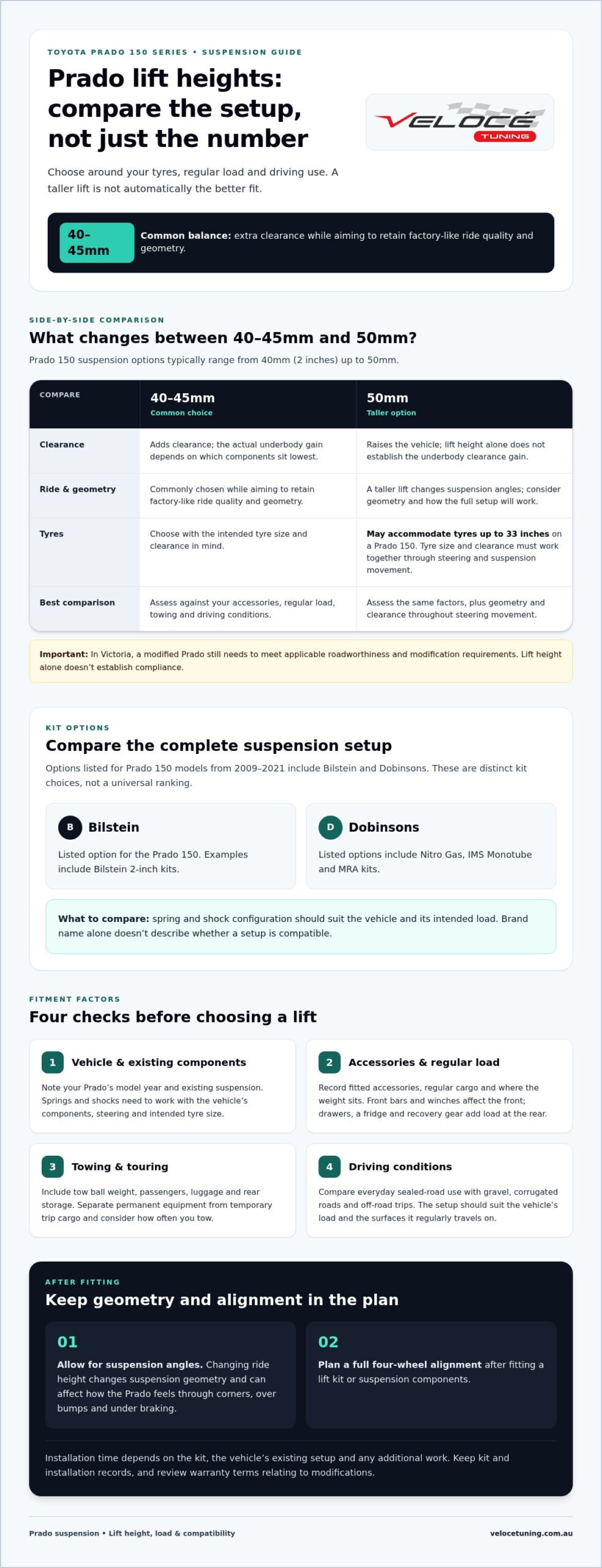
For a Prado 150, choose lift height around your tyres, load and driving use. A 40-45mm lift is a common balance between extra clearance and factory-like ride quality and geometry.
Prado lift-kit and brand options
Prado 150 suspension options cover model years 2009-2021 and typically range from 40mm (2 inches) up to 50mm. Bilstein and Dobinsons are listed options for this model; examples include Bilstein 2-inch kits and Dobinsons Nitro Gas, IMS Monotube and MRA kits. Compare the complete setup, not just the brand name: spring and shock configuration should suit the vehicle and intended load. These are distinct kit choices, not a universal ranking.
Lift height and vehicle clearance
A lift raises the vehicle body and can improve ground clearance, but the gain at the underbody depends on which components sit lowest. A 40-45mm setup is commonly chosen for added clearance while aiming to retain factory-like geometry. A 50mm lift may accommodate tyres up to 33 inches on a Prado 150, but tyre size and clearance must work together through steering and suspension movement. In Victoria, a modified Prado still needs to meet applicable roadworthiness and modification requirements; lift height alone doesn’t establish compliance.
Suspension geometry and handling
Changing ride height also changes suspension angles, so a taller lift is not simply a clearance upgrade. Consider how the springs and shocks will work with your Prado’s existing components, steering and intended tyre size. After fitting a lift kit or suspension components, a full four-wheel alignment is recommended. Installation time depends on the kit, the vehicle’s existing setup and any additional work, so lift height alone does not determine how long the job takes.
Effects on braking, towing and warranty
Suspension changes can affect how a Prado feels through corners, over bumps and under braking. Towing adds another factor: the trailer’s tow ball weight loads the rear, so account for your usual towing setup when selecting springs. Keep the kit and installation records, and review your vehicle’s warranty terms relating to modifications. Assess suspension changes as part of the complete vehicle, not as an isolated lift figure.
Before choosing, note your Prado’s model year, current accessories, regular cargo, towing use and planned tyres. Then compare 40-45mm and 50mm options against those requirements, including geometry and clearance through steering movement. The right setup is the one that suits your actual load and driving conditions, not simply the tallest option. This step-by-step comparison helps narrow the choices before selecting a kit for your Prado 150.
Matching suspension to vehicle load and use
A Prado’s suspension needs to support the weight it regularly carries, not just its stance when empty. Accessories, tow ball weight, luggage and rear storage systems all add load, often over the rear axle. Match the setup to those real demands, then consider how the vehicle drives on sealed roads, gravel and touring routes.
Start with a practical load inventory. Separate equipment that stays fitted from cargo added for trips, then note how often you tow. A bull bar, winch and driving lights affect the front; a drawer system, fridge, recovery gear and luggage add weight at the back. Tow ball weight adds further rear load. Where the weight sits matters because suspension responds to its distribution, not just the total amount of gear.
Match springs to regular accessories
Permanent accessories should guide spring selection. A Prado carrying a front bar and winch every day has different needs from one carrying only occasional touring luggage. Rear drawers and a fridge create a different load pattern from a roof rack. Note where each accessory sits and describe your usual loaded configuration, rather than choosing components around a rarely used maximum load.
Factor in towing and touring
For towing, include the trailer’s tow ball weight alongside passengers, luggage and rear storage. A Prado that feels settled when unladen may sit differently when loaded for a trip. Touring gear may also stay aboard between journeys, so distinguish permanent equipment from temporary cargo. This helps avoid choosing a setup that suits an empty driveway inspection but not the vehicle’s regular working weight.
Use this simple preparation before choosing suspension:
- Record fitted accessories at the front, rear and roof.
- List regular cargo, including drawers, a fridge and recovery equipment.
- Describe your usual towing arrangement and when the Prado carries touring loads.
- Compare the loaded and lightly loaded driving you actually do.
How you drive shapes the balance. A Prado used mainly on sealed roads needs composed everyday ride behaviour, while frequent gravel or corrugated-road travel calls for a setup suited to changing surfaces. Off-road trips add another consideration: suspension must work with the vehicle’s load and terrain, not just provide a higher stance. A well-matched setup can support comfort on sealed roads and control when surfaces change.
Reassess newer Prado setups
On the Prado 250, accessories, a lift, bigger tyres and touring loads can push the factory setup towards its limits. Consider those changes as a combined package. A suspension and lift kit setup should account for the accessories and tyres together, rather than treating each upgrade as an isolated decision. This is where Prado suspension and lift kits fit into planning the vehicle around its intended load and use.
Finally, compare the planned setup with the Prado’s permitted payload and the manufacturer’s guidance. Keep a written record of fitted accessories and typical trip cargo to make future changes easier to assess. If the load changes, for example, by adding rear storage or towing regularly, revisit whether the suspension still suits the vehicle’s everyday balance.
Off-road handling and durability
On Australian tracks, a Prado’s suspension has to manage uneven ground, changing loads and tyre clearance together. A lift kit can improve ground clearance and make room for larger tyres, including on the Prado 250. But ride height alone doesn’t determine off-road control. Spring and damper behaviour, suspension geometry and the vehicle’s fitted accessories all shape how it responds when a wheel crosses a rut or rocky rise.
Think first about the terrain you drive regularly. A Prado used on maintained gravel roads has different needs from one tackling ruts, rocky tracks or uneven touring routes. In every case, consider how the suspension will work with the vehicle’s usual load. Accessories and touring gear affect weight, while a lift and larger tyres can change suspension geometry. Treat these choices as one setup, not separate upgrades.
More clearance can help reduce contact between the vehicle’s underbody and obstacles, while larger tyres may need extra room around the guards. Check clearance through steering and suspension movement, not just while the Prado is parked. A tyre that appears to fit at rest still needs room as the steering turns and suspension compresses. Tyre size, lift height and vehicle configuration all matter.
Geometry deserves attention after a lift or tyre change. On a Toyota Prado, factory upper control arms can reach their limits after lifting or fitting larger tyres, affecting alignment and suspension travel. This can influence how the wheels meet the ground as the suspension moves over uneven terrain. A full four-wheel alignment after suspension or lift-kit work helps set the wheels correctly for the modified setup.
For a Prado 250, assess mounting points as part of the wider suspension package. A coil brace kit can reinforce coil spring mounting points and help distribute suspension loads more evenly. It’s one component, not a substitute for matching the suspension to the vehicle’s accessories, lift and intended terrain. Consider the complete system before adding parts individually.
- List the Prado’s fitted accessories and regular touring equipment.
- Describe the terrain you drive, such as gravel, ruts or rocky tracks.
- Check tyre clearance through steering and suspension movement.
- Include upper control arms, alignment and spring mounting points in the upgrade plan.
After fitting, notice any changes in steering feel, tyre contact and suspension movement on familiar roads and tracks. Uneven tyre wear or a new pull through the steering can signal that alignment needs attention. A measured approach helps balance clearance, geometry and component durability, rather than pursuing maximum lift without considering the Prado’s complete off-road setup.
Prado suspension compatibility
Before booking a Prado suspension upgrade in Seaford, identify your Prado’s series, model year, current suspension, accessories and intended load. Match the kit to that exact configuration, then account for tyre size, lift height and alignment requirements.
Compatibility starts with the vehicle, not the kit description. The Prado 150 Series suspension and lift-kit range covers model years 2009-2021. Dobinsons front coil springs are listed for Toyota Prado 150 Series models from 2010-2024. Those year ranges differ, so use the vehicle’s exact model details when assessing fitment.
Check the compliance plate or vehicle documents for the model year, then record the Prado series and variant. Also note whether its suspension remains standard or already includes replacement springs, shocks or a lift. A kit intended for one configuration may not suit another, even when both vehicles are Prado 150s.
Next, list changes that affect the suspension package. A bull bar, winch, rear drawers, auxiliary battery or larger tyres can alter load and clearance needs. Include towing and touring equipment, too. For example, a Prado carrying permanent rear storage needs a different load assessment from one used mostly unladen.
Consider tyres and ride height together. A lift can change suspension geometry, while larger tyres need clearance through steering and suspension movement. Assess the complete setup rather than relying on the visible gap when the vehicle is parked. After fitting a lift kit or suspension components, a full four-wheel alignment is recommended.
Before booking, prepare these details for a clear compatibility assessment:
- Vehicle identification: Prado series, model year and variant.
- Existing setup: standard or modified suspension, current lift and tyre size.
- Added weight: fitted accessories, regular cargo and towing use.
- Driving needs: sealed-road use, touring, off-road conditions or a mix.
Share these details together rather than selecting springs based on lift height alone. They help establish whether the proposed front and rear components suit the vehicle’s usual load and intended use. If the Prado already has modifications, include their specifications, as existing parts can affect fitment, geometry and alignment requirements.
For a Prado 150, verify that the kit’s stated model-year coverage matches the vehicle, then compare the component application with its existing suspension. A Dobinsons front coil spring listing covering 2010-2024 does not mean every Prado configuration within those years uses the same setup. Confirming series, variant and load helps avoid treating a broad year range as a guaranteed fit.
Finally, discuss how the upgrade will work as a complete system: springs, shocks, tyres, accessories and alignment. This compatibility check is especially useful before changing several components at once. It keeps the setup focused on your Prado’s actual configuration rather than a generic lift-kit description.
Which Seaford workshops specialise in Toyota Prado suspension upgrades?
For a Toyota Prado in Seaford, choose a workshop that treats suspension as a vehicle-specific setup, not a universal lift. A useful assessment accounts for your Prado’s series, model year, accessories, regular load, tyre plans and driving conditions. These details help determine whether the recommended kit suits your vehicle and intended use.
Gather the details needed for a compatibility assessment: your Prado’s model year and series, current suspension, fitted accessories and tyre size. Add your regular cargo and towing use. For example, a Prado with rear drawers and a touring load needs a different assessment from one carrying little equipment. A clear brief makes the discussion more useful.
Ask how the proposed setup addresses the complete vehicle. A lift can affect suspension geometry, and larger tyres can change clearance needs. The plan should account for springs, shocks, existing components and alignment, rather than focusing on ride height alone. After fitting suspension components or a lift kit, a full four-wheel alignment is recommended.
Compare workshop recommendations by the reasoning behind them, not by lift height alone. A 40-45mm lift is commonly selected to add clearance while aiming to retain factory-like ride quality and geometry. A 50mm lift may accommodate tyres up to 33 inches on a Prado 150 Series. Those figures are starting points, not a substitute for matching the setup to your vehicle.
Before settling on a suspension plan, make sure the discussion covers:
- Your Prado’s exact series, model year and existing suspension.
- Accessories, towing needs and the load carried over each axle.
- Tyre size, clearance and changes to suspension geometry.
- Alignment after installation and how the setup suits your driving.
A specialist discussion should link each recommendation to one of those factors. If you mainly drive on sealed roads, explain that; if you regularly tour on gravel or tackle rough tracks, describe those conditions. Your intended use helps shape the balance between everyday comfort, load support and off-road clearance.
For Prado 150 Series vehicles, model-year fitment deserves particular attention. The suspension and lift-kit range described for this series covers 2009-2021, while Dobinsons front coil springs are listed for Prado 150 models from 2010-2024. These ranges differ, so match parts to the specific vehicle rather than assuming every year uses identical components.
Take your vehicle details and load list into the discussion, then compare the proposed components against your priorities. To discuss a setup for your Prado, get started with your suspension upgrade.
Veloce Tuning: Log Book Servicing
Veloce Tuning is a local option for a Prado suspension setup matched to its load, touring plans or off-road use. Its Suspension and Lift Kits service supports vehicle-specific upgrades, while Log Book Servicing helps keep routine maintenance on track.
Before discussing the setup, outline your Prado’s model, existing suspension, fitted accessories, usual cargo and towing needs. Include how you drive, from sealed-road commuting to touring or off-road trips. These details give the suspension discussion a practical starting point. For business vehicles, Fleet Vehicle Management can support ongoing vehicle needs; Custom ECU Tuning is a separate option for drivers considering engine performance changes.
To discuss your Prado’s suspension needs, contact Veloce Tuning or visit velocetuning.com.au.
Set your Prado up for the journeys ahead
The right suspension choice continues to suit your Prado as your driving plans evolve. A new touring setup, regular towing or added accessories can change how you use the vehicle, so revisit your priorities before the next upgrade. Keep a clear note of the equipment you carry and the roads you travel; that context helps make future decisions more deliberate.
For a Prado suspension upgrade in Seaford, Veloce Tuning offers Suspension and Lift Kits, along with Log Book Servicing and Fleet Vehicle Management. Whether you’re planning a change now or mapping out your vehicle’s next stage, start with how you use your Prado and what you want the upgrade to achieve.
Contact Veloce Tuning about your Prado and take the next step towards a setup built around your driving needs.
Frequently Asked Questions
Which Toyota Prado models and years can be fitted with a suspension upgrade in Seaford, Victoria?
Prado 150 Series suspension and lift-kit options cover model years 2009-2021; fitment depends on the exact vehicle configuration. A Dobinsons front coil spring listing covers Prado 150 models from 2010-2024, so check the series, year and variant together rather than relying on the model name alone. For a Prado suspension upgrade in Seaford, have your vehicle details and any existing modifications ready when discussing suitability.
What suspension upgrade options are available for a Toyota Prado, including lift kits and touring setups?
Options include replacement springs and shock absorbers, lift kits, and setups matched to touring equipment and regular loads. Bilstein and Dobinsons are examples of brands listed for Prado 150 applications, with different kit configurations available. For a touring Prado, consider how the suspension will work with accessories, cargo and towing, rather than choosing components by brand alone. The right combination depends on the vehicle’s model and how it’s used.
What lift heights and spring rates are suitable for a Prado with a bull bar, roof rack or camper load?
A 40-45mm lift is a common Prado 150 choice; a 50mm lift may accommodate tyres up to 33 inches. Spring rate should suit the weight and position of permanent accessories: a bull bar loads the front, while roof equipment or a camper setup changes the vehicle’s overall load. Share the fitted gear and typical trip cargo when comparing options, so the setup reflects the Prado’s real use.
Which Prado suspension brands are available locally, and how do they compare?
Bilstein and Dobinsons are listed options for the Prado 150, including Bilstein 2-inch kits and Dobinsons Nitro Gas, IMS Monotube and MRA kits. They are distinct choices, not a universal ranking; compare spring and shock configuration against your Prado’s load and intended use.