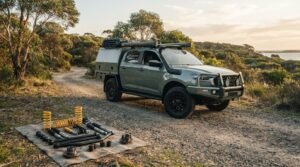

What if more lift isn’t the answer to better off-road handling? If your 4WD leans through corners under load, feels unsettled while towing or scrapes its underbody on rough tracks, a 4WD suspension upgrade Melbourne drivers choose should do more than raise ride height. The springs and dampers need to suit the vehicle’s weight, accessories and intended use.
It’s possible to gain useful ground clearance without turning your daily drive into a bone-shaking slog. A well-matched suspension setup can help your 4WD feel more composed on corrugations, carry touring gear with better control and handle varied terrain more predictably.
This guide explains what to consider when choosing a setup, from load and damping to clearance and GVM. Veloce Tuning installs suspension and lift kits in Carrum Downs, serving drivers across Frankston, Patterson Lakes, Mornington, Skye, Seaford and Sandhurst. The workshop also provides 24/7 breakdown service for mechanical emergencies.
Key Takeaways
- A 4WD suspension upgrade Melbourne drivers choose should match the vehicle’s weight and intended use, not focus on height alone.
- Spring rates and shock absorber damping affect ride control, especially when carrying touring gear or travelling over corrugations.
- Suspension setup can be planned alongside custom ECU tuning and other modifications, while each system performs its own role.
- Consider the terrain you drive, from rocky climbs to long, corrugated roads, before choosing suspension components.
- Suspension upgrades, log book servicing and mechanical support all contribute to preparing a 4WD for touring.
Beyond the Lift: The Visceral Reward of a 4WD Suspension Upgrade in Melbourne
A taller 4WD can look ready for the bush, but ride height alone won’t stop it pitching, rolling or bouncing on rough ground. The real benefit of a well-matched suspension setup is control: the vehicle settles sooner after a bump, responds more predictably to steering and feels less unsettled when carrying touring gear. That matters on the weekday commute as much as it does on a rocky climb.
For Melbourne drivers, a 4WD suspension upgrade should work across different parts of the journey. On the Mornington Peninsula, composed suspension can help manage body movement through bends, particularly when the vehicle is loaded. On uneven tracks, effective damping helps the tyres follow the surface and can make the vehicle’s response more predictable. Suspension cannot remove every jolt or replace careful driving, but the right setup can help you stay in control.
The Sensory Shift in Off-Road Performance
When a tyre hits a sharp edge, a well-matched shock absorber controls how the suspension moves and settles. The aim is for the wheel to respond to the obstacle without the vehicle continuing to bounce afterwards. Damping is the control of suspension movement after a bump, helping manage the movement between the wheels and body. For a foundational overview, see how vehicle suspension systems use springs and dampers to manage movement between the wheels and body.
That control can be useful on corrugated roads, where repeated impacts may make a vehicle feel unsettled. A better-matched setup can help reduce the need for constant steering corrections, so the driver can focus on reading the surface and choosing a line. It won’t erase every bump, but it can make the vehicle’s response feel more settled and predictable.
Why Stock Suspension Faces the Australian Test
Factory suspension is calibrated around the vehicle’s standard configuration and intended use. Add a bull bar, winch, canopy or touring equipment, and the extra weight can compress the springs, change ride height and reduce available suspension travel. The result may be a harsher or less composed drive, even before the vehicle reaches a remote track.
On steep Victorian High Country terrain, limited travel and poor load support can increase the chance of bottoming out, when the suspension reaches the end of its movement. A hard impact can unsettle the vehicle and place extra strain on components. More lift alone isn’t a complete fix. The springs and shocks need to suit the added weight and the way you use the 4WD.
A well-matched setup is a useful foundation for other modifications because it helps the vehicle manage its load and respond predictably. Veloce Tuning installs suspension and lift kits in Carrum Downs, with the upgrade planned around the 4WD’s configuration and intended use. The goal isn’t simply a more aggressive stance. It’s a vehicle that feels more controlled through corners and over rough ground.
The Anatomy of Performance: Shocks, Springs, and GVM Upgrades
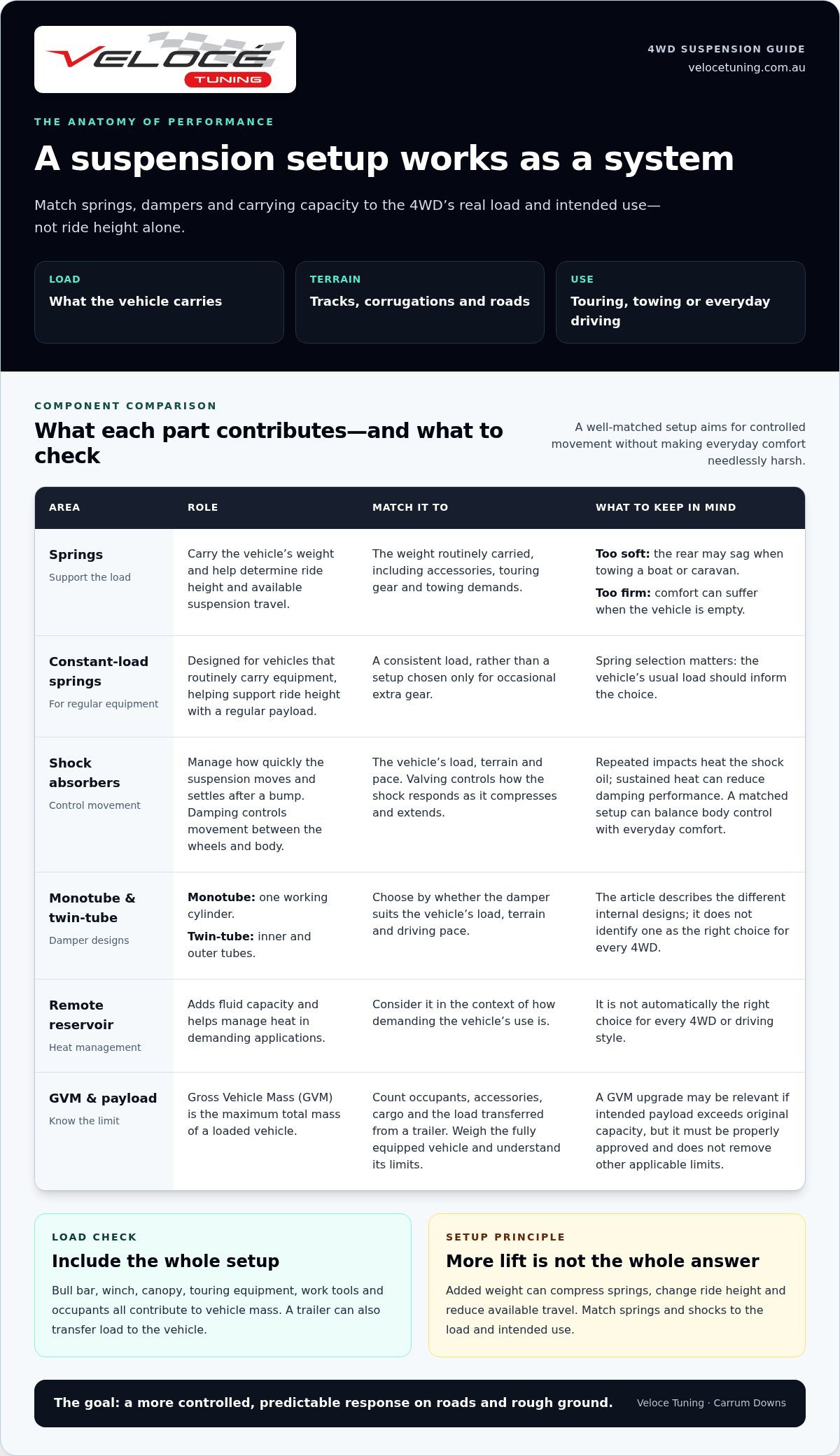
Every part of a suspension system has a job, and the components need to work together. Springs support the vehicle’s weight; shocks control how quickly the suspension moves and settles. Add touring gear, work tools or towing demands, and the original setup may no longer suit the load. For a 4WD suspension upgrade Melbourne drivers can rely on, start by accounting for what the vehicle actually carries, not by choosing the stiffest parts available.
Mastering the Physics of Load
Gross Vehicle Mass (GVM) is the maximum total mass of a loaded vehicle, including occupants, accessories and cargo. A tradie’s tools, bull bar and canopy all count, as does the load transferred to the vehicle by a trailer. Exceeding the applicable rating can affect safe handling and insurance cover, so weigh the fully equipped vehicle and understand its limits before adding more gear.
A GVM upgrade may be relevant when a vehicle’s intended payload exceeds its original capacity, but it must be properly approved for use. It isn’t a shortcut to unlimited carrying capacity: the vehicle remains subject to its upgraded rating and other applicable limits.
Springs, Bushings and Shackles Under Pressure
Constant-load springs are designed for vehicles that routinely carry equipment, helping support ride height with a regular payload. Correct spring selection matters. Springs that are too soft can allow the rear to sag when towing a boat or caravan, while an overly firm setup can compromise comfort when the vehicle is empty. Leaf springs, coils, bushings and shackles all contribute to how the suspension carries and responds to load. Worn or poorly matched connection components can introduce unwanted movement, so include them in a full inspection of the setup.
Shock Absorber Technology Unleashed
Monotube and twin-tube shocks manage suspension movement through different internal designs. Monotube units have a single working cylinder, while twin-tube designs use an inner and outer tube. On rough roads, repeated suspension movement heats the shock oil; sustained heat can reduce damping performance. A remote reservoir adds fluid capacity and helps manage heat in demanding applications, but it isn’t automatically the right choice for every 4WD or driving style.
Quality matters, but “cheap shocks always fail” is too simple. The more useful question is whether the damper suits the vehicle’s load, terrain and pace. Valving controls how the shock responds as it compresses and extends. A setup matched to the vehicle can balance body control with everyday comfort rather than making the ride needlessly harsh. For drivers looking into dedicated off-road damper servicing and custom valve tuning, specialists at dcshockservices.com highlight how rebuildable shocks can be tailored to specific driving conditions.
Veloce Tuning installs suspension and lift kits in Carrum Downs with the weight and performance demands of a modified 4WD in mind. Bushings and shackles should also be inspected for wear, as they connect suspension components and help manage movement under load. If you’re planning a build, explore Veloce Tuning’s suspension expertise as a starting point for matching the system to your vehicle’s use.
Lift Kits vs. Precision Tuning: Finding the Sweet Spot for Your Rig
A lift changes more than a vehicle’s stance. It affects how a 4WD carries weight, responds to steering and manages its centre of gravity, so chasing maximum height can leave you with a rig that feels unsettled on the road. A 2-inch lift is often treated as a practical option because it can provide extra clearance without automatically introducing the compromises of a much taller setup. There’s no one-size-fits-all answer, though. The right height depends on the vehicle, its load and the terrain it needs to handle.
When planning a 4WD suspension upgrade in Melbourne alongside other modifications, aim for balance: enough clearance and wheel travel for uneven ground, while retaining composed handling on everyday roads. Lift height alone won’t guarantee room for larger tyres or better articulation. The complete setup needs to work together.
The Performance Duel: Off-the-Shelf vs. Bespoke Engineering
A generic kit may suit a standard vehicle but overlook the weight of a bull bar, canopy, drawers or other modifications. That mismatch can affect ride height and comfort. Veloce Tuning plans suspension as part of the vehicle’s wider performance setup, taking its configuration and intended use into account rather than treating the lift as an isolated change.
If you’re also considering more engine response, custom ECU tuning can alter how power is delivered, but it doesn’t increase suspension grip or correct poor load balance. A composed setup can help the vehicle feel settled as you accelerate over changing surfaces. Braking still depends on the whole vehicle, including tyres, brakes, load and road conditions. Stable suspension is one part of maintaining control, not a substitute for sound brakes.
Too much lift can raise the centre of gravity and contribute to a “tippy” sensation, particularly through corners or when carrying a high load. Matching spring rates and dampers to the vehicle helps avoid treating height as the only measure of performance.
Tyre Clearance and Articulation
More clearance can help create space for larger tyres, but lift height alone doesn’t establish what will fit. Tyre diameter, wheel choice and suspension movement all affect clearance, including whether a tyre contacts the bodywork as the wheels turn or articulate. On rocky tracks, useful wheel travel helps keep tyres following uneven ground. A tall setup that restricts movement may look imposing without delivering the articulation you need.
Before choosing a lift or tyres, consider the complete combination: vehicle load, intended terrain, steering and suspension travel, and applicable Victorian requirements. Road legality depends on the modification as a whole, not simply whether a lift is described as two inches. A properly considered build can look purposeful without sacrificing predictable road manners. If you’re planning a balanced setup, explore Veloce Tuning’s 4WD suspension work as part of your rig’s broader performance plan.
Navigating the Victorian High Country: Customising for Local Tracks
Victoria’s terrain changes quickly. Rocky climbs around Mansfield and Bright call for steady traction and suspension control, while corrugations on long touring routes towards the Murray River test a vehicle over repeated impacts. A setup suited to one surface may feel less composed on another. Plan a 4WD suspension upgrade around the trips you actually take and the load you carry there and back.
On steep, uneven climbs, predictable wheel movement can help tyres stay in contact with the ground as the vehicle moves over rocks. Corrugated roads call for suspension that remains controlled through repeated movement, rather than continuing to bounce after each ridge. Neither extra lift nor a particular shock type makes a track safe by itself. Tyre condition, driving technique, vehicle load and track conditions all matter.
Terrain-Specific Tuning Profiles
Soft sand around Gunnamatta calls for smooth, measured driving and a setup that remains composed over undulating ground. Rocky sections demand controlled compression over an obstacle and rebound afterwards, so the vehicle settles rather than lurching. These are different demands, which is why suspension choices should reflect your regular terrain, not just the most dramatic weekend destination.
After a suspension modification, arrange a wheel alignment. Changes to ride height can affect steering geometry and tyre wear.
Prepare for Water, Mud and Changing Conditions
Gippsland winter tracks can bring mud and water, but a high-clearance suspension setup doesn’t make a crossing safe or protect every drivetrain component. Breather extensions are a separate preparation consideration for water exposure, while suitable clearance can reduce the chance of the vehicle contacting the ground. Assess conditions before entering water, and don’t attempt a crossing if you can’t judge its depth or current safely.
High Country access can also change with the season. Many tracks are subject to winter closures, typically from around the Queen’s Birthday weekend in June until the end of November. Check Parks Victoria’s current track status before setting out, and factor recent weather into your route planning.
One 4WD, Two Very Different Jobs
The same rig may crawl along a remote track on Saturday and merge into traffic on the Nepean Highway on Monday. A build that’s too firm, too tall or poorly matched to its load can make the weekday drive tiring. A balanced setup considers both clearance and off-road control and the handling needed for everyday driving. Veloce Tuning is based in Carrum Downs and serves drivers in Frankston, Patterson Lakes, Mornington, Skye, Seaford and Sandhurst.
Whether your priority is sand, rocky climbs or touring corrugations, match the suspension to the trip rather than chasing height for its own sake. Explore 4×4 lift kits and suspension in Melbourne for more on building a setup around your vehicle. For an upgrade shaped around your driving, talk with Veloce Tuning.
The Veloce Standard: Bespoke 4×4 Engineering in Carrum Downs
A suspension upgrade should do more than change how your 4WD looks. It needs to suit the vehicle’s weight, how you drive and what you expect it to carry, while working with other modifications. At Veloce Tuning in Carrum Downs, suspension and lift kit installations are part of a broader performance approach that includes technical mechanical work and custom tuning. The aim is a considered setup, not just a collection of bolt-on parts.
Start by thinking about how you use the vehicle. A work 4WD carrying tools has different demands from a tourer towing a caravan or a weekend rig loaded for remote tracks. Sharing those details helps shape a setup around real driving conditions, rather than a generic idea of what an off-road vehicle should be. Careful installation and attention to the components that work together are also important.
The Total Performance Ecosystem
Suspension is one part of a vehicle’s overall performance. Added power changes how a 4WD accelerates; extra weight and towing place demands on how it handles and stops. Consider suspension choices alongside engine tuning and brake upgrades. Each system has its own role, and a well-planned build accounts for their combined effect without relying on one modification to compensate for another.
Ongoing maintenance matters too. Log book servicing helps keep scheduled maintenance documented as your vehicle evolves. Following the manufacturer’s service requirements is important for vehicle care, though warranty terms depend on the vehicle and the work performed. Professional installation and servicing provide a clearer record of the vehicle’s upkeep, not a blanket warranty promise.
Built for the Journey Ahead
Confidence matters when a track is remote and help may be far away. Veloce Tuning provides 24/7 breakdown service for mechanical emergencies, offering support when an unexpected issue interrupts a trip. Include breakdown planning alongside sensible route preparation and regular checks before departure.
To plan an upgrade, bring together the details that shape the setup: your 4WD’s accessories, the weight it carries, how often it tows and the roads or tracks you have in mind. These priorities help determine the right direction for suspension and how it fits with other performance plans. Visit the Carrum Downs workshop to discuss your build with the team.
If you’re ready to improve your rig’s composure on the commute and beyond the bitumen, visit Veloce Tuning in Carrum Downs to plan a 4WD suspension upgrade for your next adventure.
Make Your Next Track Feel Within Reach
Your next upgrade is a chance to shape how your 4WD feels every time you drive it, from the first corner on the school run to the point where the bitumen ends. Look beyond appearance: choose a setup that reflects how you load your vehicle, where you travel and what you want from it. That’s the thinking behind a considered 4WD suspension upgrade Melbourne drivers can tailor to their adventures.
Start with clear priorities. A vehicle prepared for touring, towing or more demanding tracks has different requirements, and understanding those needs helps give the build purpose. With careful planning and attention to detail, your 4WD can feel more composed and ready for the journey ahead.
Plan your 4WD suspension upgrade with Veloce Tuning in Carrum Downs. Share how you use your vehicle and start shaping a setup around the way you drive.
Frequently Asked Questions
How much does a 4WD suspension upgrade cost in Melbourne?
The cost of a 4WD suspension upgrade depends on the vehicle, the components required and how the setup needs to suit your load and driving. A basic lift and a touring build with additional suspension components are different jobs, so one figure wouldn’t reflect every vehicle. Veloce Tuning tailors suspension installations for drivers in Carrum Downs, Frankston, Patterson Lakes, Mornington, Skye, Seaford and Sandhurst.
Will a suspension lift kit void my new car warranty?
A lift kit doesn’t automatically mean every part of a new car warranty is void, but a modification may affect warranty consideration if a fault is linked to the work or parts fitted. Outcomes depend on the vehicle’s warranty terms and the circumstances. Keep records of the installation and continue scheduled maintenance. Veloce Tuning provides log book servicing to help maintain a documented service history while your 4WD is modified.
What is the difference between a lift kit and a GVM upgrade?
A lift kit changes the suspension and ride height; a GVM upgrade concerns the vehicle’s permitted maximum loaded mass. They address different needs. If you’re adding accessories or carrying tools and touring gear, weigh the fully loaded 4WD, including occupants and cargo, to understand how it sits against its ratings. Don’t assume extra ride height increases carrying capacity. Suspension should suit the vehicle’s load as well as its clearance requirements.
Do I really need a 2-inch lift for the Victorian High Country?
No, a 2-inch lift isn’t essential for every High Country trip. The useful setup depends on your vehicle’s existing clearance, tyres, accessories, load and the tracks you plan to drive. Your needs on formed roads may differ from those of a heavily loaded 4WD tackling uneven sections. Consider the complete vehicle and check current track access information before travelling, rather than treating a particular lift height as a guarantee of capability.
How long does it take to install a 4×4 suspension upgrade?
Installation time varies with the vehicle and the work involved, so there isn’t one reliable timeframe for every upgrade. A straightforward suspension change differs from a build that also needs worn components addressed, additional modifications or follow-up checks. Vehicle condition and the specific parts being installed can affect the job. Planning around the complete scope helps avoid treating a complex setup as a simple parts swap.
Can Veloce Tuning help if my modified 4WD breaks down in the bush?
Yes. Veloce Tuning provides 24/7 breakdown service for mechanical emergencies, including when a modified 4WD develops a problem during a trip. If you’re stranded, share your location and describe what has happened so the issue can be understood. For remote travel, prepare before departure with a charged phone, a route plan and a way to communicate, as reception and track access can vary.
Should I upgrade my brakes when I install a lift kit and bigger tyres?
Not automatically, but it’s sensible to assess the braking system as part of the overall modification plan. Larger tyres, added accessories, passengers and towing can change the demands placed on a vehicle, while a lift alone doesn’t determine whether a brake upgrade is needed. Consider the brakes and tyres alongside the 4WD’s actual loaded use. Veloce Tuning also installs brake upgrades, making braking a relevant part of a broader build discussion.
What is the best suspension for towing a heavy caravan?
The best suspension is matched to the specific 4WD, its permanent accessories and the load it carries while towing, rather than chosen by brand or lift height alone. Include passengers, gear and towball load when assessing how the vehicle sits and handles. Springs suited to a regularly loaded tourer may feel unnecessarily firm when unloaded, so be clear about both towing and everyday use. A setup tailored to those demands can support more predictable handling.