What if the 60,000-kilometre service interval in your manual is actually a countdown to a catastrophic mechatronic failure? You know that sharp, visceral snap of a perfect upshift, the way your car lunges forward with surgical precision when you find the apex. But when that crispness fades into a low-speed shudder or a hesitant crawl, the fear of an expensive repair becomes a heavy weight. We know the frustration of conflicting advice, especially when you just want to preserve your high-octane driving experience. Understanding exactly how often should DSG fluid be changed is the difference between a high-performance machine and a very expensive mechanical failure. This guide cuts through the noise to reveal the technical necessity of timely fluid changes for your specific gearbox. We will explore why the harsh Australian climate demands more than the factory minimum, the critical differences between wet and dry clutch systems, and how to keep your gear transitions silky smooth. Your drivetrain deserves more than just survival. It’s time for a pulse check.
Key Takeaways
- Learn why the standard manufacturer interval of 60,000 kilometres often falls short for performance vehicles pushed to their limits in the harsh Australian climate.
- Discover exactly how often should DSG fluid be changed to prevent the dreaded “DSG shudder” and protect your expensive mechatronic unit from premature failure.
- Identify the subtle red flags of fluid degradation, ranging from hesitant low-speed engagement to clunky downshifts that disrupt your driving rhythm.
- Understand the technical necessity of a professional “level-set” procedure, where fluid temperatures must be precisely managed between 35°C and 45°C for a perfect fill.
- See how specialised DSG servicing at Veloce Tuning preserves the surgical accuracy and high-octane response of your European machine.
The Lifeblood of Your Performance Machine: Understanding DSG Fluid
Imagine the instantaneous, neck-snapping torque of a perfect upshift as you merge onto the Monash. That seamless transition isn’t just mechanical luck; it’s the result of sophisticated Direct-Shift Gearbox (DSG) technology working in millisecond increments. At the centre of this engineering marvel is the DSG fluid. It isn’t just a simple oil. It’s a high-performance cocktail that serves as both a lubricant for heavy-duty gears and a hydraulic medium for the mechatronic brain. Without it, the system is just a collection of dormant metal. Clean fluid is the only thing standing between a visceral driving experience and a $5,000 repair bill for a failed mechatronic unit.
The Dual Role: Lubrication vs. Hydraulic Control
In a standard automatic, fluid mostly provides lubrication. In a DSG, it acts as the primary actuator, allowing the mechatronic unit to engage clutches with surgical precision. This fluid manages the immense heat generated during rapid-fire gear changes, especially in the stop-start grind of Melbourne traffic where the clutch packs are constantly slipping to maintain smooth motion. DSG fluid is the connective tissue of the entire dual-clutch system. It provides the hydraulic pressure needed to swap gears faster than a human hand ever could, while simultaneously cooling the internal components to prevent thermal breakdown. When people ask how often should DSG fluid be changed, they are really asking how long they can maintain this delicate balance of pressure and temperature.
Why “Lifetime Fluid” is a Myth in High-Performance Driving
Some manufacturers claim these units are sealed for life, but for a performance enthusiast, that’s a dangerous fairy tale. Australian conditions are brutal. Our ambient temperatures and aggressive driving styles cause friction material from the clutch packs to shed into the fluid over time. This microscopic debris acts like sandpaper, scouring the delicate solenoids of the mechatronic unit. While a standard commuter gearbox might survive on old oil, a performance-tuned machine demands more. If you’ve ever wondered how often should DSG fluid be changed, the answer lies in the health of your drivetrain. Degraded fluid loses its viscosity, leading to sluggish shifts and internal wear that eventually turns a performance machine into a mechanical liability. It’s about protecting the heart of your car’s power delivery.
The Golden Interval: When to Change Your DSG Fluid in Australia
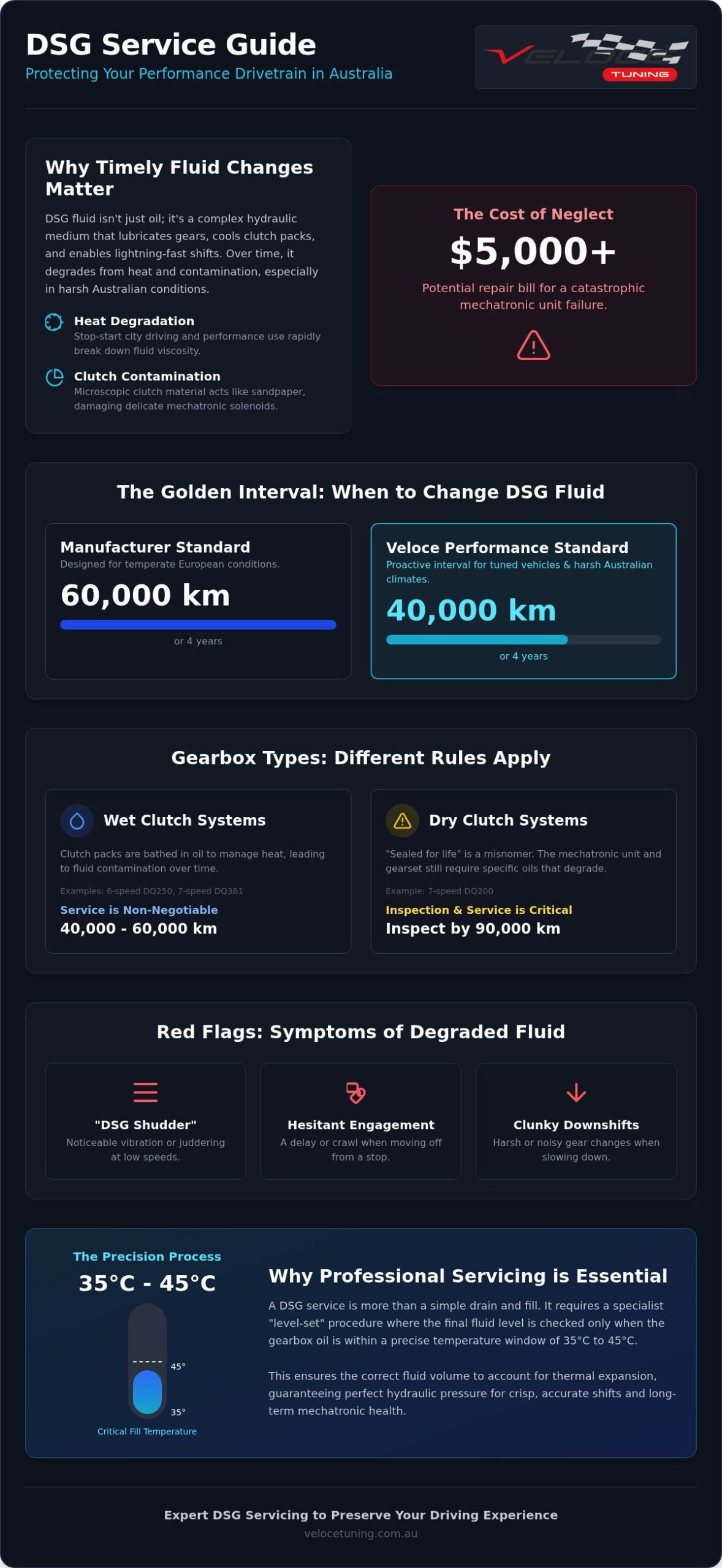
While your factory manual might suggest a baseline of 60,000 kilometres or four years, that figure is often a compromise designed for temperate European motorways, not the punishing reality of Australian roads. In our climate, we operate under what engineers call “Severe Service” conditions. The relentless stop-start crawl of Melbourne’s morning peak, heavy towing on the weekend, or a spirited blast through the undulating bends of the Mornington Peninsula all place immense thermal stress on your drivetrain. At Veloce Tuning, we advocate for a more precise 40,000-kilometre interval for vehicles that are tuned or driven with intent. This proactive “Veloce Standard” ensures that the chemical additives responsible for clutch engagement haven’t succumbed to oxidation or thermal breakdown.
Time is just as critical as distance. Even if your performance machine spends most of its life in a climate-controlled garage, the fluid inside the gearbox is constantly reacting with oxygen. Over four years, this chemical oxidation reduces the fluid’s ability to protect the delicate mechatronic solenoids. When you consider how often should DSG fluid be changed, you must look beyond the odometer. If your car has reached the four-year mark, the fluid has already begun to lose its vital properties, regardless of the low mileage on the clock. Fresh fluid is cheap insurance against a total mechatronic collapse.
Wet Clutch vs. Dry Clutch: Different Rules Apply
The architecture of your gearbox dictates its hunger for fresh fluid. Wet-clutch systems, such as the 6-speed DQ250 or the modern 7-speed DQ381, bathe their clutch packs in oil to manage heat and friction. This means they are constantly shedding microscopic clutch material into the fluid, making a strict 40,000 to 60,000-kilometre service non-negotiable. These robust gearboxes are also the reason why VW vans are so popular for conversions; for those interested in seeing these drivetrains in a different context, you can check out Route 300 Campers to see how they power premium campervan builds. Conversely, the DQ200 7-speed dry-clutch unit is often marketed as “sealed for life.” This is a dangerous misnomer. While the clutches themselves are dry, the gearset and mechatronic control unit still rely on specific oils that should be inspected and ideally replaced by the 90,000-kilometre mark to prevent the dreaded mechatronic failure that plagues neglected units.
Custom software changes the mechanical math of your drivetrain. When you invest in ECU tuning for fuel economy Melbourne or a high-stage power upgrade, you are asking your gearbox to manage increased torque and sharper shift points. This extra performance generates significantly more heat within the clutch packs. A tuned car works harder, which means the fluid shears down faster. For any modified vehicle, the question of how often should DSG fluid be changed has a simple answer: sooner rather than later. Maintaining a 40,000-kilometre service rhythm is the only way to ensure your tuned machine continues to deliver that visceral, lightning-fast response. If you are pushing your car to its limits, a quick professional assessment of your fluid health is the best way to safeguard your investment.
Red Flags: Symptoms of Degraded DSG Fluid and Impending Failure
The first sign of trouble is rarely a loud bang. It’s usually a subtle, unsettling hesitation as you pull away from a red light. This “DSG Shudder” feels like the car is tripping over its own feet, a rhythmic vibration that signals the clutch packs are struggling to find purchase. While some online forums might claim your clutches are terminal, this is often just the sound of degraded fluid failing to provide the necessary friction. If you find yourself questioning how often should DSG fluid be changed, your car might already be whispering the answer through these mechanical glitches.
Beyond the shudder, keep a sharp ear out for “clunky” downshifts. As you slow down for a suburban roundabout, a healthy DSG should blip the throttle and slide into gear with surgical silence. Degraded fluid leads to jarring transitions and delayed engagement. You might shift into Drive or Reverse and wait a beat too long before the drivetrain bites. In extreme cases, you may experience a “False Neutral,” where the gearbox momentarily loses drive altogether, leaving you stranded in the middle of an intersection. This is often accompanied by an audible whining or increased mechanical noise, a clear cry for help as internal lubrication breaks down.
The Mechatronic Warning: When Electronics Fight Physics
Inside the mechatronic unit, tiny solenoids act as gatekeepers for hydraulic pressure. When old fluid carries microscopic debris from worn clutch material, these gates become clogged and sluggish. This electronic struggle often manifests as the “Prndl” lights flashing on your dashboard. This isn’t just a minor glitch. It’s a critical warning that your transmission is entering a protective limp mode. Catching this early is the difference between a simple fluid service and a full DSG mechatronic repair Melbourne specialists provide as a final recovery effort.
Performance Loss: The Subtle Fade of Precision
For the enthusiast, the most painful symptom is the loss of that “snappy” gear change. Over time, heat thins the fluid and breaks down its hydraulic integrity, leading to slower response times and a disconnected feeling between your right foot and the road. You lose the visceral, high-octane punch that defines the dual-clutch experience. Deciding how often should DSG fluid be changed is ultimately about maintaining that factory-fresh agility. Fresh fluid restores this connection, ensuring every shift is delivered with the speed and accuracy your performance machine was designed to provide. Don’t wait for a total failure to reclaim your driving rhythm.
The Veloce Precision Process: Why Professional DSG Servicing Beats the DIY
While some driveway enthusiasts might advocate for a “measure-in, measure-out” approach, the reality of modern dual-clutch engineering demands far more than a simple socket set and a funnel. Precision is the pulse of performance. Attempting a DIY swap without specialised diagnostic tools is a gamble with your drivetrain’s life. The critical factor often ignored in home garages is the “Level-Set” procedure. DSG fluid expands significantly as it heats up, meaning the volume changes based on temperature. To achieve surgical accuracy, the fluid level must be set while the internal temperature is strictly between 35°C and 45°C. If you are outside this window, you risk an under-filled or over-filled gearbox, both of which lead to erratic shifting and accelerated wear. When considering how often should DSG fluid be changed, you must also consider how correctly it is being replaced.
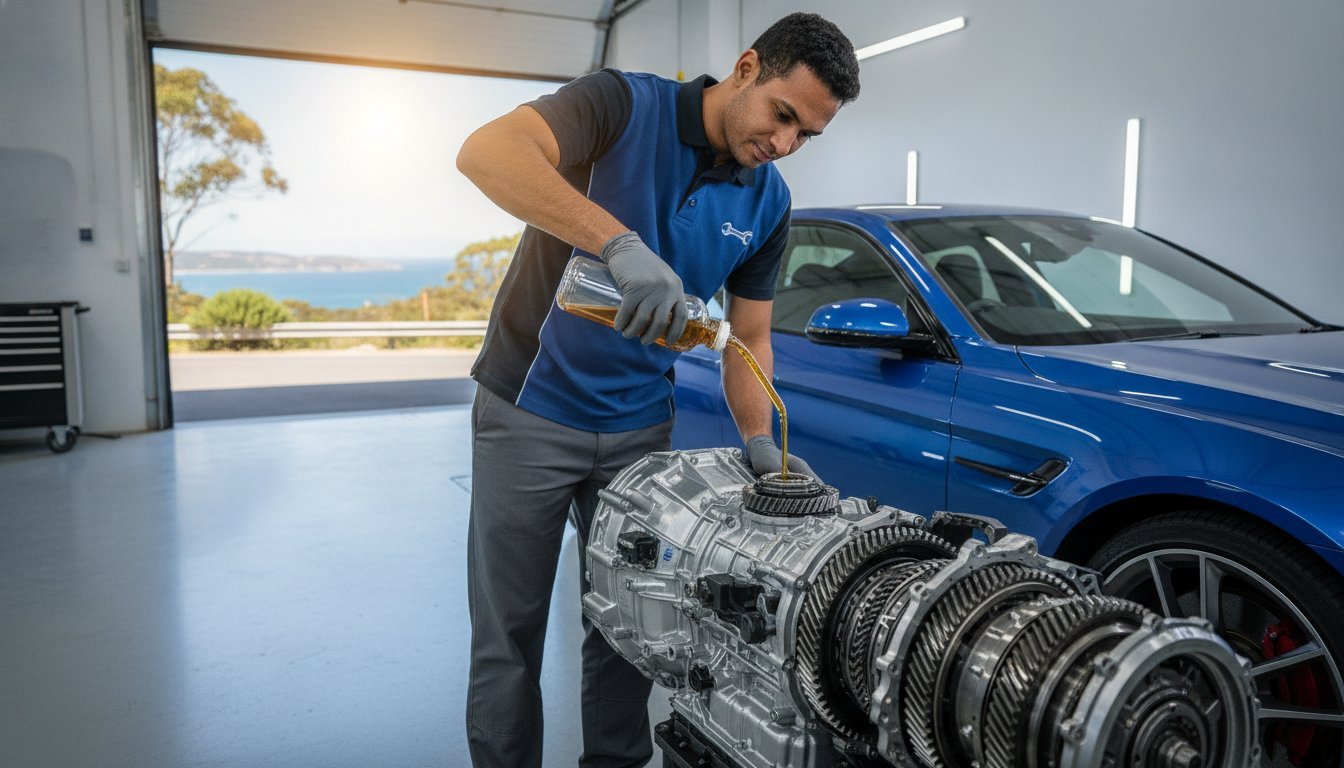
At Veloce Tuning, we go beyond the standard drain plug. A professional service includes a high-performance filter replacement, a step frequently overlooked by budget workshops. This filter is the kidney of your transmission, trapping the microscopic friction material shed from the clutch packs. We also utilise high-performance synthetic fluids that exceed OEM specifications, providing superior thermal stability for the aggressive Australian climate. This meticulous attention to detail ensures your gearbox remains a sharp, responsive instrument rather than a sluggish liability.
Beyond the Drain Plug: The Technical Workflow
Our process begins long before the first drop of oil hits the drain pan. We follow a methodical sequence to ensure total drivetrain health:
- Step 1: A comprehensive diagnostic scan to monitor existing fault codes and evaluate clutch wear values, ensuring the hardware is healthy enough for fresh fluid.
- Step 2: Controlled drainage followed by a forensic inspection of the waste fluid for metallic debris or excessive clutch material.
- Step 3: Precise refilling using specialised pressure-fill equipment to prevent aeration and ensure the mechatronic unit is fully primed.
The Final Calibration: Adapting the Gearbox
The most vital stage of a professional service happens through the software. Once the fresh fluid is at the correct level, we perform a “Basic Settings” reset via the TCU. This allows the gearbox to re-learn the specific clutch bite points with the new fluid viscosity, compensating for the subtle changes in hydraulic pressure. This calibration restores the “snappy” gear change feel and ensures the visceral connection between driver and road is at its peak. This level of care is a standard part of our log book service Carrum Downs performance owners trust. If you want to ensure your machine continues to shift with surgical speed, it is time to book a specialised DSG assessment with our master craftsmen.
Specialised DSG Care in Carrum Downs: Elevating Your Drive
Carrum Downs is home to a workshop where technical mastery meets a raw, unadulterated passion for automotive culture. At Veloce Tuning, we don’t just see a gearbox; we see the heart of your vehicle’s power delivery. We understand that for Mornington Peninsula performance owners, a car is more than transport. It is an extension of the driver. This is why our approach to DSG servicing is meticulous, ambitious, and driven by a genuine love for the craft. When you ask how often should DSG fluid be changed, you aren’t just looking for a number on a calendar. You are seeking the assurance that your machine will continue to perform with surgical accuracy. We provide that peace of mind by treating every vehicle that enters our bays like a mechanical masterpiece.
The rhythmic momentum of a high-performance machine is a delicate thing. It requires a specialist who understands the nuances of European engineering and the unique demands of the Australian environment. We have mastered complex technology and brought it to a local level, ensuring that your car receives dealership-level precision with the personalised care of a dedicated partner. Your drive deserves to be evocative. It should be a sensory reward every time you find an open stretch of road. By maintaining your drivetrain with Veloce, you are choosing to preserve that visceral connection between man and machine.
The Veloce Advantage: Passion Meets Precision
Our team brings a deep background in European tuning and mechanical engineering to the local Melbourne level. This expertise allows us to look beyond the surface; we identify microscopic signs of wear or hydraulic inconsistencies before they escalate into expensive roadside emergencies. We don’t just follow a checklist. We perform a pulse check on your entire drivetrain. Because performance machines don’t always follow a schedule, we offer 24/7 breakdown support for those rare mechanical emergencies. This commitment to our community defines the Veloce experience. We are partners in your automotive journey, ensuring your car’s transformation remains permanent and its potential remains unlocked.
Book Your DSG Performance Service Today
The subtle shudders and hesitant shifts you’ve been noticing aren’t just quirks. They are a call for precision care. Ignoring these red flags only invites the risk of a mechatronic failure that could sideline your passion. It is time to restore the rhythmic momentum and high-octane response that made you fall in love with your car in the first place. Deciding how often should DSG fluid be changed is the first step toward preserving your driving experience. Our master craftsmen in Carrum Downs are ready to apply their technical mastery to your machine, ensuring every gear change is a visceral reward. Reach out to the Veloce Tuning team today to secure your appointment. Restore your gearbox’s pulse with a Veloce DSG service and experience the liberation of a perfectly calibrated drivetrain.
Reclaim Your Gearbox’s Precision
Maintaining the surgical accuracy of your drivetrain isn’t just about following a manual; it’s about respecting the engineering that makes your drive evocative. We’ve explored how the harsh Australian climate and aggressive driving demand more than the factory minimum, making the 40,000-kilometre “Veloce Standard” the true benchmark for performance. Whether you’re battling Melbourne traffic or carving through the Mornington Peninsula, your mechatronic unit relies on clean, high-performance fluid to survive. Understanding how often should DSG fluid be changed is the first step toward safeguarding your machine against expensive failures and restoring that lightning-fast gear change you crave.
At Veloce Tuning, our team of European tuning specialists combines technical mastery with local Carrum Downs expertise to ensure your vehicle shifts with visceral speed. We treat every car like a masterpiece, backed by specialised diagnostic equipment and 24/7 emergency mechanical support for total peace of mind. Don’t let a subtle shudder diminish your high-octane experience. Restore your DSG’s precision – Book your specialised service at Veloce Tuning and feel the transformation in every shift. Your performance machine is ready to be unlocked.
Frequently Asked Questions
What is the standard DSG fluid change interval for a VW or Audi?
The manufacturer standard for most Volkswagen and Audi wet-clutch units is 60,000 kilometres or four years. However, for those pushing their machines on local Melbourne roads, we recommend a 40,000-kilometre interval. This proactive approach ensures the additives that manage clutch friction don’t break down under the intense thermal loads of spirited driving. Knowing how often should DSG fluid be changed is vital for maintaining that snappy, high-octane response you expect from a performance machine.
Can I change my DSG fluid myself at home?
Attempting a DSG service at home is a high-risk gamble that lacks the surgical precision of a professional workshop. Without specialised diagnostic equipment to monitor fluid temperature between 35°C and 45°C, achieving the correct level is nearly impossible. You also miss the critical mechatronic adaptation process. A professional service ensures your gearbox re-learns its clutch bite points, a step that home mechanics simply cannot perform without the right technical mastery.
What happens if I never change my DSG fluid?
Neglecting your fluid leads to a slow, expensive descent into mechatronic failure as microscopic clutch debris clogs the internal solenoids. Over time, the fluid loses its hydraulic integrity, causing the gearbox to hunt for gears or enter limp mode. If you ignore how often should DSG fluid be changed, you risk a repair bill that can easily start from $1,500 for mechatronic repairs. Fresh fluid is the only thing standing between a smooth drive and a total drivetrain collapse.
Is DSG fluid different from regular automatic transmission fluid (ATF)?
DSG fluid is a highly specialised lubricant that serves as both a cooling medium for clutch packs and a hydraulic actuator for the mechatronic brain. Standard ATF is designed for torque converters and lacks the specific friction modifiers required for the rapid-fire engagement of a dual-clutch system. Using the wrong fluid will lead to immediate clutch slippage and catastrophic internal damage. Precision engineering demands a fluid that matches the visceral speed of the gearbox.
How much does a DSG service cost in Melbourne?
In the Melbourne market, a professional DSG service typically ranges between $400 and $950 depending on the specific gearbox model and the quality of the synthetic fluids used. While some local workshops might offer basic drain-and-fill options for less, a comprehensive performance service includes filter replacement and electronic adaptations. Investing in a thorough service now is a minor expense compared to the $2,000 to $4,500 cost of a full clutch pack replacement.
Will a DSG fluid change fix a gearbox shudder?
A fresh fluid change can often resolve a low-speed shudder if the issue is caused by degraded friction modifiers in the oil. The new fluid restores the correct grip-and-slip characteristics of the clutch packs, smoothing out transitions. However, if the shudder is caused by physical wear to the mechatronic unit or damaged clutch plates, a service alone won’t be a magic fix. It is a vital pulse check to determine the current health of your drivetrain.
Is it necessary to change the DSG filter every time?
Replacing the DSG filter every time you change the fluid is non-negotiable for anyone serious about vehicle longevity. This filter is the primary line of defence, trapping the metal shavings and clutch material that naturally shed during high-performance gear changes. Leaving an old filter in place is like taking a shower and putting on dirty clothes; it immediately contaminates the fresh fluid and restricts the hydraulic pressure needed for those crisp, lightning-fast upshifts.
Does a 7-speed DSG need a fluid change if it is a “dry” clutch?
Even sealed for life 7-speed dry-clutch units, like the DQ200, benefit immensely from preventative gear oil changes. While the clutches themselves don’t sit in oil, the gearset and the mechatronic control unit rely on specific lubricants that degrade over time. Specialists recommend a gear oil change around the 90,000-kilometre mark to prevent internal wear. Proactive maintenance ensures your dry-clutch gearbox remains reliable long after the manufacturer warranty has expired.