
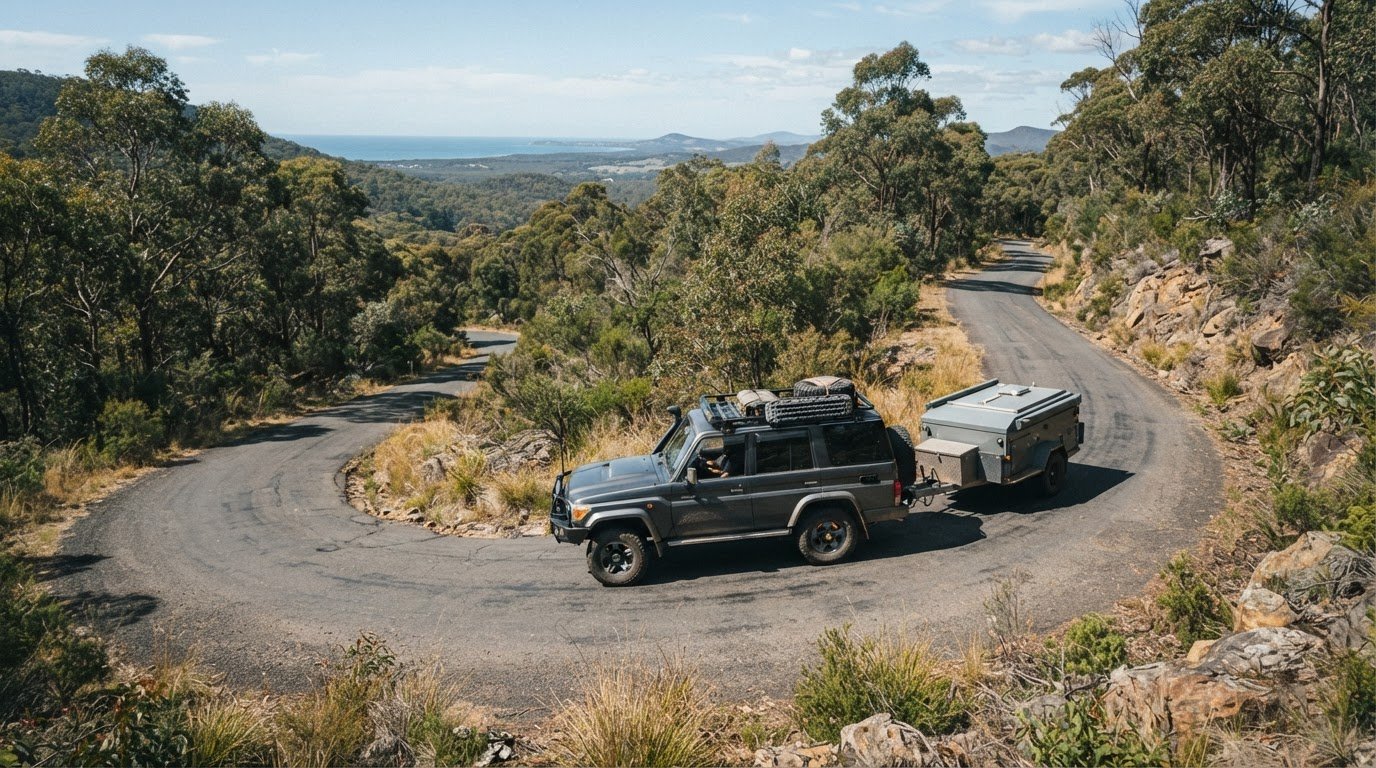
A long descent can turn steady braking into a heat problem. Brake fade is a temporary reduction in braking effectiveness caused by heat from repeated or sustained braking, especially when a 4×4 is carrying a heavy load. Preventing brake fade in a 4×4 starts with managing speed and using engine braking to reduce how hard the brakes have to work.
When heading downhill with a trailer or a loaded vehicle, it’s natural to rely on the brake pedal to control your speed. But holding the brakes on builds heat, and as their effectiveness drops, the vehicle may take longer to slow. Changing down to a lower gear lets the engine help hold the vehicle back and reduces the demand on the brakes.
This guide explains what causes brake fade, how it can affect a 4×4, and why engine braking matters on long descents. You’ll also learn how vehicle load, brake condition and driving approach influence heat build-up, so you can better manage your speed and braking on the road.
Key Takeaways
- Brake fade is a heat-related drop in braking effectiveness; changes in pedal feel or stopping response deserve attention.
- Keep brake fluid within the vehicle manufacturer’s replacement schedule, as moisture can make it more vulnerable to boiling.
- On long descents, select a lower gear early and use engine braking to reduce sustained pressure on the brakes.
- Vehicle load and driving pace affect brake workload, so plan for the terrain and avoid carrying more than the vehicle’s recommended load.
What is brake fade?
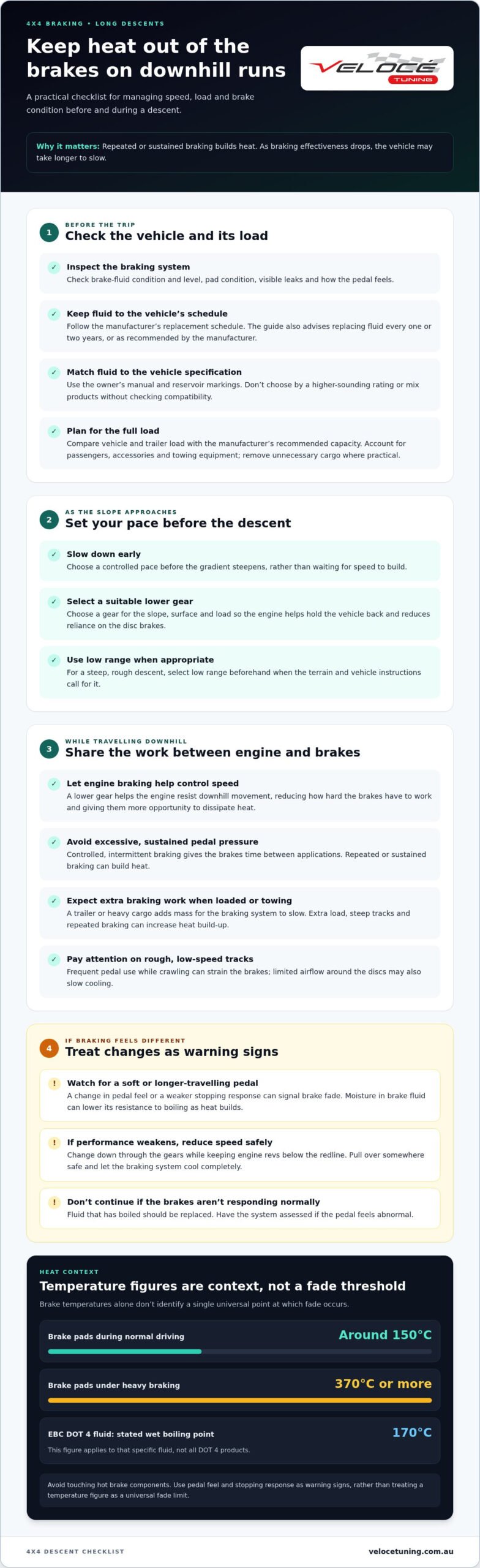
Brake fade is a temporary loss of braking effectiveness when heat reduces friction or affects the hydraulic system. Brake pads typically reach around 150°C during normal driving and can reach or exceed 370°C under heavy braking; these figures indicate heat levels, not a universal fade threshold. A soft or longer-travelling brake pedal and weaker stopping response are warning signs. Before an Australian off-road or towing trip, inspect fluid condition and level, pad condition, visible leaks and pedal feel, then replace fluid to the vehicle manufacturer’s schedule.
Brake Fluid Boiling and Moisture
Brake fluid absorbs moisture over time, which lowers its resistance to boiling as heat builds in the braking system. If the fluid boils, vapour makes it more compressible, so brake-pedal pressure may not transfer effectively through the hydraulic system. The pedal can travel further while stopping power falls. This is especially relevant on long descents or while towing, when sustained braking adds heat. Fluid that has boiled should be replaced.
Fluid Compatibility and Wet Boiling Points
Brake fluid compatibility means using a fluid that meets the specification required for the vehicle’s braking system. Follow the owner’s manual and fluid reservoir markings rather than choosing by a higher-sounding rating or mixing products without checking compatibility. Wet boiling point describes a fluid’s boiling resistance after it has absorbed moisture. For example, EBC DOT 4 brake fluid is stated to have a wet boiling point of 170°C. That figure is specific to that fluid, not a universal value for all DOT 4 products.
Check fluid quality regularly and replace it every one or two years, or as recommended by the vehicle manufacturer. Before travelling, look for a low fluid level or visible contamination and have the system assessed if the pedal feels abnormal.
Signs of Brake Overheating
Brake overheating is excessive heat in pads, discs or fluid that can reduce braking performance. A soft pedal, increased pedal travel or a noticeable drop in stopping response can signal fade; brake temperatures alone don’t identify a single universal threshold. Since pads can reach or exceed 370°C during heavy braking, avoid touching hot components. If braking weakens, reduce speed safely and allow the system to cool before continuing.
Engine braking on long descents
Repeated braking on a long descent can build heat, especially in a loaded 4×4 or while towing. Select a suitable lower gear before the slope, so the engine helps control speed and the brakes aren’t doing all the work. Preventing brake fade on 4×4 descents starts with choosing a controlled pace before the gradient steepens.
Lower Gears and Engine Braking
Slow down before the descent rather than waiting until speed builds. Avoid excessive or sustained pedal pressure; controlled, intermittent braking gives the brakes time between applications. The right gear depends on the slope, surface and load, so anticipate changes in terrain and maintain a speed you can manage. This measured approach is central to preventing brake fade on 4×4 trips.
Heat from Repeated Braking and Heavy Loads
Brake fade is a temporary reduction in braking effectiveness as heat accumulates through repeated or sustained braking. A trailer or heavy cargo adds to the work required to slow the vehicle, so a loaded 4×4 can build heat faster on a long downhill run. Friction at the brake pads and discs generates that heat.
When towing, account for the extra mass before reaching a slope: reduce speed early and use a lower gear so the engine helps slow the vehicle. If braking performance weakens, change down through the gears while keeping engine revs below the redline, then pull over somewhere safe and let the braking system cool completely. Don’t continue downhill if the brakes aren’t responding normally.
If your regular load or terrain calls for a change to the vehicle’s braking setup, brake upgrades are a relevant option to discuss as part of preparing your 4×4.
How vehicle mass and low-speed driving contribute to brake fade
A loaded 4×4 needs more braking force to slow than the same vehicle travelling lightly. Extra passengers, camping equipment or a trailer add mass, increasing the work the braking system must manage. On steep or uneven tracks, repeated braking can build heat; reduced airflow at low speeds may also slow cooling. Watch for changes in pedal feel, not just vehicle speed.
Low-speed driving can still put brakes under strain. Crawling down a rough track often means frequent pedal use to control the wheels over obstacles, while limited airflow passes around the discs. This can keep brake components hot, even when the vehicle isn’t moving quickly. Maintain a controlled pace and, where practical, avoid carrying unnecessary gear or trailer load.
Before a trip, compare the planned vehicle and trailer load with the manufacturer’s recommended capacity. Remove unnecessary cargo where practical, and account for passengers, accessories and towing equipment. Exceeding the recommended load places extra stress on the brakes; reducing the load means the braking system has less mass to slow.
Vehicles regularly used for towing or demanding terrain may need their braking components assessed for those conditions. Consider a brake upgrade if standard components aren’t suited to the vehicle’s regular load and use. The assessment should cover the whole setup, including pads, rotors, wheels and the existing braking system, rather than treating one part in isolation.
Brake fade causes and types
Brake fade has several causes, and they don’t all affect braking performance in the same way. In a 4×4, heat can reduce friction at the pads, affect brake fluid or trigger temporary green fade from new pads. Knowing the difference helps explain why a firm pedal or fresh-looking rotors alone don’t guarantee consistent stopping. Preventing brake fade on 4×4 vehicles starts with recognising how heat changes braking components.
Friction fade occurs when overheated pads deteriorate and lose their ability to create reliable friction against the rotors. As the pad material breaks down, it can release gases that form a microscopic layer between the pad and disc. This layer reduces friction and braking response. The pedal may still feel firm, but the vehicle takes longer to slow.
Green fade can affect new brake pads when they first reach high temperatures. Their friction material may release gases during this initial heat cycle, temporarily reducing braking effectiveness. Bedding in new pads with a few controlled stops helps prepare them for use. Avoid repeated harsh braking during this process, as it can overheat new components before they settle.
Glazing can follow overheating: pads and rotors may cool with shiny surfaces, signalling changes to their friction contact. The smooth finish can reduce resistance between components and compromise braking. Severe, localised heat can also cause structural changes in a cast-iron brake disc when temperatures exceed 650°C. These effects differ from fluid fade, where boiling fluid affects hydraulic pressure. Preventing brake fade on 4×4 descents means avoiding prolonged heat build-up, not simply fitting new pads.
Drum brakes were more susceptible to fade than modern disc brakes, where fade is extremely unlikely, but heat-related performance loss remains possible. After a fade event, don’t assume the brakes have recovered just because components have cooled. Have pads and rotors assessed for glazing, deterioration or heat damage before demanding driving. If your 4×4’s braking setup needs a suitability assessment, discuss brake upgrades for its load and use.
Veloce Tuning: Log Book Servcing
Veloce Tuning offers Log Book Servcing, a useful next step for keeping your 4×4’s scheduled maintenance in view before off-road travel or towing. Brake fade prevention depends partly on the condition of the braking system, so raise any changes in pedal feel or stopping response during servicing rather than treating them as routine wear.
For vehicles carrying regular loads, Fleet Vehicle Management can help businesses manage vehicle maintenance needs. If your 4×4’s setup has changed, such as with a lift kit, discuss how that may affect its load and driving demands. Suspension and Lift Kits and Custom ECU Tuning are also available offerings, but neither replaces attention to brake condition or correct downhill driving technique.
Plan servicing around the vehicle manufacturer’s maintenance schedule, and mention the terrain, towing and loads your 4×4 handles. Contact Veloce Tuning to discuss your vehicle’s maintenance needs.
Build confidence into your next 4WD trip
Make each journey a chance to refine how you prepare the vehicle and brief everyone who may take the wheel. A shared understanding of the route, load and driving plan helps keep decisions calm when terrain changes or a descent demands more attention. Good preparation for preventing brake fade on a 4×4 is part of a broader habit: matching the vehicle’s setup and care to the way it’s actually used.
After a trip, note any change in brake response and the conditions where you noticed it. Those details can make a future maintenance discussion more focused, especially if your 4×4 regularly alternates between commuting, towing and off-road driving. If your vehicle’s use has changed, make that part of the conversation too.
For a considered next step, get in touch with Veloce Tuning about your vehicle’s needs. Take your next trip with a clear plan and confidence in the preparation behind it.
Frequently Asked Questions
Anything Else I Should Check On?
Before departure, inspect tyre tread, condition and pressures, then look for uneven wear that could affect contact with the road. Worn or overinflated tyres can reduce road contact and lengthen stopping distances, while underinflation can dull response. Check the vehicle and trailer load, and look for visible brake-fluid leaks. These checks complement, but don’t replace, a brake inspection before demanding off-road or towing use.
What About Brake Fluid?
Use the fluid type and replacement interval specified in the vehicle handbook. Don’t assume different brake fluids are interchangeable. Check the reservoir level and condition before a trip. A falling level calls for an inspection for leaks or worn components, not repeated top-ups alone. If the fluid has boiled, replace it before returning the vehicle to demanding driving.
Why Fit Upgraded Brakes to Your Truck or 4×4?
Upgraded brakes may suit a 4×4 that regularly carries heavy loads, tows or travels demanding terrain, but the setup must match the vehicle and its use. Pads, rotors and brake balance need to work together; excessive rear brake bias can make the rear wheels lock early and destabilise the vehicle. Veloce Tuning offers brake upgrades for drivers around Carrum Downs, Frankston, Patterson Lakes, Mornington, Skye, Seaford and Sandhurst.
What causes brake fade in a 4×4, especially when towing or driving downhill?
Heat is the trigger, but several conditions can combine: a heavy 4×4 or caravan needs more braking effort, while repeated pedal use limits cooling between applications. A long descent adds to that workload. Fade may affect pad friction as components overheat, or the hydraulic response if brake fluid boils. You may notice a change in pedal feel or reduced stopping response.
How can you prevent brake fade when descending steep hills in a 4×4?
Approach the slope at a controlled speed, select an appropriate lower gear beforehand, and let the engine help regulate the vehicle’s pace. Apply the brakes steadily rather than riding the pedal continuously. If braking response weakens, change down while keeping engine revs below the redline, then pull over safely and allow the system to cool. Never pour water over hot brakes, as this can damage the discs.
What is the correct braking technique for a heavily loaded 4×4 or one towing a caravan?
For a heavily loaded 4×4 or caravan combination, reduce speed early and choose a gear that keeps the vehicle controlled without constant pedal pressure. Brake periodically rather than dragging the brakes, allowing heat to dissipate between applications. Keep the vehicle and trailer within the manufacturer’s recommended load capacity, and reduce cargo where practical. If braking response changes, stop somewhere safe rather than continuing downhill.