Heat is the stress test that can shorten a DSG’s working life. Knowing how to make a DSG gearbox last longer starts with following the schedule for its exact transmission: Volkswagen DSG gearboxes typically require servicing every 60,000 kms, or every 4 years if that occurs before the kilometre interval. The right fluid, correct filling procedure and sensible driving habits matter just as much.
If you’re wondering how to make a DSG gearbox last longer, both maintenance and driving habits matter. Stop-start traffic, repeated hill starts, towing and extra torque can increase heat and clutch load, so consider how the car is used as well as its service history.
This guide explains why service intervals and transmission-specific fluid matter, what diagnostics and software adaptations can reveal, and how to reduce stress from heat and heavy loads. You’ll also learn which driving habits can limit unnecessary clutch engagement and when changes in gearbox behaviour warrant attention.
Key Takeaways
- Identify your DSG type before planning maintenance; fluid, filter requirements and service schedules can differ between gearboxes.
- Seven-speed dry-clutch DSGs have different servicing needs from wet-clutch versions, so match maintenance to the transmission rather than assuming one schedule fits all.
- Pay attention to shuddering, harsh shifts, delayed engagement or warning lights; diagnostic checks and, where applicable, software adaptations can help pinpoint the cause.
- Reduce avoidable heat and clutch load by driving smoothly, using the brake on hills and being mindful of towing or performance modifications.
DSG service schedules and transmission-specific fluid requirements
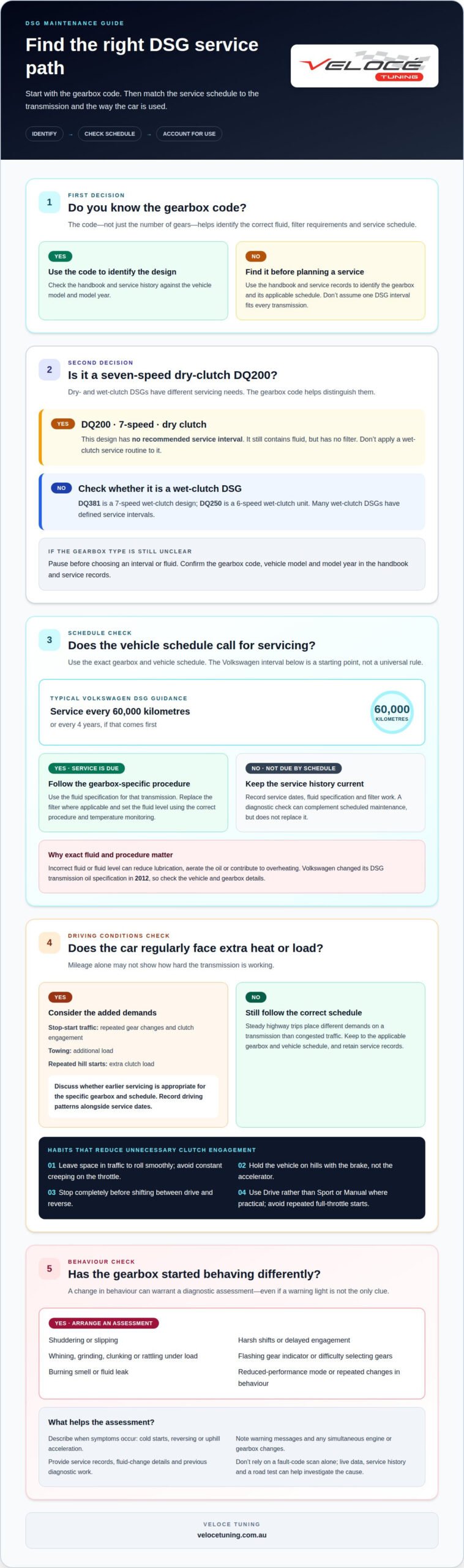
DSG servicing depends on the transmission type, vehicle model and model year. Identify the gearbox code before setting a service interval. Common mistakes include missing scheduled fluid or filter changes, using the wrong fluid and setting the fluid level incorrectly.
Design-specific service schedules
DSG designs differ in clutch type and servicing needs, so one schedule won’t suit every transmission. Wet-clutch units in many VAG models have defined service intervals, while dry-clutch systems have different requirements.
Volkswagen DSG gearboxes typically require servicing every 60,000 kilometres, or every 4 years if that comes first. Treat this as a starting point, not a universal interval: the exact gearbox code and vehicle model determine the applicable schedule. Check the handbook and service records to identify the correct timing for your vehicle.
Driving conditions and earlier servicing
Driving conditions affect how quickly DSG fluid and components experience heat and wear. Frequent stop-start traffic means repeated gear changes and clutch engagement; towing and repeated hill starts add further load.
If your vehicle regularly faces these conditions, discuss whether earlier DSG servicing is appropriate for its gearbox and schedule. Mileage alone may not reflect how the car is used: congested traffic places different demands on a transmission than steady highway trips. Record your driving pattern alongside service dates to help plan maintenance.
Gearbox-specific fluids and procedures
The correct fluid and filling procedure depend on the specific transmission. In applicable DSG systems, fluid supports cooling and hydraulic operation, while wet-clutch units may require both oil and filter servicing at scheduled intervals.
During a service, use the specification for that gearbox, replace the filter where applicable, and set the fluid level using the correct procedure and temperature monitoring. Incorrect fluid or level can reduce lubrication, aerate the oil or contribute to overheating. Volkswagen changed its DSG transmission oil specification in 2012, so the vehicle’s model and gearbox details matter when selecting fluid.
Keep service records that show the fluid specification, filter work and date. A diagnostic check can complement scheduled maintenance by identifying stored faults, but it doesn’t replace the manufacturer-recommended service schedule. Fresh fluid also won’t reverse existing wear or damage.
How Often Should A DSG Gearbox Be Serviced?
Volkswagen DSG maintenance depends on the transmission and vehicle model. Volkswagen DSG gearboxes typically require servicing every 60,000 kms, or every 4 years if that comes first, but the seven-speed dry-clutch DSG fitted to many Volkswagen models has no recommended service interval.
A dry-clutch design still contains fluid, but has no filter. Don’t assume it follows the same service routine as a wet-clutch unit. Check your vehicle’s handbook and service history to identify the gearbox and applicable schedule. An interval for one direct shift gearbox may not apply to another.
Clutch configuration helps explain the difference. The DQ200 is a seven-speed dry-clutch DSG; the DQ381 is a seven-speed wet-clutch design, while the DQ250 is a six-speed wet-clutch unit. Wet-clutch DSGs in many Volkswagen Group models have defined service intervals. The gearbox code, rather than the number of gears alone, helps identify the relevant requirements.
Driving habits also affect clutch heat and wear. In stop-start traffic, leave enough space to roll smoothly instead of repeatedly inching forward and stopping. Avoid creeping constantly on the throttle. On hills, hold the vehicle with the brake, not the accelerator. When parking, stop completely before shifting between drive and reverse. These habits reduce unnecessary low-speed clutch engagement.
For everyday driving, use Drive rather than Sport or Manual where practical, and avoid repeated full-throttle starts. A DSG is an automatic, but smooth inputs still matter. If towing, hill starts or congested commuting are regular parts of your routine, account for those conditions when planning maintenance.
Keep service records with the gearbox code and dates, then compare them with the vehicle’s schedule. If maintenance or shifting behaviour raises concern, DSG servicing and repairs can help address transmission issues.
Diagnostic checks and software adaptations
A diagnostic assessment looks beyond a warning light to investigate why a DSG’s behaviour has changed. The gearbox, mechatronic unit, engine and related system data can all affect shifting, so a fault code alone may not explain the problem.
Arrange an inspection if you notice shuddering, delayed engagement, harsh shifts, slipping or repeated changes in gearbox behaviour. Whining, grinding, clunking or rattling under load also warrant attention. A flashing gear indicator, burning smell, fluid leak, reduced-performance mode or difficulty selecting gears calls for prompt assessment.
- Describe when the symptom occurs, such as during cold starts, reversing or uphill acceleration.
- Provide service records, including fluid changes and any previous diagnostic work.
- Note warning messages and whether the engine or gearbox behaviour changes at the same time.
- Don’t rely on a fault-code scan alone to identify the cause.
A thorough check can combine stored fault codes with service history, reported symptoms and live gearbox data. A road test helps assess engagement and shifting in real driving conditions. The inspection can also assess fluid condition and consider whether a mechanical, electrical or maintenance-related issue best explains the fault.
Software adaptations or resets may form part of DSG servicing where applicable. They can help the control system respond appropriately after relevant work, but they don’t replace diagnosis of a mechanical fault. The right action depends on the gearbox model, symptoms and available system data.
Low battery voltage can contribute to warning messages or irregular electronic behaviour in modern vehicles, so include it among the diagnostic considerations. If symptoms return after an adaptation or a warning persists, further investigation is important. Early diagnosis can help prevent a small concern from developing into more involved repairs.
Managing gearbox heat and heavy loads
Heat builds when a DSG clutch repeatedly engages under load, and Australian driving can make that stress part of everyday use. Towing, repeated hill starts, slow traffic and performance modifications all affect gearbox demands. Managing those demands is part of how to make a DSG gearbox last longer. Consider vehicle load and operating conditions alongside the odometer reading when planning maintenance.
Frequent towing or hill work can make earlier servicing beneficial. A tuned engine can add torque, potentially revealing existing DSG wear or overdue maintenance sooner. That doesn’t mean every modified vehicle needs the same response. The transmission type, service history, driving pattern and condition all shape suitable maintenance, and understanding them helps you make a DSG gearbox last longer.
- Use the brake to hold position on a hill, rather than balancing the vehicle on the accelerator.
- In congestion, leave room to move smoothly instead of repeatedly creeping and stopping.
- Avoid repeated full-throttle starts when the gearbox is already working hard.
- For towing, include the added load and route conditions in service planning.
Cooling matters too. An engine cooling fault can raise under-bonnet temperatures and affect how consistently gear changes feel. If shifting changes after heavy use, or the vehicle develops warning messages, burning smells or fluid leaks, arrange prompt assessment rather than continuing to load the transmission. These symptoms can have different causes, so an assessment should consider gearbox behaviour and relevant system data.
For wet-clutch DSGs, the recommended service procedure may include gearbox-specific fluid and a filter. The correct specification and fluid level matter under load: incorrect fluid or an incorrect level can reduce lubrication or contribute to overheating. Follow the schedule for the exact gearbox, and consider towing, repeated climbs or tuning when deciding whether earlier servicing is beneficial.
Heat and load management won’t reverse existing mechanical damage, but it can reduce avoidable stress during everyday driving. If towing, tuning or repeated heavy use has raised concerns, arrange an assessment through DSG servicing and repairs.
Veloce Tuning: Log Book Servcing
Veloce Tuning’s logbook servicing helps keep scheduled vehicle maintenance organised and service records up to date. For DSG owners, that means a clear maintenance record and a useful reference when tracking the vehicle’s history.
If your driving includes regular towing, heavy loads or performance changes, organised maintenance helps you follow the schedule for your vehicle. Veloce Tuning also offers fleet vehicle management, suspension and lift kits, and custom ECU tuning. These services suit different vehicle needs; logbook servicing is the relevant starting point for routine maintenance planning.
To keep your vehicle’s servicing on track, contact Veloce Tuning in Carrum Downs.
Keep your next drive in mind
Long-term gearbox care is an ownership habit, not a single workshop visit. As your vehicle’s use changes, your maintenance plan should keep pace. A new commute, regular towing or a change in engine setup can alter the demands on the transmission. At each service, consider how the vehicle is being driven and whether its maintenance still suits that use.
The practical answer to how to make a DSG gearbox last longer is to make care part of how you own and drive the vehicle, then act when its behaviour changes. You don’t need to wait for a major fault before seeking advice. A conversation about your gearbox’s condition or service needs can help you decide what to do next.
For guidance tailored to your vehicle, contact Veloce Tuning about your DSG. Keep your focus on the road ahead, and give your transmission the considered care it deserves.
Frequently Asked Questions
Are there any reliable DSG gearboxes?
Yes, a DSG can provide reliable service, but reliability depends on the specific gearbox, its condition and how it has been maintained. A well-documented service history is useful; smooth engagement during a test drive matters too. Pay attention to hesitation when selecting drive or reverse, or changes in shift quality. These clues can help show whether the gearbox is operating consistently or needs assessment.
Can you extend DSG life with preventative checks?
Preventative checks can help identify developing concerns before they become more involved. Note any changes in engagement after the vehicle has been parked overnight, and record when a warning appears or a noise occurs. Check beneath the vehicle for signs of a fluid leak, and keep service invoices together. These details give a technician useful context alongside diagnostic data.
What are the most common DSG problems in Volkswagen vehicles?
Volkswagen DSG concerns can include shuddering, delayed engagement, harsh shifts, slipping, warning lights and unusual whining, grinding or clunking. The cause may be mechanical, electrical or related to service history, so one symptom won’t identify the failed part. A flashing gear indicator or difficulty selecting gears, for example, is a reason to arrange prompt assessment, not to assume a fluid change alone will fix it.
What is a DSG gearbox, and how does it work?
A DSG is a dual-clutch transmission that uses two clutches to pre-select the next gear. One gearbox section handles odd-numbered gears, while the other handles even-numbered gears. This lets the transmission prepare a shift before it happens and helps deliver quick gear changes. It combines automatic operation with a mechanical layout that differs from a conventional torque-converter automatic.
How often should DSG transmission fluid and filter be changed in Australia?
For Volkswagen DSG gearboxes with a scheduled fluid service, the typical interval is 60,000 kilometres or 4 years if that comes first. The exact requirement depends on the vehicle and gearbox. Wet-clutch units may require fluid and filter changes; some seven-speed dry-clutch systems have different requirements and no recommended service interval. Confirm the gearbox code and follow its applicable schedule.
Which DSG gearboxes have wet clutches versus dry clutches, and how does maintenance differ?
Volkswagen’s DQ200 is a seven-speed dry-clutch DSG; the DQ250 is a six-speed wet-clutch unit, and the DQ381 is a seven-speed wet-clutch design. Wet-clutch units use oil to serve the clutch system and often have scheduled fluid and filter servicing. Dry-clutch systems have different maintenance requirements, so identify the gearbox code before applying a service schedule.