
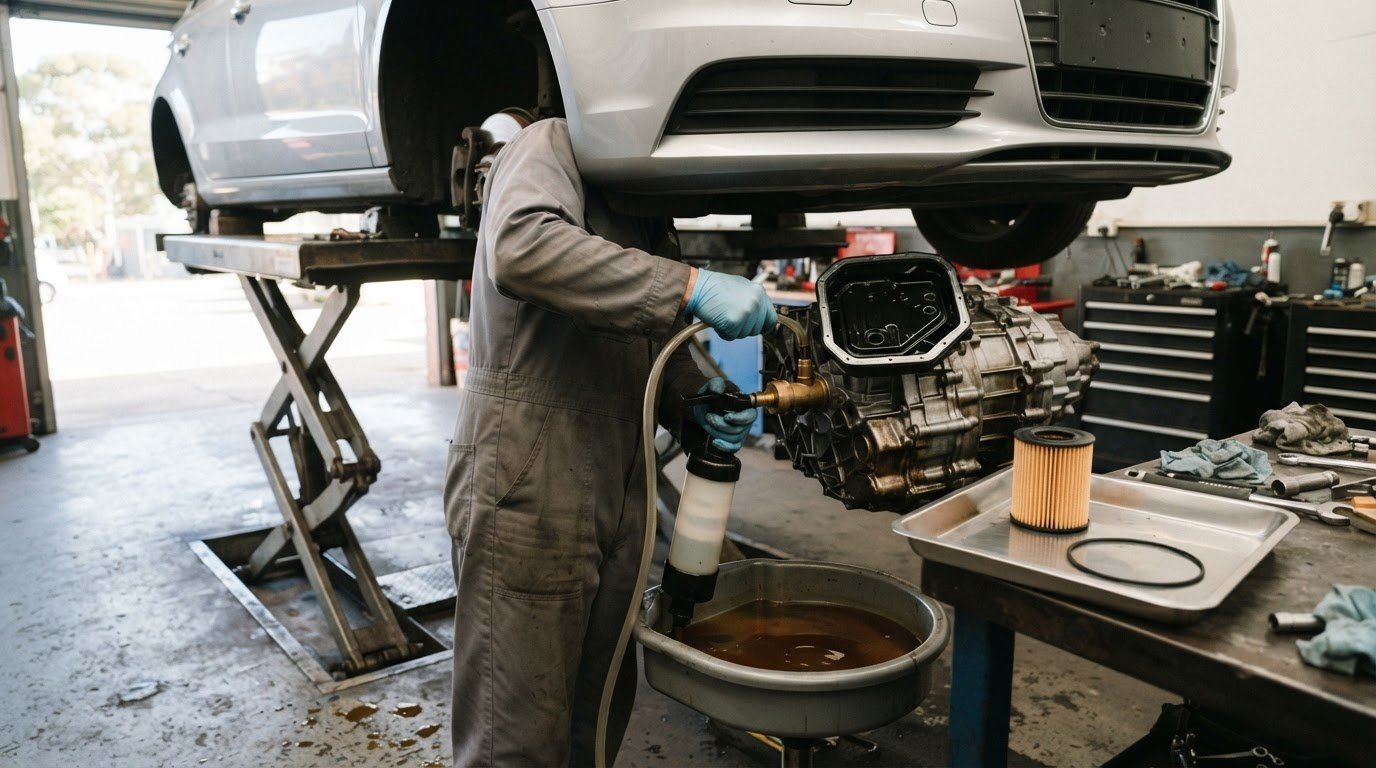
The right DSG service interval matters, but it can vary by vehicle. For an Audi DSG gearbox oil change in Mornington, transmission fluid is generally changed every 40,000 to 60,000 kilometres; DSG transmissions typically require servicing every 60,000 km.
It’s easy to treat an Audi DSG gearbox oil change in Mornington as a simple kilometre milestone, but the specific Audi model and gearbox matter. Following the applicable service schedule helps you plan maintenance before degraded fluid affects the smooth, responsive shifts you expect.
This guide explains how to determine the service interval for your Audi, what a DSG or Audi S tronic fluid and filter service involves, and what can affect the work required. You’ll also learn what to consider when choosing transmission servicing around Mornington, so you can plan a suitable next step for your car.
Key Takeaways
- Understand why DSG and Audi S-Tronic servicing can involve both fluid and filter replacement, not just a fluid top-up.
- Learn why the correct oil and parts depend on the transmission fitted to your Audi.
- Use your vehicle’s service history and gearbox details to plan the right maintenance.
- See what specialist servicing involves and when a log book service can help keep maintenance organised.
Specialist European transmission servicing, including DSG
European transmissions need servicing that accounts for their design, symptoms and maintenance history. For Audi DSG gearboxes, both the service interval and procedure matter. Fluid maintenance is only one part of keeping shifts consistent.
Mornington automatic transmission servicing
Automatic transmission servicing in Mornington can involve assessing the fluid, checking for leaks and reviewing shift behaviour. For an Audi, identify the model, gearbox and previous service details before deciding what work is appropriate. A DSG has specific servicing needs, so don’t assume a generic automatic service covers every required step. The inspection and repair should suit the transmission fitted.
Fluid checks and change intervals
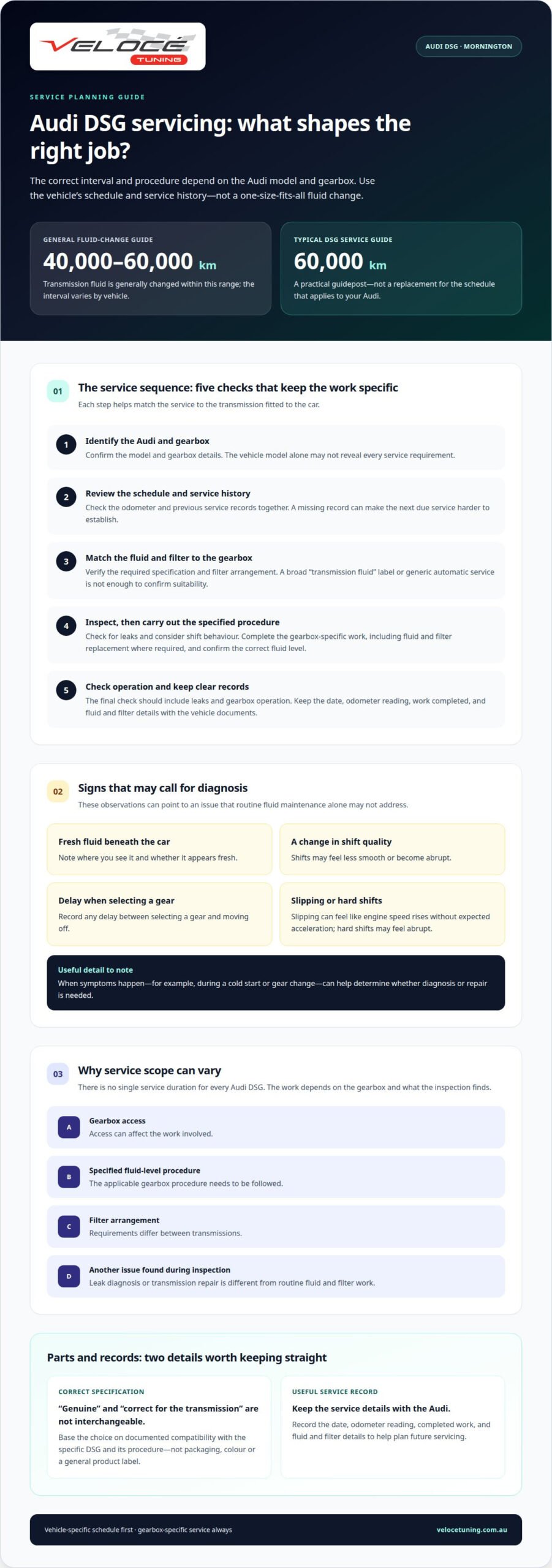
Transmission fluid should generally be changed every 40,000 to 60,000 kilometres, with the interval varying by vehicle. DSG transmissions typically require servicing every 60,000 km. These are practical guideposts, not a substitute for the Audi’s maintenance schedule. Review the service history and odometer together; a missing record can make the next due service harder to establish. Fluid checks also help identify a leak or condition that needs attention.
Leaks, slipping and hard shifts
Look for fresh fluid beneath the vehicle, changes in shift quality or a delay between selecting a gear and moving off. Slipping can feel like the engine speed rises without the expected acceleration; hard shifts may feel abrupt rather than smooth. Note when symptoms occur, such as during a cold start or gear change. These details help determine whether the car needs diagnosis or repair, rather than routine fluid maintenance alone.
Audi DSG specialists and dealer servicing
When comparing Audi dealer DSG servicing in Mornington with a specialist workshop, focus on the scope of work and how it matches your vehicle’s schedule. Compare the planned service steps, including fluid and filter requirements, with the gearbox type and available service history. Clear records help you track future servicing and give the technician useful context if symptoms are present.
DSG and Audi S-Tronic fluid and filter changes
A DSG or Audi S tronic service follows the gearbox specification, not a one-size-fits-all fluid change.
Warranty and service requirements
For an Audi in Australia, follow the maintenance schedule for its model and gearbox. Fluid, filter and procedure requirements can differ between transmissions, so identify the exact vehicle before planning the work. A generic automatic transmission service may not cover the steps specified for a particular DSG.
Keep the service record with the vehicle documents. It should show the date, odometer reading and work completed, including fluid and filter details. This creates a clear maintenance history for future servicing and warranty discussions. Follow the applicable Audi requirements rather than assuming a fluid change alone meets every scheduled service item.
The service should begin by identifying the gearbox and reviewing its service history. The technician can then match the fluid and filter requirements to that transmission, inspect for leaks and carry out the specified work. Correct fluid level and a post-service check matter. Using the wrong specification or procedure can undermine the intended maintenance.
Service timing and booking
There’s no single service duration that fits every Audi DSG. The work depends on gearbox access, the specified fluid-level procedure, filter arrangement and whether an inspection reveals another issue. A scheduled service differs from a visit that also requires leak diagnosis or transmission repair. The technician can assess the engine and gearbox response during final checks.
Booking helps allocate workshop time for the right service and vehicle details. Have the Audi model, registration details, odometer reading and available service history ready when arranging a visit. Mention symptoms such as slipping or hard shifts, as diagnosis may require more than routine fluid and filter work. This gives the technician useful context before the car arrives.
During the service, the technician identifies the gearbox, confirms its fluid and filter requirements, completes the specified procedure, then checks for leaks and correct operation. Clear records make future scheduled servicing easier to plan.
Genuine parts and oils
For an Audi DSG, the right fluid is the one specified for its gearbox, not simply an oil labelled “transmission fluid”. DSG units can differ, and the vehicle model alone may not reveal every service requirement. Match the gearbox code and vehicle details to the applicable specification before selecting fluid or filter parts.
“Genuine” describes an origin, while “correct for the transmission” describes fit and specification. The terms aren’t interchangeable. An Audi-branded component may suit a particular application, while another part may be designed to meet the same stated requirements. Base the service decision on documented compatibility, not packaging or a broad claim that a product suits all European transmissions.
Oil selection matters because fluid works within the gearbox’s operating system. The wrong type can affect how components interact and how the transmission shifts. Don’t choose by colour, viscosity description or a general label alone. Verify the required fluid against the specific DSG and service procedure. Apply the same care when selecting a filter.
- Identify: record the Audi model and gearbox details.
- Match: check the fluid and filter against that transmission’s requirements.
- Document: retain the parts and fluid details with the service record.
A dealership may use Audi-specific parts and service information, while a specialist workshop may also service European transmissions. Compare the actual scope: which fluid is used, whether the filter is replaced when required, and whether the work follows the gearbox procedure. Request those details in writing, then keep the invoice with the Audi’s maintenance records.
For example, an invoice that only says “gearbox oil” may not show which fluid specification was used or whether filter work was completed. A detailed record gives the next technician a clearer starting point and helps distinguish routine maintenance from a later repair. Precision is practical, not cosmetic.
Audi DSG oil change specialists near Mornington VIC
For Audi owners in Mornington, specialist transmission servicing starts with identifying the exact gearbox, not relying on the badge alone. DSG and S tronic requirements can differ, so the vehicle details and maintenance history should guide the work.
Prepare the Audi’s model details, odometer reading and available service records. Note any changes in shift feel, warning lights or fluid marks beneath the vehicle. These details help distinguish scheduled maintenance from a repair requiring diagnosis. A service history also gives the technician a clearer view of previous fluid and filter work.
Assess the service scope by looking for a clear link between the gearbox and the planned procedure. Useful details include:
- Identification of the Audi gearbox and its applicable service requirements.
- The specified transmission fluid and whether filter replacement applies.
- Inspection for leaks and a check of operation after servicing.
- A written record of the work completed and parts used.
Location matters for practical planning, but proximity alone doesn’t establish whether a workshop’s process suits your Audi. Consider the drive to and from Mornington, especially if the vehicle has slipping, hard shifts or a visible leak. Those symptoms can require attention beyond a routine oil service. Describe when they occur, such as during gear selection or acceleration, to give the workshop useful context.
Before the appointment, gather the registration details, service documents and a concise description of any symptoms. This helps the workshop identify the transmission and understand the reason for the visit. After servicing, keep the invoice with the Audi’s maintenance records so you can track the completed work at the next service.
For local support with Audi transmission maintenance or a DSG concern, explore DSG servicing and repairs as a practical next step.
Veloce Tuning: Log Book Servicing
Veloce Tuning provides logbook servicing to help you organise scheduled vehicle maintenance. Use your Audi’s service records to track completed work and plan future maintenance. Clear documentation gives you a practical reference for the next service.
If you manage several vehicles, Veloce Tuning’s fleet servicing helps organise maintenance across your fleet. The workshop also offers suspension and lift kits and custom ECU tuning for drivers considering changes beyond routine servicing. These are separate from a DSG fluid change, so focus on the work that suits your vehicle and plans.
For help with your vehicle’s service records, contact Veloce Tuning to discuss the next step.
Plan your Audi’s next service with confidence
Make transmission maintenance part of your Audi ownership plan, rather than considering it only after a change in driving feel. Clear service records help you make informed decisions and give future maintenance a stronger starting point.
For an Audi DSG gearbox oil change in Mornington, connect the service history with how the car is performing now. Routine maintenance and a new symptom call for different attention. A clear description of the issue helps frame the right discussion about servicing or repair.
Veloce Tuning offers DSG servicing and repairs for drivers who need help with transmission maintenance. Bring your Audi’s service details and explain any changes you’ve noticed, so the discussion can focus on your vehicle’s needs and the appropriate next step.
Contact Veloce Tuning to discuss servicing, and take the next step towards a considered maintenance plan for your Audi.
Frequently Asked Questions
How often should transmission fluid be changed?
Transmission fluid should generally be changed every 40,000 to 60,000 kilometres, while DSG transmissions typically require servicing every 60,000 km. These figures provide a useful maintenance guide for Australian drivers. For example, compare the odometer reading with the last recorded transmission service, rather than relying on how the car feels during one drive. A complete service record helps you track the next interval.
Which Audi models have a DSG gearbox, and what are the oil change intervals?
Audi models may have DSG or S-Tronic transmissions depending on their model, year and specification, so the badge alone doesn’t identify the gearbox. DSG servicing is typically required every 60,000 km. To establish the right schedule for your car, match its vehicle details with the gearbox information and service records. This helps avoid applying an interval for a different transmission variant.
What happens during an Audi DSG gearbox oil and filter service?
An Audi DSG service starts by identifying the gearbox, then follows its fluid and filter requirements. The technician drains the old fluid, replaces the filter where required and refills the transmission with the specified fluid. The service also includes checking the fluid level and inspecting for leaks. Keep the invoice to record the work performed and fluid used for future maintenance.
Should I choose genuine or aftermarket Audi DSG fluid and parts?
Choose fluid and parts that meet the specification for your exact DSG transmission. The label “genuine” alone doesn’t establish compatibility. For example, don’t select oil solely because its packaging mentions automatic transmissions. Check the gearbox requirements and retain product details with the service record. This gives the next technician useful information and helps distinguish compatible parts from products intended for another application.
What are the symptoms and risks of an overdue Audi DSG oil change?
Slipping, abrupt or hard shifts, and fluid beneath the vehicle need attention, rather than dismissal as normal wear. Note when each change occurs, such as during acceleration or gear selection, and share those details during diagnosis. An overdue service can leave a developing transmission issue unaddressed. For an Audi DSG gearbox oil change in Mornington, bring the service history and symptom notes.