A successful diesel engine conversion for a 4×4 is about more than swapping engines: the gearbox, adaptor, mounts, cooling system, wiring and driveline all need to work together. Get that combination right, and the result can feel composed and capable under load, not just powerful on paper. The total cost depends on the engine and transmission selected, the parts needed to fit them, fabrication and installation work.
It’s easy to focus on engine choice first, but compatibility and the supporting components shape the whole conversion. This guide explains what to consider before committing, from transmission and mounting requirements to the factors that affect the project budget.
You’ll also learn where technical support matters, including cooling, engine management, emissions equipment and driveline compatibility. With those pieces in view, you can make a more informed decision about the conversion your 4×4 needs.
Key Takeaways
- Choose the engine and transmission as a compatible package, with the adaptor, cooling system and driveline included in the planning.
- Build a realistic conversion budget around the parts, fabrication and installation the chosen setup requires.
- Well-matched mounts and brackets help position the engine correctly and make room for surrounding components.
- Technical support matters for integrating engine management, emissions equipment, cooling and driveline components, as well as addressing compliance requirements.
4WD engine and transmission conversion components
A conversion needs an engine, transmission, transfer case and driveline suited to how you use the vehicle. Adaptors, mounts, cooling and control systems must all work together as a package.
Diesel engine selection criteria
Common conversion choices include the GM Duramax 6.6L, 5.9L Cummins 6BT P-Pump and Cummins 4.5L four-cylinder. Published output figures for these engines can vary by version and setup, so treat them as indicative. The 4.5L is described as producing 200 HP and 750 Nm.
Power and torque figures are useful for comparison, but they do not predict reliability or fuel economy. Those depend on engine condition, calibration, vehicle weight, gearing and driving conditions. Choose for usable low-speed torque and the vehicle’s intended work, not peak output alone.
Using an existing transmission
Keeping the existing transmission can reduce the number of major components being replaced, but it must suit the new engine’s output and fit the transfer case. A conversion may retain a standard five-speed transmission; other possible combinations include a Commodore 700R-4 or 4L60-E four-speed automatic, or a six-speed Allison.
Automatic transmission transfer-case adapters connect the gearbox output to the 4WD transfer case. Their fit depends on the transmission, transfer-case input and driveline alignment. The conversion process therefore starts by identifying the engine and gearbox, then matching the adaptor, mounts, cooling and controls before installation.
In Australia, modification requirements depend on the state or territory. According to Queensland Government, the amended requirement is that a modified light vehicle must not be driven or parked on a road unless its modification is compliant; the maximum penalty is 60 penalty units. Engineering approval and emissions requirements also depend on the applicable rules and conversion. Modern conversions need the donor vehicle’s emissions equipment.
Fuel economy, towing capacity and performance can all change with engine output, gearing, vehicle weight and setup, so no single result applies to every conversion. Common pitfalls include a mismatched transmission or driveline, inadequate cooling and incomplete engine-management integration. Assess the components and applicable requirements as one system.
Engine conversion costs
A conversion budget covers more than the replacement engine. The Toyota model, selected drivetrain and integration work all shape the project scope.
Conversion cost considerations
The total depends on the vehicle and the work involved. Key factors include the engine, transmission, adaptors, mounts, fabrication and installation, along with cooling, fuel-system changes, wiring, engine management and emissions equipment. Leaving any of these out can mean essential work is missing from the initial estimate.
For example, a Cummins R2.8 conversion involves an engine and transmission package, while a Duramax conversion has its own integration requirements. The existing gearbox may be retained, replaced or adapted, depending on compatibility. Each choice changes the parts list and the labour involved.
Break the estimate into major components and installation work. Make sure the scope states what is included, such as adaptor fabrication, cooling changes and commissioning. Compare like with like: an engine-only figure cannot be directly compared with a complete installed conversion.
Value against a factory diesel
A conversion can be worthwhile when keeping a particular 4×4 matters and the selected engine suits its intended work. Buying a factory diesel may be better value when the replacement vehicle’s condition, capability and overall purchase cost make more sense than modifying the current one. The right comparison is the complete vehicle cost, not the engine alone.
Factor in the Toyota’s condition and the supporting components the conversion needs. A sound vehicle with a clear use case may suit a tailored conversion; extensive repair needs can make a factory diesel a better fit. There is no universal winner.
Start by defining the towing, touring or work performance you need, then assess the engine and transmission package against those requirements. A detailed scope clarifies the trade-offs, including which existing components can stay and which need replacing. That is a more useful basis for judging value than headline output alone.

Engine conversion mounts and brackets
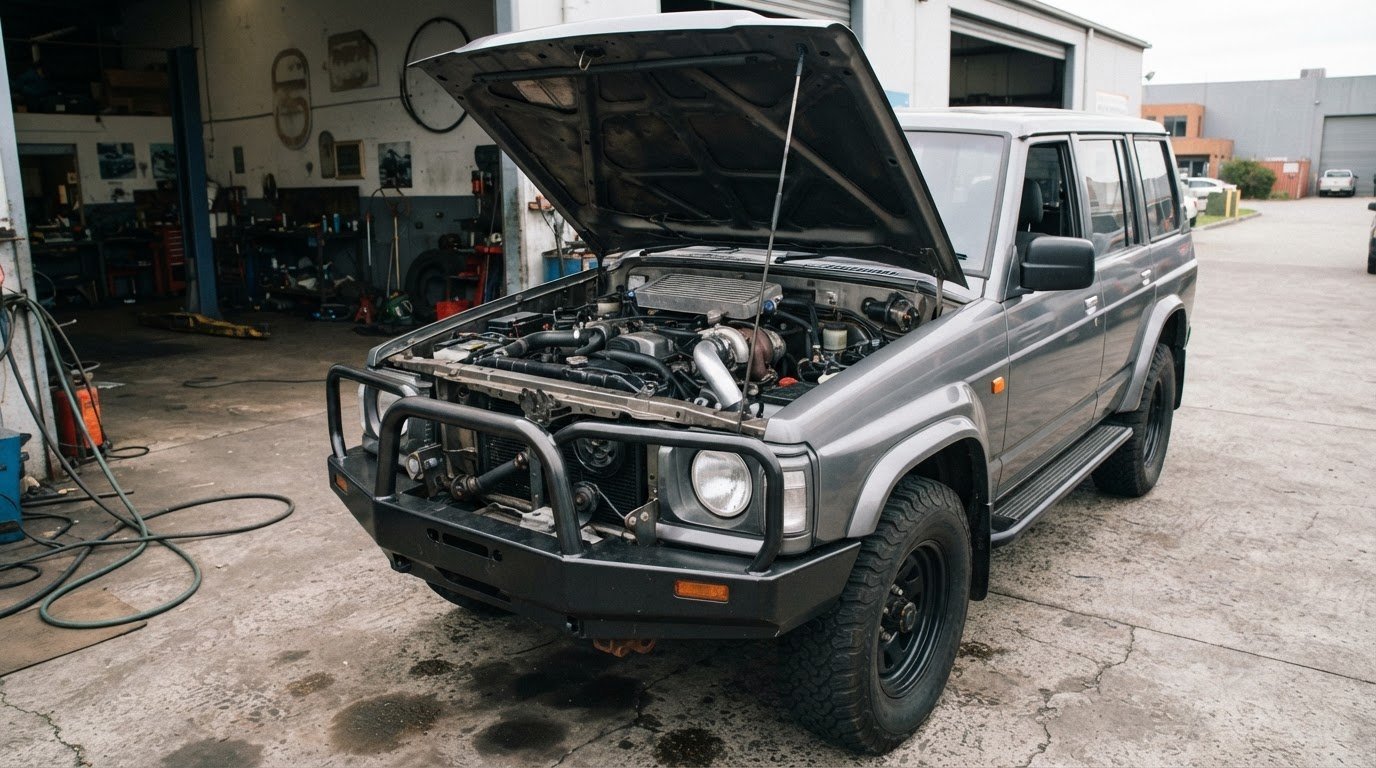
Engine mounts secure the replacement diesel to the 4×4 chassis and set its position in the engine bay. Their placement affects alignment with the transmission, clearance around the sump and space for nearby components. A mount designed for one engine cannot be assumed to suit another. The engine, gearbox and vehicle layout all shape the mounting solution.
Engine position affects clearance throughout the bay. Too far forward, and the radiator, fan or front accessories may not fit; too far back, and the firewall or transmission tunnel can become an obstacle. Mounts must also allow for engine movement under load without putting undue stress on connected components. Assess these relationships together rather than treating each bracket in isolation.
The gearbox crossmember is another important interface. A different transmission may change the gearbox position, affecting its support and driveline angles. For example, a Cummins installation needs mounts suited to that engine and the chosen transmission, not brackets copied from another vehicle. Fabrication should account for the chassis mounting points and access for servicing.
Ancillary brackets secure supporting equipment. Alternator and air-conditioning mounts must suit their components, and the exhaust needs clearance beside the chassis and steering. The radiator and cooling fan also need adequate space at the front of the engine bay. A bracket that fits the engine but blocks service access or interferes with another component can create extra work later.
A practical installation sequence begins with test-fitting the engine and transmission, then checking clearances and alignment before finalising mounts. The setup is reviewed against the sump, steering, radiator, exhaust and gearbox support. Only then can the required brackets be fabricated and installed as a coordinated system. That careful fit-up is what turns individual parts into a conversion package suited to the 4×4.
Technical support for conversions
Technical support ties the engine, controls and driveline together, so the converted 4×4 works as a complete system. Start by matching the engine output to the vehicle’s transmission, clutch, transfer case and axles. A HiLux driveline, for example, needs to be assessed against the replacement engine’s output, not just its original specification.
Modern engines also need the emissions equipment from the donor vehicle. Plan for that equipment and the engine-management systems together, rather than treating wiring as a final standalone task. A conversion for a particular vehicle may also need to meet Euro IV emissions requirements, depending on the applicable setup.
Cooling and clutch operation need specific attention. A Commodore engine lacks an engine-driven cooling fan, so its conversion requires an electric fan. In a diesel four-cylinder HiLux, the slave cylinder must be re-sleeved to an 11/16-inch bore for correct clutch operation. These details affect how the engine and existing vehicle systems work together.
Electrical integration brings another set of checks. A diesel four-cylinder HiLux tachometer can be made operative using an interface that converts pulses from the V6 DFI module. For VR, VS, VT and VY Commodore engine-management computers, the anti-theft data requirement can be disabled by changing the memcal program information. Those steps need to suit the donor components and vehicle wiring.
Technical support also identifies where a conversion can avoid unnecessary modifications. The Hilux V6 conversion described in the available technical information needs no firewall changes, transmission repositioning or driveshaft modifications. That example is specific to that setup, not a universal rule for every engine swap. A planned assessment links each requirement to the actual vehicle and components.
For a coordinated assessment of an engine conversion’s mechanical and electronic requirements, discuss your conversion requirements.
Veloce Tuning: Engine Conversions
Veloce Tuning carries out engine conversions for drivers planning a 4×4 diesel swap or weighing up the technical scope before proceeding. The conversion needs to suit the vehicle’s intended use, with the engine, transmission, mounts, cooling and supporting systems considered as a complete package.
Bring the vehicle details and your goals for touring, towing or everyday driving into the discussion. This helps shape the conversion around the 4×4, rather than treating the engine as an isolated upgrade. If the project also involves changes to ride height or suspension setup, Suspension and Lift Kits may be relevant to the wider build.
Contact Veloce Tuning to discuss your 4×4 engine conversion.
Set your conversion in motion
A diesel engine conversion for a 4×4 is a major decision about how you want the vehicle to serve you next, not simply what you want beneath the bonnet. Before moving ahead, define the role the vehicle needs to fulfil and which qualities matter most in that role. A clear brief gives the project direction and keeps the discussion grounded in your priorities.
If the 4×4 is part of a working fleet, Fleet Vehicle Management can support broader vehicle planning. Log Book Servcing can help with routine servicing, while Suspension and Lift Kits may suit a build that also needs changes to its setup. These offerings address different needs, so the next step is to focus on the work your vehicle actually requires.
Share your vehicle details and conversion goals with Veloce Tuning to begin a practical discussion. Contact Veloce Tuning and take the next step towards a conversion shaped around your plans.
Frequently Asked Questions
What does a diesel engine conversion for a 4×4 involve?
A diesel conversion replaces or adapts the engine and integrates it with the 4×4’s existing systems. The work can include engine mounts, fuel and cooling changes, wiring, engine management and adjustments to transmission connections. For example, a donor engine’s control system needs to communicate with the vehicle’s instruments and starting system. The exact scope depends on the chosen engine and the vehicle’s layout.
How much does a diesel engine conversion for a 4×4 cost in Australia?
There is no single cost for every Australian conversion. The vehicle and project scope determine the total, including engine and transmission choices, adaptors, fabrication, parts condition and installation work. A complete conversion and an engine-only supply are not comparable estimates. For a useful comparison, check what each scope includes, especially supporting components and integration work.
Which gearbox, transfer case and driveline parts may need upgrading for a diesel conversion?
The gearbox, transfer case and driveline may need changes if they do not suit the replacement engine’s output or physical connections. Assessment can include clutch capacity, gearbox condition, transfer-case compatibility, tailshaft alignment and axle suitability. For example, moving the gearbox can affect tailshaft angles even if the transfer case stays. The right parts depend on the engine, vehicle configuration and intended use.
What are the best diesel engine options for a 4×4 conversion by power, reliability and fuel economy?
The listed options include the Duramax 6.6L, Cummins 6BT 5.9L and Cummins 4.5L; their stated outputs help compare power and torque. No option is identified as best for reliability or fuel economy, which depend on engine condition, calibration, vehicle weight, gearing and driving conditions.
Can you legally convert a 4×4 to diesel in Australia, and what rules apply in each state?
A conversion must comply with the rules that apply in the relevant state or territory. In Queensland, a modified light vehicle must not be driven or parked on a road unless the modification is compliant; the maximum penalty is 60 penalty units.
What engineering certification and emissions requirements apply to diesel 4×4 conversions in Australia?
Engineering approval and emissions requirements depend on the applicable rules and the conversion. Modern conversions need the donor vehicle’s emissions equipment, and Euro IV requirements may apply depending on the setup.