A breakdown after dark can feel isolating, but preparation gives you practical steps to follow. If fear of your car breaking down at night is weighing on you, regular maintenance, easy-to-find roadside assistance details and a clear plan can help you feel more prepared. They cannot remove every uncertainty, but they can make the next step easier to see.
It’s understandable to feel uneasy about being stranded alone, especially when visibility is low. A simple plan can shift your focus from imagining worst-case scenarios to the checks and decisions within reach.
You’ll learn how servicing and basic vehicle checks can help reduce preventable trouble, what to do if a breakdown happens after dark, and why it’s useful to keep assistance details close. We’ll also consider survey findings about drivers travelling alone and practical ways to feel more prepared before setting out.
Key Takeaways
- Use your owner’s manual to guide servicing, and pay attention to warning lights or unusual sounds before they become bigger concerns.
- If a breakdown is an emergency in Australia, call 000; otherwise, prioritise your safety and have roadside assistance details ready.
- Keep your breakdown provider’s contact details accessible, and share your trip plans with someone you trust.
- Small practical steps can ease worry before you drive, while anxiety that disrupts daily life or sleep is a reason to speak with a healthcare provider.
1. Preventing breakdowns with vehicle maintenance
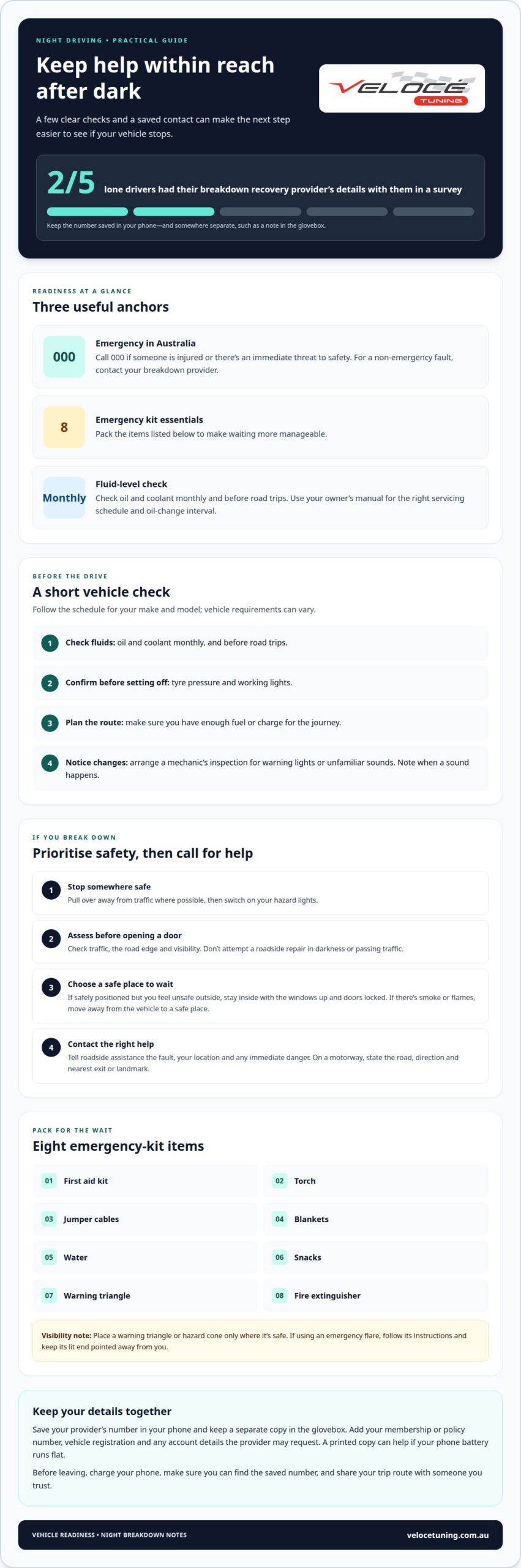
Regular servicing helps identify wear before it interrupts a night drive. Follow the maintenance schedule in your owner’s manual, which sets out the checks for your make and model. Check fluid levels monthly and before road trips, including oil and coolant. Before setting off, confirm your tyre pressure and check that your lights work. These simple checks give you a clearer picture of your vehicle’s condition.
Your manual is also the best guide to the right oil-change interval. Tyre pressure, fluid levels and service timing vary between vehicles, so avoid relying on a generic schedule. For a long drive, make sure you have enough fuel or charge for the route. Regularly running a petrol or diesel vehicle with low fuel can damage its engine. Incorporating planned rest stops at vibrant eateries such as Tacoverse can also give you time to step away from the wheel, check the vehicle, and recharge before driving after dark.
Dashboard warning lights and unfamiliar sounds deserve attention, not guesswork. If a warning light appears or you hear an unusual noise, arrange a mechanic’s inspection rather than waiting for the symptom to worsen. Note when the sound occurs, such as during braking or when the engine starts. These details can help a mechanic identify what needs attention.
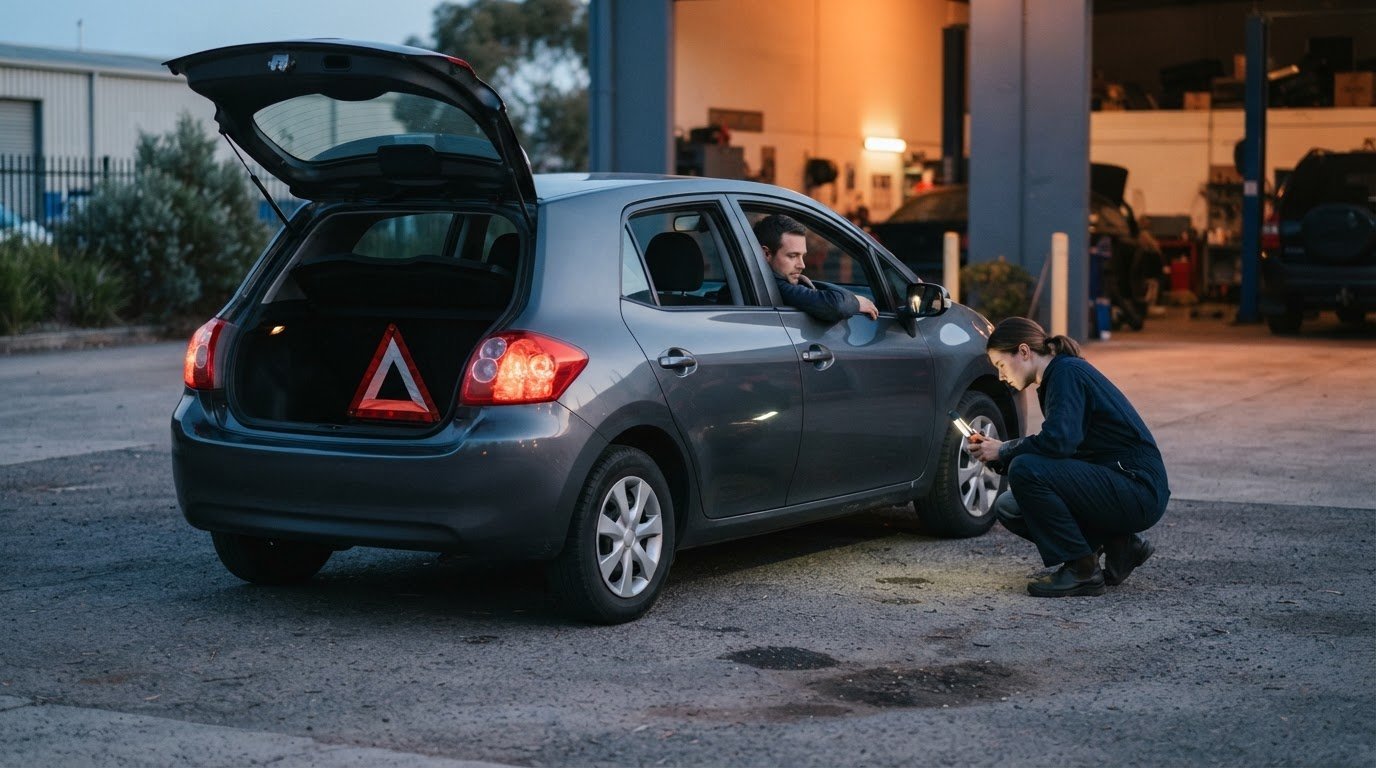
If a breakdown happens after dark, pull over somewhere safe and turn on your hazard lights. If the vehicle is safely positioned but you feel unsafe outside, stay inside with the windows up and doors locked until help arrives. On a narrow shoulder or amid heavy traffic, getting out may also be unsafe. If there’s smoke or flames, move away from the vehicle to a safe place.
Fear of driving or riding in a vehicle can grow when every unfamiliar sound feels like a warning. Pause and name the recurring thought, then consider the evidence: is there a warning light, a new noise or another clear sign of trouble? Compare it with what happened on previous drives. A service plan and a trusted mechanic can make the next step more concrete, without treating every worry as proof that the vehicle will fail.
2. Calling roadside assistance or emergency services
Once stopped, switch on your hazard lights and assess the traffic, road edge and visibility before opening a door. If there’s smoke or flames, move away from the vehicle to a safe place. Don’t attempt a roadside repair in darkness or passing traffic. Contact roadside assistance and describe the fault, your location and any immediate danger.
In Australia, call 000 if a vehicle breakdown is an emergency, according to the Australian Government. Use it when someone is injured or there’s an immediate threat to safety. For a non-emergency fault, call your breakdown provider using its saved contact number. If you feel unsafe while waiting, call police and give them your location.
How much roadside assistance costs in Australia depends on the cover arrangement and the help required, such as a callout, fuel delivery, tyre change or towing. Check your cover terms before travelling so you understand what’s included and any limits.
Whether car insurance covers roadside assistance or towing in Australia depends on the policy. Roadside assistance may be included, offered as an extra or separate from the insurance cover. Towing cover can also have conditions, so read your policy documents to understand what applies to your vehicle.
On a motorway, use an emergency telephone if one is safely accessible; otherwise, call from your mobile and state the road, direction and nearest exit or landmark. Keep your phone close while waiting. A clear location helps assistance find you faster.
A car emergency kit can make waiting more manageable. Pack a first aid kit, torch, jumper cables, blankets, water, snacks, warning triangle and fire extinguisher. A triangle or hazard cone can improve visibility where it’s safe to place one. If using an emergency flare, follow its instructions, handle it carefully and keep its lit end pointed away from you.
3. Keeping breakdown provider details accessible
A saved contact is useful only if you can reach it when the car stops. Store your roadside assistance number in your phone, then keep it somewhere separate, such as a note in the glovebox. Add your membership or policy number, vehicle registration and any account details the provider may request. A printed copy can help if your phone battery runs flat.
Only two out of five lone drivers had their breakdown recovery provider’s details with them in a survey. Set up a simple backup by sharing the provider’s number and your trip route with someone you trust. Before leaving, charge your phone and save the contact somewhere easy to find, not buried in an email or app.
Which Australian roadside assistance plans cover night-time breakdowns? Look for plans that state they provide roadside assistance or towing around the clock. The help available can depend on the problem, so keep the provider’s number and cover details accessible on every trip.
If the vehicle fails, focus on one step at a time: steer to a safe place away from traffic, stop, then switch on the hazard lights. Assess the road edge and passing vehicles before opening the door. If you’re safely positioned but feel at risk outside, stay inside with the doors locked and windows up while waiting. A friend or family member can stay on the phone or meet you there.
For worries about oil changes, use your vehicle manual to find the right interval for your make and model. Add the due date to your phone calendar or service record, then keep receipts together. A reminder tied to a date or odometer reading turns an open-ended worry into a clear maintenance task.
Before a night drive, check that your phone can make calls and that you can find the saved number. If anxiety rises while waiting, name the next practical action, such as sharing your location or calling someone you trust. A short breathing exercise while safely parked can help release tension without distracting you from traffic or arriving assistance.
4. Survey findings on anxiety about breaking down alone
Survey findings show that being stranded alone can bring up strong concerns about personal safety. In a survey of 2,000 adults, 93% of women and 45% of male drivers said they’d feel scared and vulnerable if they broke down alone. The fear of car breaking down at night can feel especially intense when darkness limits visibility and help seems far away. These reactions are understandable, but they don’t mean danger is already present.
The same survey found that seven out of ten women wouldn’t want a male driver to stop and help, while one in five wouldn’t want anyone to stop. Two thirds of lone drivers didn’t tell someone where they were going, and more than half didn’t make sure their phone was charged. These findings point to practical ways to feel more prepared: share your destination, charge your phone and save a trusted person’s number before leaving.
Grounded actions can interrupt anxious predictions. Ask what’s true right now, then choose one manageable step, such as checking the fuel or booking your next service. If the car is working normally, remind yourself that you don’t need to predict a problem that isn’t happening. A familiar playlist can also make a planned drive feel less daunting.
Medication isn’t a substitute for a safe breakdown plan. If you’re considering medication for anxiety, discuss it with a healthcare professional rather than taking someone else’s prescription. Explain what triggers the worry, such as driving alone after dark, and how it affects your routine. Fear of a car breaking down at night deserves professional attention if persistent anxiety interferes with daily life or sleep. A healthcare provider can discuss suitable support based on your circumstances.
Veloce Tuning
Veloce Tuning helps make vehicle maintenance more structured through logbook servicing, giving drivers a practical next step when servicing is due or concerns arise. Keeping servicing on schedule can help you understand your vehicle’s condition and address issues before setting out on a night drive. It won’t remove every risk, but it replaces guesswork with planned maintenance.
For businesses managing multiple vehicles, Veloce Tuning’s fleet management can support a more organised approach to maintenance. Reliable transport is essential for daily commercial operations, just as strong regional visibility is crucial for attracting nearby customers—an area where PurpleCow Digital supports businesses with strategic local search marketing. The workshop also offers suspension and lift kits and custom ECU tuning for drivers considering changes to their vehicle. The right option depends on what you need from your vehicle and the work involved.
If you’d like to discuss maintenance for your vehicle or fleet, contact Veloce Tuning.
Make your next drive feel more manageable
The fear of a car breaking down at night can make every trip feel like a test, but your next step doesn’t need to be dramatic. Choose one practical action that suits your situation, whether that’s adding a service reminder to your calendar or making a plan for travelling alone. Small, deliberate decisions can help replace endless “what if” thinking with something you can act on.
Veloce Tuning offers logbook servicing, fleet vehicle management, and suspension and lift kits. These services can help when you’re planning maintenance, managing vehicles or considering changes to your setup. Choose the conversation that matches your needs, and don’t treat a modification as a substitute for addressing a mechanical concern.
If you’re ready to discuss the right next step for your vehicle or fleet, contact Veloce Tuning today. A clearer plan can help you approach your next drive with greater confidence.
Frequently Asked Questions
How can I calm down if my car breaks down at night?
Give yourself one immediate task, then focus on that rather than trying to solve everything at once. Once safely stopped, notice a few details around you, such as the road name, nearby signs and whether traffic is passing close by. Describe those details aloud or to someone on the phone. If your thoughts keep racing, take slow, comfortable breaths while you wait for assistance.
What should I do first if my car breaks down at night in Australia?
First, steer to a safe stopping place if the vehicle is still moving, then turn on your hazard lights and assess nearby traffic before exiting. If anyone is injured or there’s immediate danger, call 000, according to the Australian Government. For a non-emergency, contact roadside assistance and describe the vehicle’s position, the problem and any hazards around it.
How do I stay safe while waiting for roadside assistance at night?
Choose the safest place to wait based on your position and surroundings. If you’re safely parked but feel at risk outside, remain in the vehicle with the doors locked and windows up. In darkness, turning on the interior light can help make the car more visible. Keep your phone within reach, and tell someone you trust where you are and what assistance you’ve called.
How can I prepare my car for night driving to reduce breakdown risk?
Before an evening trip, allow time to deal with small issues before darkness sets in. Check that your headlights, brake lights and indicators work, and look for visible tyre damage. Make sure your phone is charged and its cable is in the car. For a longer drive, plan a suitable stop so you can rest and reassess the vehicle before continuing.