A flat battery can mimic a bigger failure, but replacing it isn’t always the right first step. If your car won’t start and you need help nearby, battery testing can indicate whether a jump-start or replacement may help. An alternator, starter motor or electrical fault may need diagnosis, while a vehicle that cannot be repaired safely where it is may need towing. The right car won’t start help near me depends on the symptoms and the next repair needed.
It’s frustrating when the engine stays silent and you’re left weighing your next move. This guide explains what roadside battery help can involve, when a jump-start may be suitable and which signs can point to a deeper fault. You’ll also learn when towing makes more sense, so you can choose a practical next step without guessing.
Key Takeaways
- Use the vehicle’s symptoms to decide whether roadside battery help or a deeper mechanical diagnosis is the more useful next step.
- Learn what a professional jump-start may include, and why a battery that won’t hold charge may need replacing.
- Recognise when a car is unsafe to drive or cannot be repaired roadside, making towing the practical option.
- Understand how battery, alternator, starter motor and electrical faults can produce similar starting problems.
Mobile technician coverage and operating hours
Mobile roadside assistance is most useful when the technician can reach the vehicle’s exact location. Local help is relevant to Carrum Downs and nearby areas, including Frankston, Patterson Lakes, Mornington, Skye, Seaford and Sandhurst. Veloce Tuning provides 24/7 breakdown assistance, so drivers can seek help when a no-start interrupts a trip.
For car won’t start help near Carrum Downs, describe what happens when you turn the key or press the start button. Say whether the engine clicks, turns slowly or stays silent, and whether dashboard lights come on. These details can help distinguish a possible flat battery from a starting or charging fault. Also explain any access restrictions, such as a basement car park or narrow driveway.
When arranging assistance, provide your suburb, street, vehicle make and model, registration and contact number. Describe the symptoms and explain where the vehicle is parked. If you’re in Carrum Downs, Frankston, Patterson Lakes, Mornington, Skye, Seaford or Sandhurst, give the nearest cross street too. A precise location helps identify where the car needs attention.
A flat tyre may be repairable, depending on its condition, while some damage calls for replacement. If the vehicle has a spare wheel, it may be possible to fit it. Don’t attempt a wheel change beside busy traffic, where passing vehicles leave little room to work. Have the tyre and roadside conditions assessed before deciding whether repair or a spare-wheel change is suitable.
Jump-starting carries risks if leads are connected incorrectly, and working near traffic exposes you to passing vehicles. Keep clear of traffic and leave the jump-start to a professional if you’re unsure about the connections or surroundings.
Battery replacement or starter motor repair costs in Australia depend on the vehicle, the parts needed and the fault. Get a quote based on your vehicle details and symptoms before arranging the work.
Professional jump-start roadside assistance
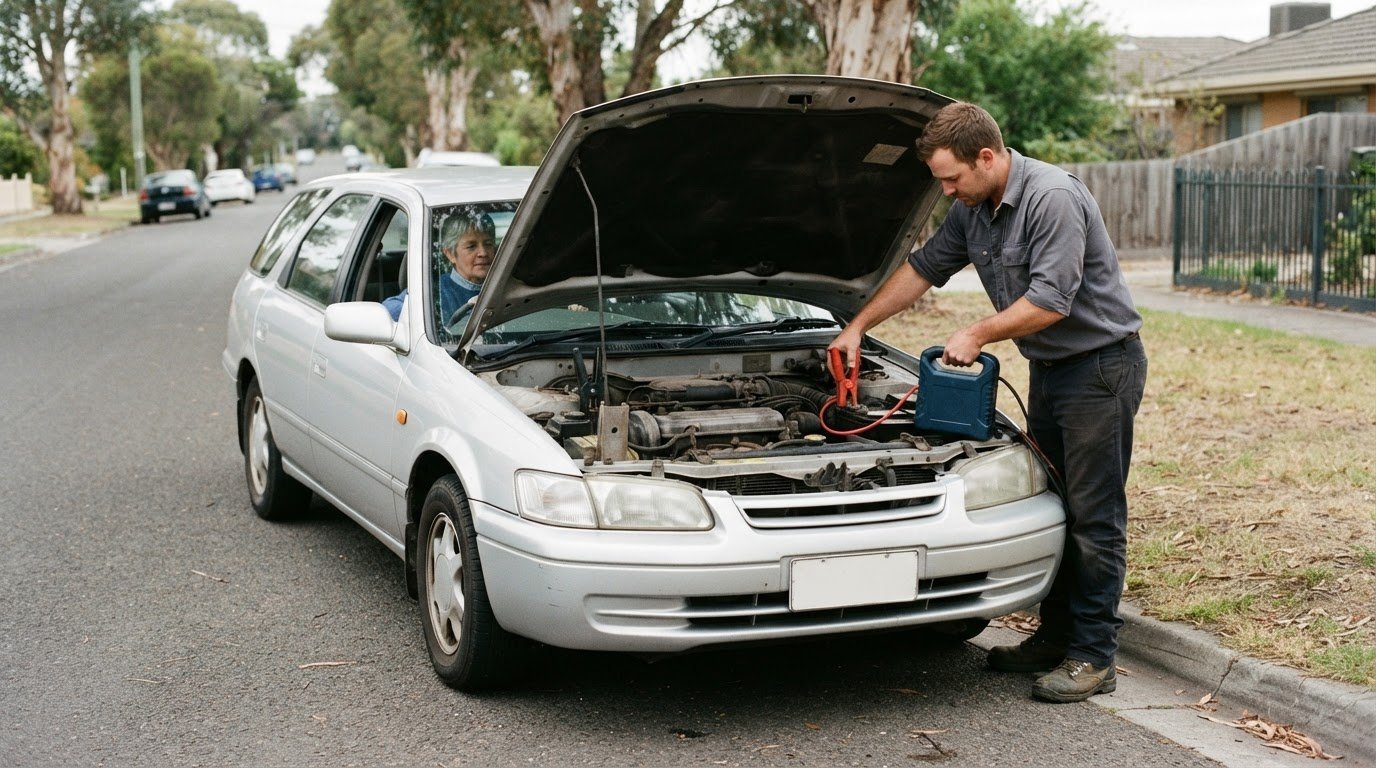
A jump-start can restore power when a flat battery is the likely cause. Battery and charging-system tests can help show whether the battery has simply discharged or a fault needs further attention.
Emergency Jump-Start Availability
Emergency jump-start availability depends on the service area, operating hours and whether a response unit can reach the vehicle. Access matters too: a car in a locked garage or restricted car park may need different arrangements from one parked in an open driveway. Explain any access limits during the call, along with the vehicle’s symptoms.
Those details help determine whether a jump-start is a suitable first response or whether the vehicle needs diagnosis or towing.
Running the Car After a Jump
After a successful jump-start, leave the engine running for a few minutes to help the battery charge. Then drive for about 30 minutes before stopping again, giving the charging system time to replenish it. A short idle may not restore enough charge for another start.
If the car won’t restart or loses power again, arrange a battery and charging-system assessment rather than relying on repeated jump-starts.
Jump-Starts Compared with Towing
A jump-start may be suitable when a discharged battery appears to be the problem and the vehicle can restart safely. If the engine still won’t start or a mechanical fault makes driving unsafe, towing is the more appropriate next step. Diagnosis can help distinguish these situations.
Roadside assistance cover varies by policy or membership. Review whether your cover treats a no-start callout, towing and battery replacement as separate services.
Safe Jump-Starting in Australia
Use the vehicle manufacturer’s instructions to identify the correct jump-start procedure and connection points. Don’t guess at the terminals or sequence, as incorrect connections can damage vehicle electronics. If the instructions aren’t available or the process is unfamiliar, leave the task to a professional.
A technician can assess the battery and charging system before you decide whether to continue driving. For support with a no-start, arrange roadside assistance and describe what happened when you tried to start the vehicle.

Towing when roadside repairs are not possible
A roadside restart is only useful if the vehicle can run safely afterwards. Towing is the next step when a mechanical fault prevents a safe restart or roadside repair. For example, a failed starter motor won’t be fixed by replacing the battery. If the vehicle is blocking traffic or parked in an exposed location, include that when arranging help.
Roadside diagnosis helps separate a flat battery from faults involving the alternator, starter motor, charging system or electrical wiring. A technician can test battery condition and charging to guide the next step. If a battery no longer holds charge, battery replacement can be practical. If testing points to another mechanical fault, a mechanic can investigate beyond the roadside checks.
When arranging help, give the vehicle’s location, make and model, registration, and what happens when you try starting it. Be specific: does the engine click, turn slowly or make no sound? Mention warning lights and any recent battery replacement. These details help identify the reported fault and determine whether diagnosis or towing is the appropriate response.
If roadside repairs cannot restore safe operation, arrange transport to your home, a mechanic or another suitable location. Tell the towing service your preferred destination and whether the vehicle is accessible. A car stranded in a narrow street, car park or roadside position can need different loading access, so describe the surroundings clearly.
Choose towing over repeated starting attempts when the vehicle remains unsafe or the fault needs workshop diagnosis. A successful jump-start doesn’t prove the underlying problem is fixed: a charging-system fault, for example, can leave the battery flat again. If the engine runs but warning signs remain, avoid driving until the cause is assessed. This can help prevent a breakdown from becoming a roadside hazard.
Help diagnosing a car that will not start
A no-start can point to more than a flat battery. The cause may be the battery, alternator, starter motor, charging system or electrical wiring. A battery can discharge because it is old, lights were left on, charging has failed or the vehicle has been inactive. Frequent short trips and hot coastal conditions can also contribute to battery failure.
Start with the symptoms rather than guessing which part needs replacing. Note whether the engine turns slowly, clicks or stays silent, and whether dashboard lights appear. These clues can help distinguish a possible flat battery from a starter motor or electrical fault. Battery testing and a charging-system check can show whether a jump-start may address the problem or only restore power temporarily. If you need car won’t start help near me, share these observations when arranging assistance.
An alternator fault matters because it can stop the battery charging properly. If the vehicle starts after a jump but later struggles again, the battery may not be the only issue. A battery that no longer holds charge may need replacement; wiring or starter faults need a different repair. Roadside diagnosis helps determine whether the car can be driven safely or needs towing for further assessment.
Call a mechanic rather than keep trying to start the car if repeated attempts fail, the engine makes unusual sounds or warning signs remain after a jump. Seek help if the vehicle is stranded in traffic or an unsafe spot. Repeated attempts won’t identify a failed alternator, starter motor or wiring fault, and towing may be the safer next step. For car won’t start help near me in Carrum Downs, Frankston, Patterson Lakes, Mornington, Skye, Seaford or Sandhurst, clear symptoms help guide the next assessment.
For fleet operators, recording each vehicle’s no-start symptoms and repair history can reveal recurring battery or charging issues. Explore fleet vehicle management to support oversight of vehicles with repeated breakdowns. For an individual car, give the mechanic the symptoms, recent battery history and whether a jump-start changed anything. That detail helps narrow the fault before repair decisions are made.
Veloce Tuning
Once the immediate no-start problem is addressed, Veloce Tuning can help with ongoing vehicle care. Logbook servicing helps keep your service schedule on track and protects your new-car warranty; fleet servicing supports businesses managing their vehicles. These services complement roadside diagnosis or towing when a car cannot be driven safely.
For drivers planning broader vehicle changes, Veloce Tuning also offers suspension and lift kits and custom ECU tuning. The right option depends on your vehicle and what you want it to do, not simply on a battery fault. If a no-start issue has left you needing ongoing vehicle care, contact Veloce Tuning to discuss the next step.
Get back on track with a clear next step
A no-start can interrupt more than a trip; it can unsettle the plans built around your vehicle. Once the immediate problem is addressed, keep a note of what happened, what changed after assistance and whether the fault returned. That history can help inform future maintenance rather than treating every breakdown as an isolated event.
If your car won’t start, the right help near you depends on the cause and what the vehicle needs next. Veloce Tuning in Carrum Downs provides ongoing vehicle care, from logbook servicing to fleet servicing and performance upgrades. If you need a considered plan after a roadside problem, call Veloce Tuning to discuss the vehicle and its needs.
Contact Veloce Tuning about your vehicle’s next step. A clear plan can help you move forward with greater confidence and get back to enjoying the drive.
Frequently Asked Questions
Can you replace my battery on the roadside?
Veloce Tuning offers battery testing and replacement through its Batteries & Auto Electrical service, alongside 24/7 breakdown assistance. A roadside assessment can help identify whether a flat battery is behind the no-start; battery replacement is the next consideration if testing shows the battery has failed. Share your vehicle’s make, model and symptoms so the fault can be assessed accurately.
How quickly can you provide roadside assistance?
Veloce Tuning’s breakdown service operates 24/7, but an exact arrival time depends on your location and current road conditions. Give your suburb, street and nearest cross street during the call, then explain whether the vehicle is in a driveway, car park or roadside. Those details help clarify where assistance is needed and how the vehicle can be reached.
Need a Tow?
If the vehicle can’t be driven safely and roadside repairs won’t resolve the fault, towing is the practical next step. Tell breakdown assistance where the car is, whether access is restricted and where it needs to go, such as home or a mechanic. If it is blocking traffic, mention that immediately.
What should I check first if my car won’t start?
First, make sure the vehicle is in Park or Neutral, then note what happens when you turn the key or press the start button. Check whether dashboard lights come on, and listen for clicking or slow engine cranking. These observations can help distinguish a possible battery issue from another fault. Avoid repeated starting attempts if the car is in an unsafe position.
How can I tell if a car won’t start because of a flat battery, starter motor, or alternator?
A flat battery can cause dim dashboard lights, slow cranking or clicking. A starter motor fault may leave the lights working while the engine fails to turn over. An alternator problem affects charging, so the battery may lose power again after a start. These signs can guide diagnosis, but testing is needed to identify the fault rather than guessing at parts.
What are the costs and response times for roadside assistance or a mobile mechanic near me?
Roadside assistance costs depend on the work required, parts and the vehicle’s fault. Response time depends on location, traffic and nearby assistance. Provide your suburb, vehicle details and symptoms when arranging help so the team has useful context to assess what is needed. Veloce Tuning accepts Afterpay, humm, Zip, cash, EFTPOS, Visa, Mastercard and American Express for workshop services.