
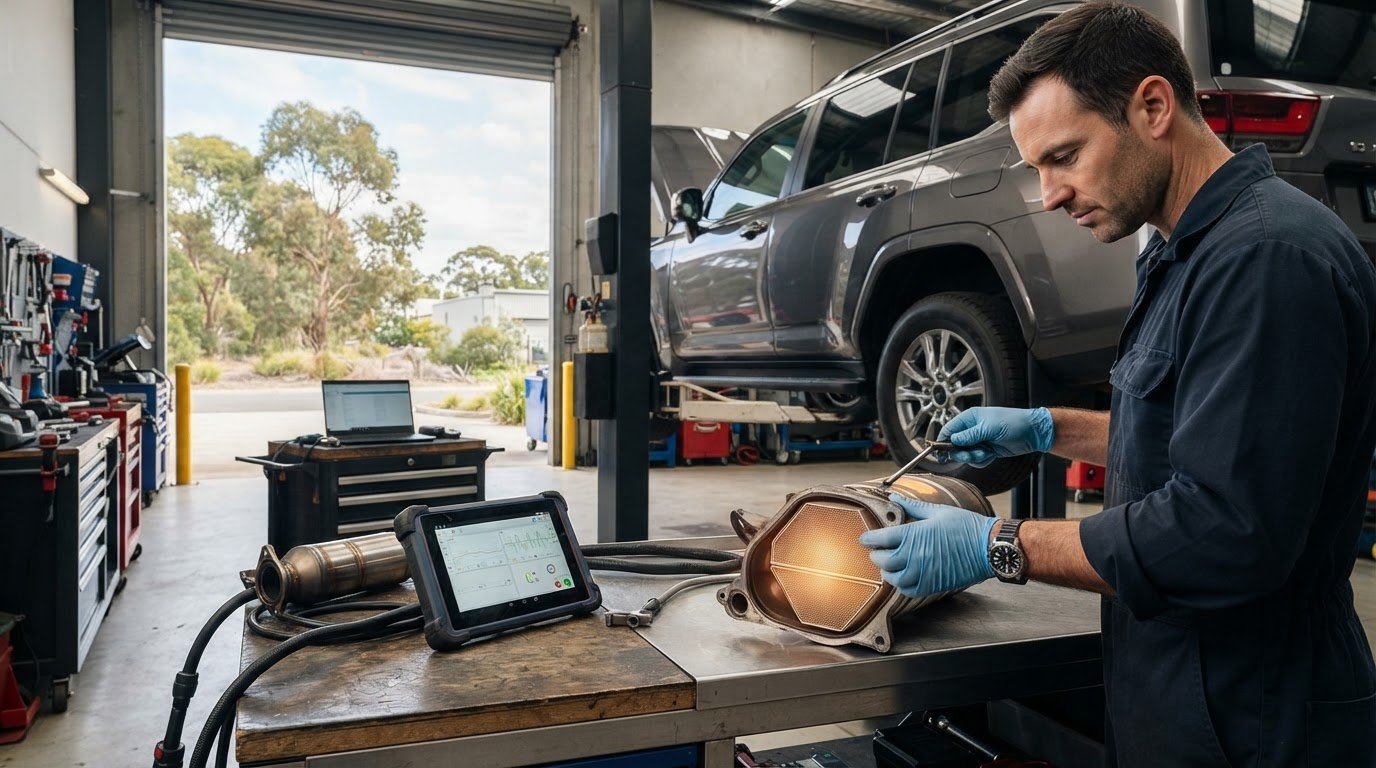
The filter might not be the real fault. If your diesel is losing power, using more fuel or showing a DPF warning, a blockage could be a symptom of another issue, not a reason to delete the system. The most practical DPF delete alternatives Australia has to offer start with finding the cause.
It’s understandable to want a lasting fix when repeated warnings disrupt daily driving, especially when advice about regeneration, cleaning and replacement seems to point in different directions. But deleting or disabling a factory-fitted DPF isn’t a compliant solution for an on-road vehicle. The right next step depends on what’s happening inside the filter and whether another fault is contributing.
This guide compares diagnosis, regeneration, professional cleaning, repair and replacement, so you can see what each option does and when it may be suitable. You’ll also learn when specialist DPF servicing can help uncover the cause of repeat blockages. Veloce Tuning provides DPF servicing and repairs for diesel owners in Carrum Downs and nearby areas. Start with the fault, then choose the fix.
Key Takeaways
- DPF delete alternatives Australia start with identifying what’s behind the blockage, rather than assuming the filter itself is the only fault.
- Diagnosis, regeneration, professional cleaning, component repair and replacement each address different problems and have different limits.
- A warning light or drop in performance is a clue, not a diagnosis. The vehicle handbook and a proper assessment can help guide your next step.
- Repeated DPF trouble may call for checks of related systems as well as the filter before choosing a repair path.
- Veloce Tuning provides DPF servicing and repairs in Carrum Downs to assess the filter and related causes before selecting a remedy.
DPF delete alternatives in Australia: why keep the emissions system working?
A diesel that feels sluggish or keeps showing a warning needs a clear diagnosis, not a shortcut that masks the fault. For owners who use their vehicle on the road, the starting point is to keep the factory emissions system functional and establish why it isn’t working as intended. That’s the principle behind practical DPF delete alternatives Australia drivers can consider.
What does a DPF do, and what does deletion mean?
A diesel particulate filter captures soot in the exhaust before it can leave the vehicle. During regeneration, the system raises exhaust temperatures so accumulated soot can burn away. The Diesel Particulate Filter (DPF) overview explains the filter’s role and regeneration in more detail.
A repair aims to restore the system’s intended operation, whether the issue lies with the filter or a related component. A DPF delete, by contrast, means removing or disabling emissions equipment, or bypassing its function. These are different outcomes: the warning or blocked filter may be the visible symptom, while the underlying cause still needs attention.
Why is a DPF delete a poor road-use shortcut?
Removing or disabling factory emissions equipment can create compliance concerns for a vehicle used on public roads. Requirements and consequences can depend on the vehicle and circumstances, so check current official Australian and Victorian guidance rather than relying on broad claims or forum advice. Inspection outcomes may also be affected. Changes to emissions equipment could have implications for insurance cover, manufacturer warranty or resale, but these aren’t identical for every vehicle or policy. Review the relevant terms and seek clarification from the appropriate authority or insurer.
A compliant DPF alternative is a diagnosis-led option that addresses the fault while retaining the vehicle’s emissions controls in working order. That keeps the decision focused on the actual problem, not simply the part displaying a warning.
The right remedy depends on what testing finds. Regeneration may suit a filter that can complete the process. Cleaning may be considered when soot or deposits restrict flow. Repair or replacement may be needed if the filter or a related component is damaged. None is a universal fix. If an engine fault is contributing to repeated blockage, addressing the filter alone may not resolve the cause.
Australian and Victorian requirements can change, so verify current road-use and emissions guidance before making decisions about vehicle modifications. In practice, start with the cause, then select a suitable remedy. That’s a steadier route to restoring performance while keeping the emissions system in place.
How to identify the DPF fault before choosing an alternative
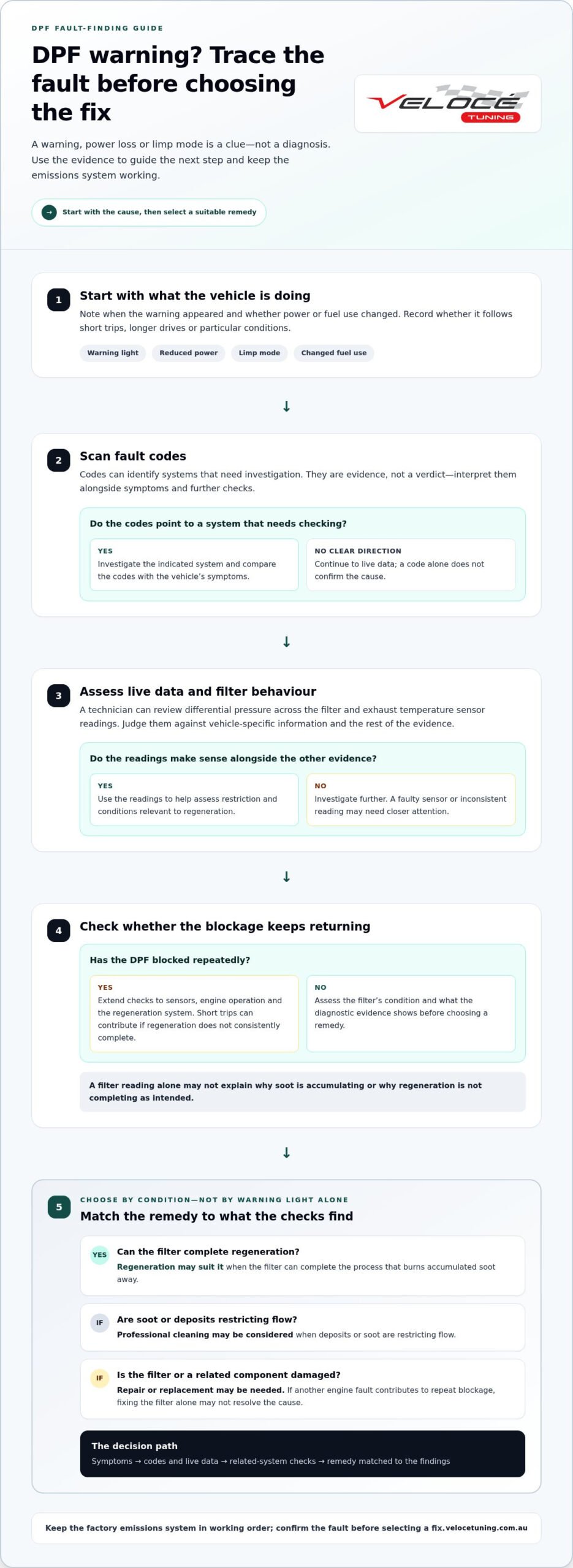
A DPF warning light, reduced power or limp mode can point to a filter problem, but none confirms the cause on its own. Soot loading may be part of the picture; sensor readings, regeneration issues or another engine fault can also contribute. Before choosing among the DPF delete alternatives Australia drivers can consider, build a clear picture of what the vehicle is reporting.
- Record the symptoms. Note when the warning appeared, whether power or fuel use changed, and whether the issue follows short trips, longer drives or particular conditions. This history gives a technician useful context.
- Scan for fault codes. Diagnostic trouble codes help identify systems that need investigation. A code is evidence, not a verdict, so it needs to be interpreted alongside symptoms and further checks.
- Assess live data. A technician can review readings such as differential pressure across the filter and exhaust temperature sensor data. These readings help show how the DPF and its monitoring system are behaving, but must be judged against vehicle-specific information.
- Inspect related systems. If the filter keeps blocking, checks may need to extend to sensors, engine operation and the regeneration system. A filter reading alone may not reveal why soot is accumulating or regeneration isn’t completing as intended.
- Select a remedy. Once the fault and filter condition are understood, the next step may be regeneration, cleaning, component repair or replacement. The evidence should guide the choice.
Which checks help distinguish a blocked DPF from another fault?
Fault codes and live data are most useful when considered together. Differential pressure readings can help assess restriction across the DPF, while exhaust temperature readings provide context about conditions relevant to regeneration. If a sensor is faulty, or its readings don’t make sense alongside other evidence, the apparent filter fault may need closer investigation. These checks support a technician’s assessment; they aren’t a stand-alone diagnosis.
What can cause a DPF to block repeatedly?
Short-trip driving can contribute, as the vehicle may not consistently reach conditions that allow regeneration to complete. It isn’t the only possible explanation. An engine, sensor or regeneration fault may also play a part. Repeating the same remedy without investigating why the blockage returns can leave the underlying issue unresolved.
Diagnosis should come before cleaning or replacement, because the right fix depends on whether the restriction is the cause or a symptom of another fault. When DPF trouble repeats, a complete assessment can help connect the warning to the filter and related systems. Veloce Tuning provides DPF servicing and repairs in Carrum Downs, with the repair path guided by diagnosis and the condition of the system.
DPF delete alternatives compared: regeneration, cleaning, repair or replacement
There isn’t one fix for every blocked filter. The right option depends on what diagnosis reveals, whether the issue is soot or damage, and whether a fault elsewhere is affecting the DPF. This comparison of DPF delete alternatives Australia drivers may consider shows what each option can address and where its limits lie.
| Option | When it may suit and what it addresses | Limitations |
|---|---|---|
| Diagnosis | When a warning, reduced performance or repeat blockage needs investigation. It helps identify the reported fault and assess the filter and related systems. | It identifies evidence and informs a repair choice; it doesn’t clear a blockage or fix a fault by itself. |
| Regeneration | When assessment indicates the filter can complete regeneration under suitable conditions. The process burns accumulated soot. | It addresses soot, not every cause of restriction. It won’t repair a damaged filter or resolve an underlying engine or sensor fault. |
| Professional cleaning | When the filter’s condition suggests cleaning may address accumulated material restricting flow. | Suitability depends on the filter’s condition and the nature of the restriction. Cleaning won’t fix a separate fault that caused the problem. |
| Component repair | When assessment finds a repairable fault in a related component or system affecting DPF operation. | It targets the identified fault, but may not resolve a filter that is itself damaged or beyond repair. |
| DPF replacement | When the filter is damaged or assessment indicates another remedy isn’t suitable. | It replaces the filter, but related engine, sensor or regeneration faults may still need attention. |
When can regeneration or professional cleaning be considered?
Regeneration may be appropriate when diagnostic findings indicate that the filter and system are in suitable condition for the process. It burns soot, but doesn’t remove every type of deposit or correct the reason regeneration failed. Professional cleaning is a separate option, and its suitability depends on the filter’s condition. Neither approach should be treated as a guaranteed fix.
When might repair or DPF replacement be the next step?
A fault in a sensor or related engine system may call for repair without replacing the DPF. If the filter itself is damaged or remains unsuitable for cleaning, replacement may be assessed instead. The distinction matters: a new filter won’t necessarily stop repeat trouble if the underlying cause remains.
In short, soot may call for regeneration, a cleanable filter may suit professional cleaning, a faulty component may need repair, and a damaged filter may require replacement. Diagnosis connects the symptom to the remedy and helps avoid repeating a step that doesn’t address the actual fault.
What to do when your DPF warning light comes on in Australia
A DPF warning light is a prompt to pay attention, not a reason to guess at the fix. The right response depends on the vehicle and the warning shown, so don’t assume a high-speed drive or forced regeneration is suitable. Use this sequence to decide what to do next.
- Note the warning. Record which light or message appeared and whether other warnings came on at the same time.
- Record what changed. Make a note of power loss, unusual smoke, changes in how the engine runs, and when the symptoms occur.
- Consult the vehicle handbook. Follow the manufacturer’s guidance for that specific warning and vehicle. If the instructions call for stopping or seeking assistance, act accordingly.
- Arrange diagnosis. Fault testing can help establish whether the DPF, a sensor or another related system needs attention before a remedy is chosen.
This measured approach helps you avoid treating every warning as the same fault. It also puts you on a clearer path towards DPF delete alternatives Australia drivers can consider, with the vehicle’s condition and the cause guiding the decision.
What information should you note before a workshop assessment?
Clear observations give the technician useful context, even though they can’t replace diagnostic testing. Note the exact warning message, when it first appeared, whether engine power changed and whether you noticed unusual smoke. Include recent driving patterns, such as frequent short trips, and mention any servicing or repairs carried out shortly before the warning. These details can help connect the symptoms to the vehicle’s fault information.
If the warning comes and goes, note when that happens too. For example, record whether it appears after particular types of trips or alongside another change in how the vehicle runs. Don’t try to trigger a regeneration to test the system. Follow the vehicle’s instructions and leave the decision to the diagnostic assessment.
When should you avoid continuing to drive?
Let the handbook and severity of the symptoms guide your immediate response. If the vehicle has severe power loss, enters limp mode or displays additional critical warnings, stop somewhere safe and seek prompt professional assistance rather than continuing the journey. Don’t put yourself or other road users at risk to reach a workshop.
For less severe symptoms, arrange an assessment and follow the handbook’s directions rather than assuming the vehicle is safe to keep using as normal. Veloce Tuning’s DPF repair and servicing guide offers further context on the system and its servicing. For assessment and repair, enquire about DPF servicing and repairs.
Choosing a DPF repair path with Veloce Tuning in Carrum Downs
Once you’ve noted the symptoms and considered the options, the next step is to connect the warning to its cause. Veloce Tuning provides DPF servicing and repairs from its Carrum Downs workshop for local diesel drivers, including those from Frankston, Patterson Lakes, Mornington, Skye, Seaford and Sandhurst. The aim is to assess the filter and related systems before settling on a repair path, rather than treating every warning as the same fault.
What should a thorough DPF assessment establish?
A useful assessment brings together your account of the symptoms, diagnostic evidence and the apparent condition of the filter. If the DPF keeps blocking, the investigation may also need to consider whether an engine, sensor or regeneration fault is contributing. That wider view matters: cleaning or replacing a filter may not resolve repeat trouble if a related issue remains.
The recommended next step should make sense in light of those findings. Depending on the diagnosis and filter condition, the path may involve servicing, repair or further assessment of whether the filter is suitable for cleaning or needs replacement. Each option has limits, so clear explanations help you understand what it addresses and what may still require attention.
How can you reduce the chance of another DPF issue?
No maintenance routine can guarantee a DPF will never develop a fault, but following the vehicle manufacturer’s maintenance schedule and warning guidance gives you a sound starting point. If a warning appears, use the handbook’s instructions rather than relying on general advice that may not suit your vehicle.
Driving patterns and how the vehicle is used can also provide useful context during an assessment. Regular short trips, for example, may be relevant to the investigation, but they don’t prove the cause by themselves. Share that history alongside any recent servicing or repairs so the diagnosis can account for the broader picture. For scheduled maintenance, see Veloce Tuning’s guide to log book servicing and vehicle maintenance.
For drivers considering DPF delete alternatives Australia, the practical choice is the one informed by the actual fault and the condition of the filter and related systems. Veloce Tuning’s local DPF servicing and repairs offer a diagnostic-led option for diesel owners in Carrum Downs and surrounding areas. If your DPF warning has returned, or you’re unsure what the symptoms mean, talk to Veloce Tuning about DPF servicing and repairs and arrange an assessment.
Get your diesel back on the right track
The best DPF fix isn’t automatically a clean or a replacement. It starts with finding out whether soot, filter condition or a related system fault is behind the warning. Regeneration, professional cleaning, repair and replacement each have a place, but diagnosis helps match the remedy to the problem.
That’s the practical value of exploring DPF delete alternatives Australia: you can respond to recurring trouble without jumping to a shortcut or overlooking the cause. Keep a record of symptoms, follow your vehicle handbook’s warning guidance and seek an assessment if the issue persists or performance drops.
Veloce Tuning provides specialist DPF servicing and repairs from its Carrum Downs workshop for nearby communities across Melbourne’s south-east. If your diesel’s filter is causing concern, talk to Veloce Tuning about DPF servicing and repairs. A clear diagnosis can help you choose a considered next step and get back to driving with greater confidence.
Frequently Asked Questions
Is a DPF delete legal for road vehicles in Australia?
No. Removing or disabling a factory-fitted DPF on a vehicle used on public roads is illegal in Australia because it no longer meets the emissions requirements under which it was certified. The specific compliance process and consequences can vary with the vehicle and circumstances. If you need guidance on a particular vehicle, check current official Australian and Victorian requirements before making decisions about emissions equipment.
What is the best alternative to deleting a DPF?
The best alternative is the remedy that addresses the diagnosed cause while keeping the emissions system functional. A technician may recommend regeneration, professional cleaning, component repair or DPF replacement, depending on the filter’s condition and related system faults. No single option suits every blockage. For DPF delete alternatives Australia drivers can consider, diagnosis is the useful starting point, especially when warnings or blockages keep returning.
Can a blocked DPF be cleaned instead of replaced?
Yes, cleaning may be considered if assessment shows the filter’s condition makes it suitable. It can address accumulated material restricting flow, but it won’t repair physical damage or fix an engine, sensor or regeneration fault that contributed to the blockage. A professional assessment can help distinguish a filter that may respond to cleaning from one that needs repair or replacement. Results depend on the filter and the underlying cause.
Can driving on the highway regenerate a blocked DPF?
Sometimes, a vehicle may complete its automatic regeneration during suitable driving conditions, but a highway trip isn’t a guaranteed fix for a blocked DPF. Follow the vehicle handbook’s instructions for the specific warning, and don’t assume a forced regeneration or extended drive is appropriate. If the light stays on, performance drops or other warnings appear, arrange diagnosis. Stop safely and seek prompt assistance if symptoms are severe.
What causes a DPF to keep blocking?
Repeated blockage can have more than one cause. Frequent short trips may prevent conditions for regeneration from being reached, but engine, sensor or regeneration faults can also contribute. Incorrect engine oil may be another factor, so use the specification stated by the vehicle manufacturer. If the warning returns after a remedy, don’t assume the same fix is needed again. A broader inspection can help identify what’s driving the repeat fault.
Does DPF cleaning restore engine performance?
It may help if restricted flow from accumulated material is contributing to reduced performance and the filter is suitable for cleaning. But cleaning can’t guarantee a performance improvement or resolve a separate fault affecting the engine, sensors or regeneration system. The filter’s condition and the original cause matter. If power remains low after cleaning, or the warning returns, have the vehicle assessed rather than assuming the DPF needs another clean.
How do I know whether my DPF needs repair or replacement?
You’ll need diagnostic evidence and an assessment of the filter’s condition to choose between repair and replacement. Fault codes and live data can help identify problems in the DPF system, while inspection can inform whether the filter itself appears damaged or another component is involved. Veloce Tuning provides DPF servicing and repairs from Carrum Downs for drivers in Frankston, Patterson Lakes, Mornington, Skye, Seaford and Sandhurst. The findings guide the next step.