

A blocked DPF doesn’t automatically mean the filter is finished. Replacing it before finding the cause can leave an underlying issue unresolved. If you’re dealing with lost power or a DPF warning light, it’s understandable to want a quick fix. Effective DPF repair Melbourne starts with working out why the blockage happened.
Short, stop-start trips can interrupt regeneration, while faults elsewhere in the engine system may also contribute. The right repair depends on what an assessment finds and whether the filter can be restored or needs replacing.
This guide covers common causes of DPF blockage, what professional assessment aims to establish, and how regeneration, cleaning, repair and replacement differ. You’ll also learn what to expect when seeking specialist DPF servicing in Melbourne. Veloce Tuning provides DPF servicing and repairs from its Carrum Downs workshop for drivers across Melbourne’s south-east, including Frankston, Patterson Lakes, Mornington, Skye, Seaford and Sandhurst. Identifying the cause first helps guide a suitable next step for your vehicle.
Key Takeaways
- A DPF warning light signals a problem, but it doesn’t identify the cause. Your vehicle’s symptoms and driving pattern provide useful context for assessment.
- Short trips and interrupted regeneration can contribute to blockage, but a separate vehicle fault may also be involved.
- Regeneration targets accumulated soot. Physical damage may need a different repair path, including replacement.
- For DPF repair Melbourne, professional assessment helps determine which option suits the filter and the underlying issue.
- Follow your vehicle’s guidance when a warning appears. Seek urgent assistance if its instructions or symptoms indicate it isn’t safe to continue driving.
What DPF repair in Melbourne can address when a diesel filter blocks
A diesel particulate filter (DPF) sits in a diesel vehicle’s exhaust system, trapping soot and other particulate matter before it leaves the tailpipe. As soot accumulates, exhaust flow can become restricted and affect engine performance. That doesn’t automatically mean the filter has failed. A warning light or sluggish response is a reason to investigate, not proof that the DPF needs replacing.
DPF repair involves assessing and servicing the filter and related faults, with the next step guided by the filter’s condition and the vehicle’s symptoms. For drivers considering DPF repair Melbourne, the distinction matters: treating a symptom without identifying its source may leave the underlying problem unresolved.
What does a diesel particulate filter do?
The filter captures soot in a porous core as exhaust passes through it. The vehicle periodically uses regeneration, raising exhaust temperatures so accumulated soot can burn away. Regeneration helps clear soot, but it doesn’t remove every substance in the filter. Ash can accumulate over time and isn’t burned off by regeneration; physical damage is a separate issue. Each condition can call for a different response. The Diesel Particulate Filter (DPF) Explained overview provides further background on filter design and regeneration.
Think of soot as material that may be cleared through regeneration, while ash and damage need separate consideration. Repeated regeneration attempts aren’t a universal fix, particularly if the filter is damaged or a fault is preventing the process from completing.
Which symptoms can point to a DPF fault?
A DPF warning on the dashboard is a clear prompt to pay attention. Other possible signs include reduced power, limp mode or fuel use that differs from your usual pattern. These symptoms can disrupt a drive, but they don’t identify the failed part on their own.
Similar performance changes can stem from other mechanical or sensor-related faults. The DPF may be restricted, regeneration may not be completing, or another issue may be affecting the system. A warning light alone can’t distinguish between these possibilities, and the filter may not be the root cause.
- Note when the warning appeared and any changes in power or fuel use.
- Follow the instructions in your vehicle’s handbook or dashboard messages.
- If a warning persists, arrange professional assessment rather than repeatedly attempting regeneration.
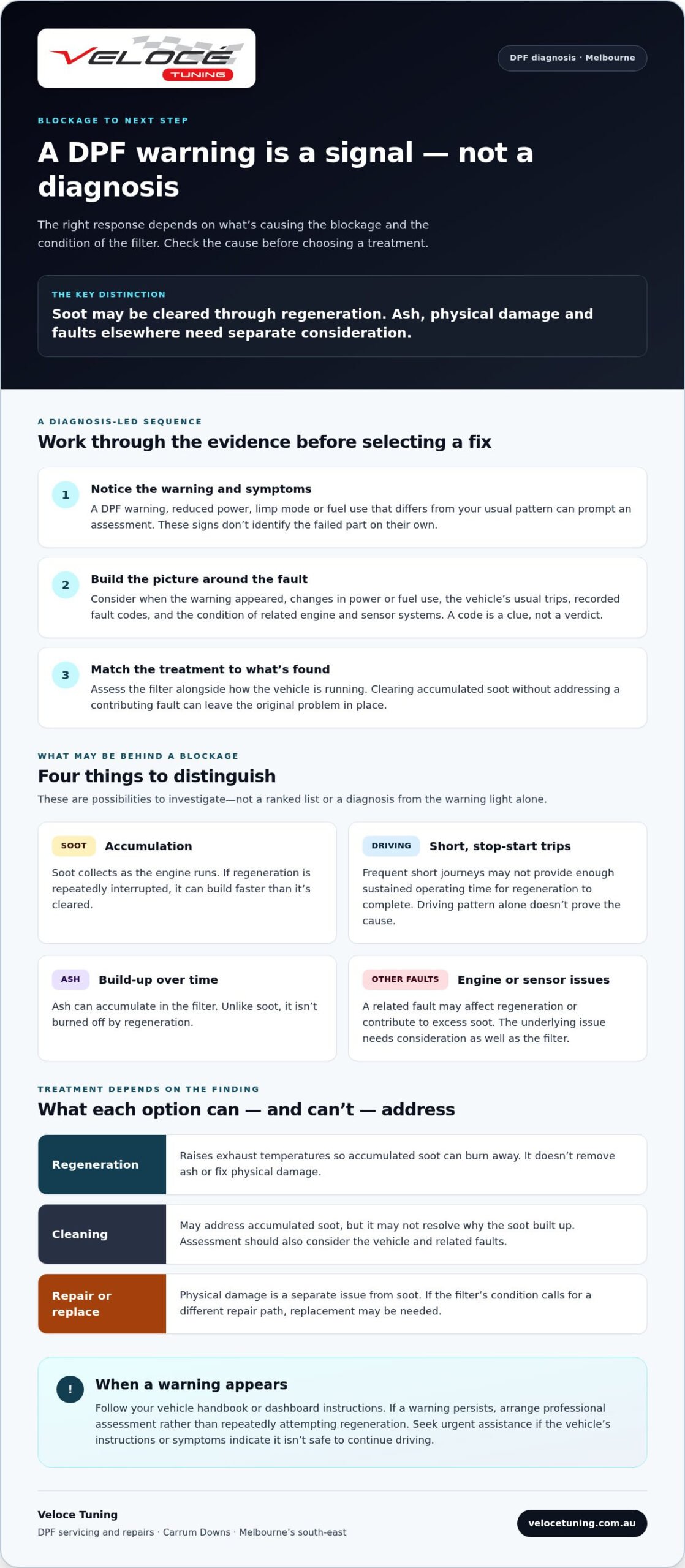
Act promptly, but don’t jump straight to replacement. Identifying whether the concern is soot, ash, physical damage or another vehicle fault is the starting point for choosing a suitable repair path.
How DPF blockages develop and why diagnosis matters
A DPF blockage is often the result of a process, not a single event. Soot collects as the diesel engine runs, and the vehicle relies on regeneration to burn it away. If regeneration is repeatedly interrupted, soot can build faster than it’s cleared. Driving habits are only one part of the picture. The engine, its sensors and related systems can all influence regeneration, so vehicles showing similar warnings may need different repairs.
Why can a DPF become blocked?
Frequent short trips may not give an engine enough sustained operating time for regeneration to complete. Stop-start driving can add to the pattern, particularly if the vehicle is regularly switched off during a regeneration cycle. The effect depends on the vehicle and how it’s used; an occasional short journey doesn’t prove that driving style caused the blockage.
Soot loading can also rise if the engine or a related system isn’t operating as intended. For example, worn or leaking injectors can cause incomplete combustion and excessive particulate matter, a scenario diesel specialists like Gee Diesel Services Ltd frequently address during fuel system testing. A sensor fault, meanwhile, may affect how the vehicle manages regeneration. These are possibilities, not a diagnosis, and the cause can’t be reliably identified from the warning light or driving pattern alone.
Clearing a DPF without addressing the fault that caused the blockage can leave the original problem in place. Assessment should consider the filter’s condition alongside how the vehicle is running, rather than treating soot accumulation as the whole story.
What should a DPF assessment establish?
A useful assessment considers the warning information, any recorded fault codes and the symptoms you’ve noticed. Be ready to describe when the warning appeared, whether power or fuel use changed, and what sort of trips the vehicle usually makes. Those details help put the fault information in context. A code is a clue, not a verdict; it needs to be considered alongside the vehicle’s behaviour and related systems.
Before choosing treatment, the assessment should consider whether an engine or sensor fault could be contributing to the blockage. Otherwise, regeneration or cleaning may address accumulated soot without resolving why it built up. The filter may also need a different solution if its condition points to a problem soot removal can’t fix.
For drivers seeking DPF repair Melbourne, diagnosis-led servicing helps distinguish a blockage that may respond to soot-focused treatment from a recurring issue with another cause. Veloce Tuning provides specialist DPF servicing and repairs from its Carrum Downs workshop for nearby communities in Melbourne’s south-east. If a warning persists or returns, Veloce Tuning’s specialist DPF servicing and repairs can help establish a suitable next step based on the vehicle’s condition.
DPF regeneration, cleaning, repair or replacement: how the options differ
A blocked DPF doesn’t point to one automatic fix. Regeneration and cleaning target soot, while repair or replacement may be considered when the filter’s condition or another fault calls for a different approach. With DPF repair Melbourne, the useful question isn’t which option sounds quickest; it’s which one matches the assessment findings and the filter’s condition.
| Option | Purpose | When it may suit | Key limitation |
|---|---|---|---|
| Regeneration | Burn accumulated soot from the filter. | When soot loading and the vehicle’s condition allow regeneration to proceed. | It won’t resolve physical damage or necessarily fix the fault interrupting regeneration. |
| Professional cleaning | Remove accumulated material from a filter assessed as suitable for cleaning. | When assessment indicates the filter can be cleaned rather than replaced. | It doesn’t repair a damaged filter or correct an underlying engine or sensor fault. |
| Repair | Address a repairable fault affecting the filter or related system. | When diagnostic findings identify a fault that can be repaired. | Suitability depends on the specific fault and vehicle condition. |
| Replacement | Fit a replacement filter when the existing one isn’t suitable for restoration. | When damage or condition rules out an appropriate restoration path. | It may not address the cause of failure if a related vehicle fault remains. |
When might regeneration or professional cleaning be considered?
Regeneration may be an option when the issue is soot accumulation and the vehicle is in a condition to complete the process. Professional cleaning is a separate option that may suit a filter assessed as cleanable. Neither should be treated as a cure-all: if an engine or sensor fault is contributing to the blockage, that issue may need attention as well. The assessment should guide the choice.
When might repair or replacement be appropriate?
If findings point to physical damage or a condition cleaning can’t address, restoration may not be suitable. Repair may be considered when the identified fault is repairable; replacement may be appropriate when the filter isn’t fit for restoration. These decisions can’t be made from a warning light alone. The filter’s condition and related vehicle faults shape the recommendation.
There’s no universal rule that cleaning is always preferable or that replacement is inevitable. A suitable assessment weighs the filter’s condition, the type of blockage and any contributing fault before recommending a next step. That helps avoid treating soot when the issue is damage, or replacing a filter without addressing why it became blocked.
What Melbourne drivers should do when a DPF warning appears
A DPF warning can unsettle any drive, especially if the vehicle also feels less responsive. Avoid guessing at the cause or repeatedly trying to trigger regeneration. Note what the vehicle is telling you, then follow its guidance for what to do next.
What should you do when the warning light appears?
- Record the warning. Note the exact dashboard message, when it appeared and whether it has come and gone before. If safe, take a photo so you can describe it accurately.
- Notice changes in behaviour. Keep track of reduced power, limp mode, unusual running or a change in fuel use. Don’t try to diagnose the fault from these signs alone.
- Read the handbook. Follow the instructions for your vehicle’s make and model. Responses vary, so don’t rely on generic advice or assume a regeneration drive is suitable.
- Arrange professional assessment. If the warning persists or returns, organise an assessment rather than repeatedly attempting forced regeneration without suitable diagnosis.
If your handbook directs you to stop, or the vehicle’s symptoms make it unsafe to continue, pull over somewhere safe and seek assistance. Treat vehicle-specific instructions as your guide. Don’t continue simply to reach a workshop if the vehicle indicates otherwise.
How can local drivers prepare for a workshop visit?
A little preparation makes the first conversation more useful. Note the vehicle’s make, model and year, the warning history, any messages shown and when you first noticed a change. Describe recent driving too, such as whether the vehicle has mainly been used for short local trips, longer runs or a mix of both. These details provide context, but they don’t confirm the cause.
Bring any relevant service or repair history, particularly if the warning has appeared before or the vehicle has recently had work carried out. Consistent upkeep from general maintenance providers such as BLACKCAT AUTO LLC helps keep records comprehensive and makes recurring faults easier to trace. If power has dropped or the vehicle has entered limp mode, mention when that happened and whether it changed after restarting. Avoid clearing warnings or repeatedly attempting regeneration before assessment, as the original information may help explain the issue.
For drivers in Melbourne’s south-east, Veloce Tuning’s workshop is in Carrum Downs, serving nearby communities including Frankston, Patterson Lakes, Mornington, Skye, Seaford and Sandhurst. Professional assessment can help establish what the warning relates to and which next step fits the vehicle. For specialist DPF repair Melbourne support, read about Veloce Tuning’s DPF repair service.
DPF repair in Melbourne with Veloce Tuning: diagnosis-led next steps
A DPF issue can raise a costly question: can the filter be restored, or is replacement the sensible path? At Veloce Tuning’s Carrum Downs workshop, specialist DPF servicing and repairs start with understanding the vehicle’s symptoms and assessment findings. The next step should fit the filter’s condition and any contributing fault, rather than assume every blockage needs the same treatment.
What can you expect from a diagnosis-led repair conversation?
Bring the warning messages, symptoms and relevant vehicle history you’ve noted. The discussion can then focus on what the assessment indicates, which options may suit and what their limitations are. Regeneration, cleaning, repair and replacement each address different conditions. The recommendation should be explained in plain language, including what the proposed work is intended to address.
That distinction matters. If findings point to soot accumulation and the filter is suitable, a soot-focused option may be considered. If there’s physical damage or a separate fault, another course may be more appropriate. You should be able to understand why the proposed step matches the findings and what it is intended to resolve. No single treatment is right for every vehicle.
Why choose a local Carrum Downs workshop for DPF repairs?
A local workshop gives drivers across Melbourne’s south-east a nearby place to discuss specialist mechanical concerns. Veloce Tuning is based in Carrum Downs and serves communities including Frankston, Seaford, Patterson Lakes, Mornington, Skye and Sandhurst. Its broader mechanical services include log book servicing, fleet vehicle management, suspension and lift kits, engine conversions, brake upgrades, and DSG servicing and repairs.
For a business running diesel vehicles, a DPF concern can sit alongside wider fleet maintenance needs. Veloce Tuning also provides commercial vehicle repair in Melbourne, a local service for broader fleet repair requirements. Each issue still needs to be considered on its own merits; a DPF warning doesn’t establish that another repair is needed.
Before booking, have the vehicle details and warning history handy, and be ready to describe any changes in how it drives. That gives the assessment a clearer starting point, while the findings guide whether regeneration, cleaning, repair or replacement is appropriate. The decision should follow the vehicle’s condition, not a blanket promise about savings or results.
For diagnosis-led DPF repair Melbourne support, Veloce Tuning’s DPF repair service is available from its Carrum Downs workshop.
Make your next move with confidence
A DPF warning can put your plans on hold, but guessing at a fix can add uncertainty. Bring the warning details and symptoms to a specialist, then use the assessment to make an informed decision. That’s the practical starting point for DPF repair Melbourne, whether you’re weighing a restoration option or need to understand why replacement may be recommended.
Veloce Tuning provides DPF servicing and repairs from its Carrum Downs workshop for drivers across nearby Melbourne communities. Have your vehicle details and warning history ready so the assessment can begin with a clear account of what’s happening.
Book a DPF assessment with Veloce Tuning to discuss the right next step for your vehicle.
Frequently Asked Questions
Can a blocked DPF be repaired?
Sometimes, depending on the filter’s condition and what caused it to block. If a warning returns after previous servicing, investigate whether the underlying issue remains rather than assume the same treatment will work again. For DPF repair Melbourne, an assessment can help distinguish soot-related problems from physical damage or another fault. A warning light alone can’t show whether cleaning, repair or replacement is suitable.
What are the common signs of a blocked DPF?
Possible signs include a DPF warning light, reduced engine power, limp mode or a change in fuel use. For example, if the vehicle suddenly struggles to accelerate, note when it happens and whether a dashboard message appears at the same time. These clues don’t prove the filter is blocked; engine, sensor or exhaust-system faults can cause similar symptoms. Record what you notice and follow the handbook’s advice.
Can I keep driving with a DPF warning light on?
It depends on the warning and how the vehicle is behaving. Check the handbook for instructions specific to your model, especially if a message tells you to stop or seek service. If the vehicle enters limp mode, loses power sharply or feels unsafe, pull over when safe and arrange assistance rather than continuing the trip. Don’t assume the light will clear simply by driving further.
What is the difference between DPF regeneration and cleaning?
Regeneration burns accumulated soot as part of the vehicle’s normal DPF operation, while professional cleaning is a separate service that may be considered after the filter is assessed. For example, a vehicle’s handbook may describe a specific response to a regeneration warning, but that guidance applies to that vehicle and situation. Neither process necessarily fixes a separate fault affecting the engine or sensors.
How much does DPF repair cost in Melbourne?
There isn’t one cost that applies to every DPF issue. The work depends on the vehicle, what’s causing the problem and whether the filter is suitable for regeneration, cleaning or repair, or needs replacement. A useful first step is to establish what the assessment has found and what work is recommended. Drivers around Carrum Downs, Frankston and nearby south-east suburbs can use that information to understand the proposed scope before deciding how to proceed.
Does every diesel vehicle have a DPF?
No. DPF fitment varies by make, model, engine and emissions configuration, so fuel type or age alone isn’t enough to tell you. If you’re unsure, look up the vehicle specifications or owner’s handbook, or have the vehicle assessed. This is particularly useful before interpreting a dashboard message, as a warning about the exhaust or engine may relate to a system other than a DPF.
Will DPF cleaning fix the problem permanently?
No cleaning service can be assumed to provide a permanent fix. If the filter is suitable, cleaning may address material in it, but an unresolved fault could contribute to the problem returning. For instance, if a vehicle continues to interrupt regeneration, cleaning alone may not change that pattern. Ask for the recommended work and its limitations to be explained in relation to the assessment, rather than relying on a blanket promise.
Is DPF removal a suitable repair?
DPF removal or disabling emissions equipment shouldn’t be treated as a routine repair solution. A repair should focus on identifying the fault and addressing it while retaining the vehicle’s intended emissions-control system. Requirements can depend on the vehicle and applicable rules, so avoid making assumptions about what is permitted. For a warning or blockage, seek an assessment and discuss repair options that suit the filter’s condition.