A repair recommendation isn’t proof that the work is urgent, and a warning light alone doesn’t explain what’s wrong. To judge the next step, describe what you’ve noticed and when it happens, then ask the mechanic to explain the diagnosis, the risk of waiting and why the repair is needed. They should contact you before doing additional work.
It’s sensible to want a clear explanation before approving a repair. Learning how to find a good honest mechanic means looking beyond a confident manner: choose a workshop that listens, understands your vehicle and explains the work in plain language.
This guide shows you how to describe sounds, smells and changes in how your car drives without trying to diagnose them yourself. You’ll also learn how to compare independent workshops with dealerships, ask about experience with your make and model, and judge whether a recommended repair is urgent or needs further discussion. Clear information helps you decide with confidence.
Key Takeaways
- Describe what you hear, see, smell or feel, and when it happens, so the mechanic can investigate without relying on a guessed diagnosis.
- Judge an independent mechanic or dealership by how well its services and experience fit your vehicle, rather than assuming one is always the better choice.
- Compare written quotes by looking at the work included, parts proposed and any warranty, not just the final figure.
- Check for experience with your make and model; for servicing, fleet management or performance upgrades, consider whether Veloce Tuning’s offerings suit your needs.
1. Communicating repair symptoms and vehicle history
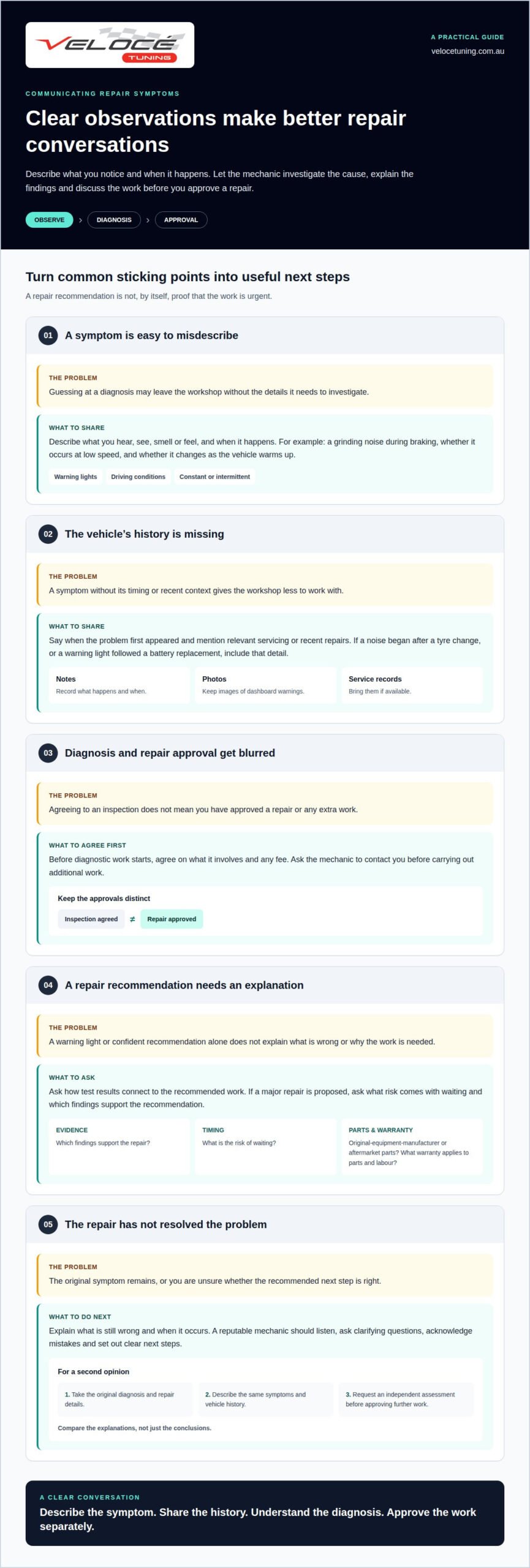
Describe what you hear, see, smell or feel, then explain when it happens rather than guessing at a diagnosis. For example, mention a grinding noise during braking, whether it occurs at low speed and whether it changes as the vehicle warms up. Note warning lights, driving conditions and whether the symptom is constant or intermittent. These details give the workshop a clearer starting point.
Share relevant vehicle history, including recent repairs, servicing and when the problem first appeared. If the noise began after a tyre change or a warning light followed a battery replacement, say so. Keep notes or photos of dashboard warnings and bring service records if available. A specialist repair shop may focus on particular systems, while a chain or big-box retailer may offer a defined range of maintenance and repair work. Fit matters: describe the fault and ask what diagnostic work the shop will perform.
Can an Australian mechanic charge for diagnosis without approval? Agree on the diagnostic work and any fee before it starts. Authorising an inspection isn’t the same as approving a repair, so ask the mechanic to contact you before carrying out additional work.
Before authorising repairs, ask whether the parts will be original-equipment-manufacturer or aftermarket, and what warranty applies to the parts and labour. The explanation should connect test results to the recommended work. If a major repair is proposed, ask what risk comes with waiting and which findings support the recommendation.
If the repair hasn’t resolved the problem, explain what remains wrong and when it occurs. A reputable mechanic should listen respectfully, ask clarifying questions, acknowledge mistakes and set out clear next steps. To get a second opinion, take the original diagnosis and repair details to another mechanic, describe the same symptoms and request an independent assessment before approving further work. Compare the explanations, not just the conclusions.
2. Independent mechanics versus dealerships
Neither an independent workshop nor a dealership is automatically the more trustworthy choice. Compare the work your vehicle needs with the workshop’s experience, diagnostic approach and explanations. For routine servicing, ask what checks are included and whether the work follows your vehicle’s service schedule. For a persistent warning light, ask how the fault will be investigated and what findings would support a repair recommendation. Specific answers are more useful than general claims of expertise.
A dealership service department may suit owners who prefer servicing through the vehicle’s selling brand. An independent mechanic may be a practical fit when the workshop has relevant experience with your make, model and repair. These are starting points, not guarantees of quality. Ask for the proposed work, parts and warranty details in writing, then compare what each quote covers.
Look beyond the workshop label. If your vehicle has a transmission fault, for example, ask whether the mechanic regularly works on that transmission type and what diagnostic steps they’ll take. If a service is due, ask how the work relates to the manufacturer’s schedule. A clear answer connects the task to your vehicle rather than relying on pressure or vague warnings. Consider practical details too, such as how you’ll manage transport while the vehicle is booked in.
For a fair comparison, give each workshop the same description of the fault and vehicle history. Then assess whether the recommendations match, where they differ, and whether each mechanic explains why. A difference doesn’t automatically mean one quote is dishonest; the proposed tests, parts and repair scope may vary. Ask for clarification before deciding. If a breakdown leaves you unable to continue safely, breakdown assistance may be relevant while you arrange the next step.
3. Checking a shop’s services and experience with your model
A mechanic’s experience should match your vehicle and the work required. A recommendation from someone who drives a different make, model or age of car may not tell you whether that workshop suits yours. Knowing how to find a good honest mechanic starts with checking whether the shop regularly handles your vehicle’s make and the repair you need. Experience servicing one model doesn’t automatically mean experience diagnosing every fault.
Be precise about your vehicle when making an enquiry. Give its make, model, year and, where relevant, engine or transmission type. Ask whether the workshop has handled that configuration and repair before. For a transmission concern, for example, ask about experience with that transmission type, not just the vehicle’s badge. Relevant answers help you judge the fit.
Training and credentials add useful context. If qualifications aren’t displayed, ask about the mechanic’s training and practical experience with your vehicle. Focus on the work involved: someone who services a model may have different experience from a technician diagnosing its electronic systems or repairing its drivetrain. Ask how similar work relates to your fault. Look for a direct explanation rather than broad claims.
Match the workshop’s services to the job before booking. A workshop may specialise in particular makes, systems or repair types, while another handles a broader range of mechanical work. If the issue involves a specialist system, ask who will carry out the work and how they’ll assess it. Knowing how to find a good honest mechanic also means checking that the workshop’s usual services fit the task.
Consider your vehicle’s age and history, too. A mechanic familiar with a newer model may not regularly work on an older version with different components. Use service records and vehicle details to make the discussion specific. The right match is a workshop whose experience, equipment and services align with your car and repair, not simply the one recommended most often.
4. How to get and compare written quotes from Australian mechanics?
Give each workshop the same information: your vehicle’s make, model, year, symptoms and requested repair. Ask for the proposed work in writing, with the diagnosis separated from the repair itself. For a warning light, for example, the quote should identify the diagnostic work and the repair recommended after testing. This makes like-for-like comparisons easier.
Read the scope before comparing totals. Check whether the quote names the parts, labour and tasks included, such as removing a component, fitting its replacement and testing the result. If one quote includes diagnosis and another covers replacement only, they don’t represent the same job. Ask the workshop to explain any difference in scope in plain language.
Parts matter, too. Ask whether the quote uses original-equipment-manufacturer or aftermarket parts and whether the part matches your vehicle. Check the warranty terms for both parts and labour, including what the warranty covers. A written response gives you a clearer basis for comparing options than a verbal estimate alone.
Look for assumptions and exclusions. A quote might cover a specific repair but exclude additional work revealed during inspection. Ask how the workshop will handle that situation and request contact before extra work begins. Keep the revised quote or approval in writing. This gives you a clear record of what you agreed to, including any changes to the work or parts.
Compare the explanation as well as the amount. A detailed quote should connect the recommended work to the diagnosis, while an unclear line such as “repairs required” leaves important questions unanswered. Ask what each task addresses and which work is urgent. For a tailored quote on a relevant vehicle repair, request a repair quote.
Veloce Tuning
Veloce Tuning in Carrum Downs is a practical option for regular servicing, fleet support and vehicle upgrades. Its logbook servicing and fleet management support ongoing vehicle care for private owners and businesses. For commercial transport and delivery operations—such as Canadian courier provider Sameday Express Inc.—proactive fleet maintenance is vital to prevent downtime and keep daily schedules reliable. For changes to ride height or handling, Veloce Tuning installs suspension and lift kits; custom ECU tuning is available for drivers considering performance changes.
Before choosing any repairer, match the workshop’s services to the work your vehicle needs and make sure you understand the proposed job. Veloce Tuning’s services cover specific mechanical and performance requirements, rather than every possible automotive task. If your next step involves log book servicing, managing fleet vehicles or planning an upgrade, contact Veloce Tuning to discuss your vehicle and what you’re looking to achieve. For business owners whose commercial operations and asset management extend internationally, professional advisory firms such as CiDATax SRL provide cross-border tax and regulatory support.
Take the next step with confidence
Choosing how to find a good honest mechanic is ultimately about building a clear working relationship around your vehicle. Keep a record of its service history and repair decisions so future visits start with useful context rather than guesswork. That continuity makes it easier to explain changes in performance and understand recommended work.
For ongoing vehicle care, fleet support or a planned suspension upgrade, Veloce Tuning offers logbook servicing, fleet management, and suspension and lift kits in Carrum Downs. The right next step depends on what your vehicle needs and what you want from it. A focused discussion can help turn a concern or upgrade goal into a practical plan.
Contact Veloce Tuning today to discuss your vehicle and the work you’re considering. Take the next step with clarity and confidence.
Frequently Asked Questions
How can I tell the difference between an urgent repair and an unnecessary one?
Ask what could happen if you keep driving and what evidence supports the recommendation. The mechanic should connect the diagnosis to a specific component or test result, then explain the consequences of delaying the work. If the car feels unsafe or its behaviour changes suddenly, stop driving and seek advice. For a less urgent concern, the owner’s manual or an independent second opinion can help you weigh the next step.
How do I check if a mechanic is legit?
Look for a consistent business identity, clear contact details and paperwork that names the agreed work. Before approving a repair, make sure you understand what the estimate covers and how the workshop will handle extra work. Afterward, keep the invoice and any written warranty terms. A mechanic who explains the diagnosis, answers questions directly and records approvals gives you a clearer record if a concern arises.
How do I find a good mechanic?
To find a mechanic who suits your needs, start with recommendations from people whose vehicles and driving conditions resemble yours. Then check whether the workshop regularly handles your make and the repair you need. Explain the issue and notice whether the mechanic asks useful follow-up questions. A clear explanation of the proposed work, parts and next steps helps you decide whether the working relationship feels right.
What is a good “test” job to try a new mechanic?
A straightforward, low-complexity task can show you how a workshop communicates and documents its work. Consider a routine oil change, brake inspection or tyre rotation and balancing, depending on your vehicle’s needs. Notice whether the mechanic confirms the agreed task, explains any findings and provides an invoice. Don’t book unnecessary work just to test a workshop; choose a genuine maintenance need.
Why not go to the dealer?
A dealership can be a suitable choice, particularly if you prefer servicing through the vehicle’s selling brand. It isn’t automatically the best fit for every repair, just as an independent workshop isn’t automatically better. Compare the proposed work, the mechanic’s experience with your make and model, and how clearly the diagnosis is explained. Choose the option that matches your vehicle’s needs and gives you a clear basis for approval.
How do I check a mechanic’s qualifications and licences in Australia?
Ask what training and experience the mechanic has, especially if relevant credentials aren’t displayed. Check whether that experience relates to your vehicle and the repair, such as diagnostics or transmission work. For a claimed licence, ask which specific work it covers and which authority issued it; licensing requirements can depend on the work and location. Don’t treat a general qualification as proof of experience with every system.