
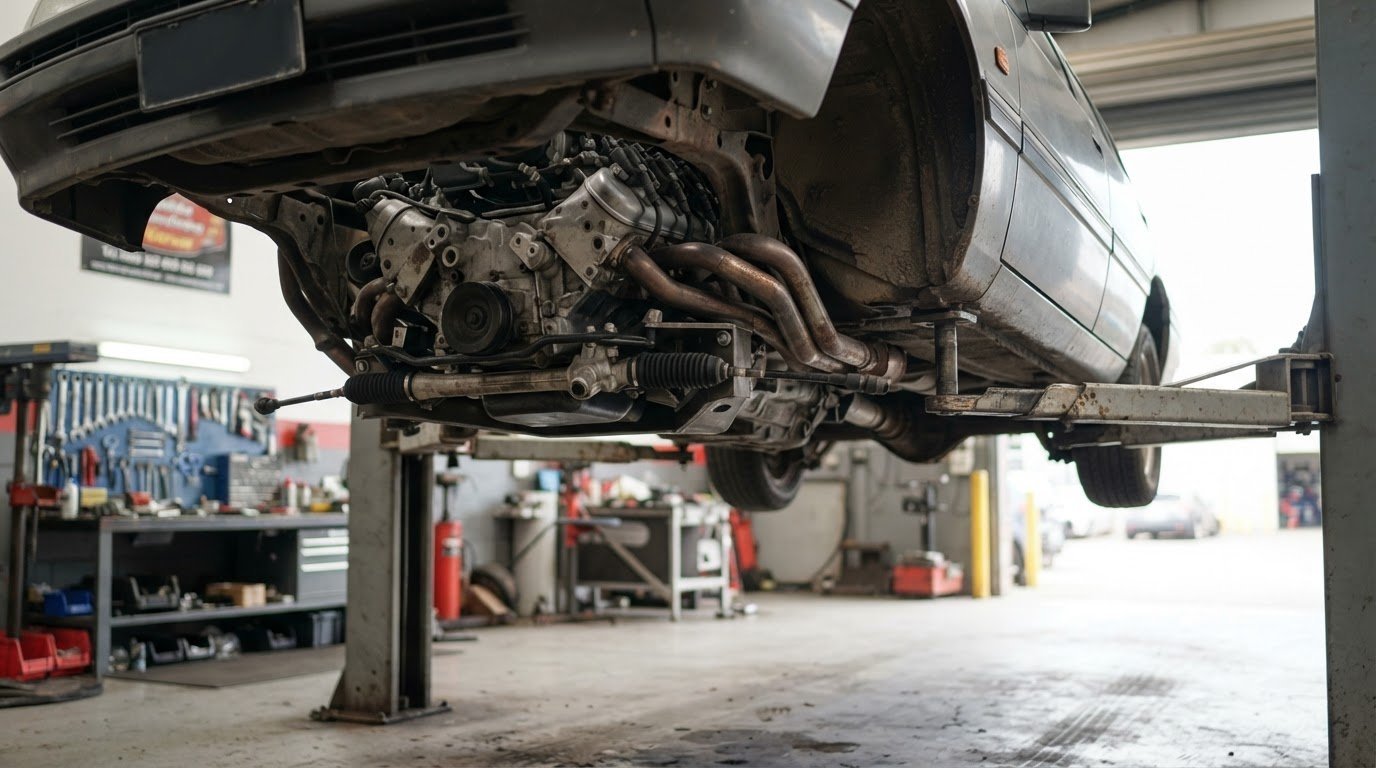
The LS engine swap cost in Australia depends on far more than the engine itself. The transmission, custom mounts, wiring and ECU changes, fuel system, cooling and driveline all affect the total, and the swap kit can make up a significant part of the build. The engine is only the starting point.
That’s why two LS conversions can have very different budgets, even when both promise the same V8 soundtrack and surge of power. This guide explains what drives installation costs, how custom kit components add up, and how an LS swap compares with rebuilding or upgrading the original engine. You’ll have a clearer picture of what your project involves before deciding which path suits the car and the performance you want.
Key Takeaways
- Build your budget around the whole conversion, including the transmission, wiring, fuel system and driveline, not just the engine.
- Factor Australian engineering and registration requirements into the plan, as compliance can shape the parts and work involved.
- An untested engine-and-vehicle combination can require extra development, increasing costs compared with a proven setup.
- Look closely at what a custom swap kit includes, then weigh the conversion against rebuilding or upgrading the original engine.
What factors drive engine replacement costs in Australia?
An LS conversion budget depends on how well the engine package suits the vehicle and its intended road use. Engineering, emissions equipment and supporting systems can all add work beyond fitting the engine.
Engineering and registration requirements
Engineering and registration requirements influence which modifications a road-use conversion needs and how they work together. Planning for compliance early can shape component choices, fabrication and the work required before the vehicle is ready for the road.
For example, an Australian E46 LS swap is intended to be engineered and compliant with Australian Design Rules (ADRs) for road use. That example makes the point: the vehicle, engine and modifications need to be considered as a complete package. Engineering advice at the planning stage helps define the design constraints before buying parts, including how the transmission, steering and engine-bay layout work together. A mismatch can mean extra adaptation.
Emissions compliance
Emissions compliance involves retaining the equipment needed to control exhaust emissions from the replacement engine. This affects both the parts list and how the engine is installed and configured.
A modern replacement engine needs the emissions equipment from its donor vehicle. For a conversion from carburettor induction to electronic fuel injection (EFI), example guidance includes retaining donor-car controls such as the charcoal canister, catalytic converters and oxygen sensors, along with a suitably shrouded air filter. These components must work with the engine and fuel system as installed. Engineering advice can help shape the conversion around those requirements rather than leaving emissions equipment as an afterthought.
Wiring, ECU and fuel systems
Wiring, the electronic control unit (ECU) and fuel-system changes connect the LS engine to the vehicle’s existing systems. Their impact on cost depends on compatibility, component condition and how much adaptation is needed.
An LS1 swap may need wiring and ECU adaptations, fuel-system upgrades, a suitable transmission and driveshaft modifications. Custom engine mounts, cooling changes and power-steering adaptations may also be needed. Generation IV LS engines use fly-by-wire throttles, which need conversion to cable operation in older vehicles. When buying an LS1, account for whether its wiring loom, computer and software are included, along with accessories such as headers, oil pans, mounts and pulleys.
What does an engine swap cost?
There’s no single price for an Australian LS swap: the engine, supporting hardware and installation all shape the total. A worked E46 conversion gives a useful example, but not a standard price for every vehicle.
Drivetrain and installation work
Drivetrain and installation costs cover the components and labour needed to make the engine work in the vehicle. An engine that fits physically may still require substantial supporting changes.
Together, those figures show how supporting systems add to the engine package.
The build itself takes close to 120 hours of labour. A custom exhaust, intake clearance or driveline adaptation can add work when the chosen engine and vehicle don’t align. An untested combination may cost 25% to 50% more through development and uncertainty.
Swapping versus rebuilding or upgrading
Comparing a swap with rebuilding or upgrading means weighing the replacement engine and supporting parts against work on the original setup. This helps show whether the budget is driven by engine condition, compatibility or the desired performance change.
These are engine-unit figures, not complete installation totals.
Engine prices alone don’t settle the choice. A rebuild retains the original configuration, while an LS conversion requires integrating a different powertrain. The vehicle’s condition, intended use and performance goals determine which route best suits the project.
Custom swap kit components and price
A custom swap kit brings together components needed to adapt an engine to a specific vehicle. That example shows why kit scope deserves attention alongside the engine and gearbox.
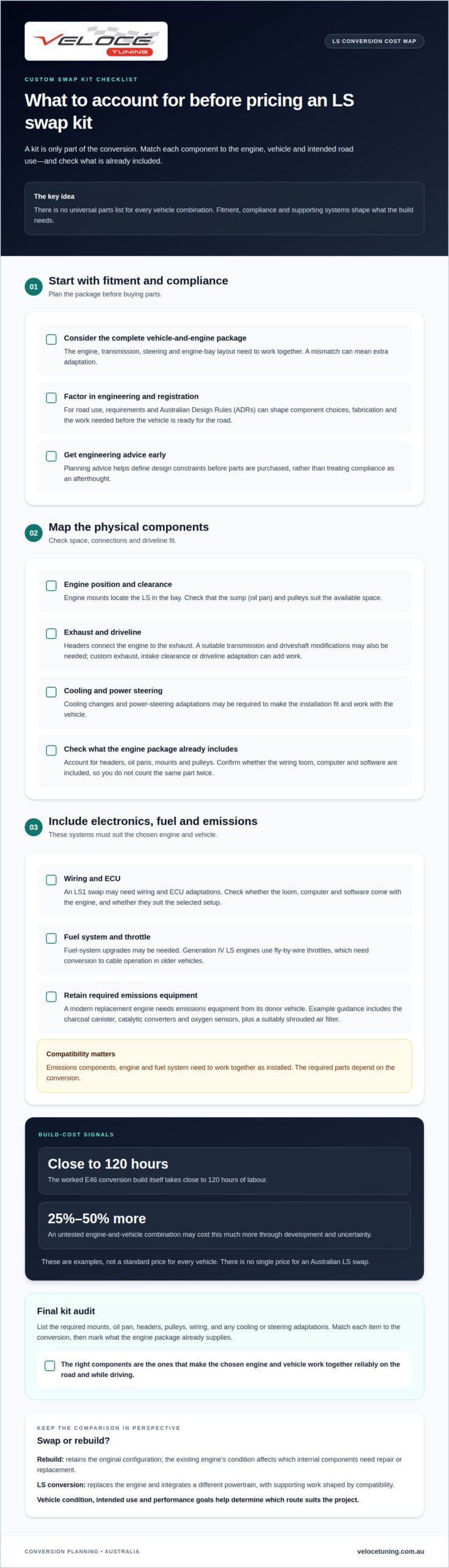
Kit components can address engine positioning, clearance and connections to the vehicle. Engine mounts locate the LS in the bay, while the sump and pulleys must also suit the available space. Headers connect the engine to the exhaust, and cooling or power-steering adaptations can affect how the installation fits together. These parts are not interchangeable across every vehicle combination.
Electronics add another layer. An LS1 purchase should account for whether the wiring loom, computer and software come with the engine. The ECU must work with the selected engine and vehicle setup. Fuel-system requirements also depend on the engine configuration, including whether the chosen components support its injection system. A kit budget therefore needs to be understood in relation to the actual conversion, not as a universal list of included parts.
Small supporting parts matter, too. That estimate concerns replacement components, not the price of the E46 custom swap kit. It helps illustrate how consumables can sit alongside major fabricated or vehicle-specific pieces.
Before settling on a kit, map each required component against the conversion: mounts, oil pan, headers, pulleys, wiring, and any cooling or steering adaptations. Then identify what the engine package already includes to avoid counting the same part twice. The right components are those that make the chosen engine and vehicle work together reliably on the road and while driving.
LS swap vs engine rebuild costs in Australia
An engine rebuild retains the vehicle’s original engine, while an LS swap replaces it and changes how the powertrain works. The better cost comparison depends on the engine’s condition, the desired performance and how much supporting work the conversion needs. These factors affect both the parts required and the labour involved.
For a rebuild, the existing engine is the starting point. Its condition determines which internal components need repair or replacement, while the original transmission and surrounding systems may remain in place. An LS conversion introduces a different engine package, so the budget may also need to cover adapting the transmission, driveline, electronics and other vehicle systems. The more the conversion changes, the more components to account for.
Upgrading the original engine sits between those options. It can target a particular performance goal while retaining the existing configuration, but the engine’s condition and the scope of upgrades still shape the work. An LS1’s aluminium block reduces weight compared with a cast-iron engine, and LS1 crate engines can reach up to 500 hp. That potential is distinct from the cost of making the complete vehicle handle the conversion.
Use the vehicle’s current market value as another decision point. If an engine replacement costs more than 60 to 70 per cent of that value, consider whether replacing the vehicle makes greater financial sense. This comparison doesn’t decide between rebuilding and swapping by itself; it helps put the planned work in context.
Compare the outcomes, not just the engine choices: a rebuild focuses on restoring the original powerplant, while an LS conversion changes the vehicle’s character and supporting package. The conversion’s scope, the existing engine’s condition and the required performance all influence which route makes sense. For a tailored assessment of an engine conversion, outline your vehicle and performance goals.
Veloce Tuning: Engine Conversions
Veloce Tuning carries out engine conversions and can help bring your plan into focus, from your performance goals to the work involved in changing the vehicle’s powertrain. Consider its engine conversion service when weighing an LS swap against keeping the original engine, or when you need direction for your project.
Custom ECU tuning may also be relevant when a conversion needs engine-management calibration. Looking at the whole setup, rather than the engine alone, connects the swap decision to how you want the vehicle to perform. Discuss your vehicle, intended use and priorities with Veloce Tuning to plan the next step.
Contact Veloce Tuning to discuss your engine conversion.
Set your conversion in motion
The LS engine swap cost in Australia is only one part of the decision. Shape a conversion around how you want the vehicle to perform, how you’ll use it, and the balance you want between power and practicality. A considered plan turns a broad idea into a build with a clear direction.
Veloce Tuning carries out engine conversions, with related options such as suspension and lift kits and log book servicing for different vehicle needs. Fleet vehicle management is also available for businesses managing vehicles as part of their operations. The right scope depends on your vehicle and goals.
Contact Veloce Tuning about your swap to discuss the direction you have in mind. Bring your vehicle details and performance priorities to the conversation, then take the next step towards a conversion that feels right on the road.
Frequently Asked Questions
How much does an LS engine swap cost in Australia in 2026?
The engine and manual gearbox, labour, custom kit and supporting modifications all contribute to the total. A different chassis, parts package or swap combination changes the work involved, so treat the example as a reference point, not a universal quote.
What is the cost of an LS engine and transmission in Australia?
That package is a worked example, not a fixed price for every LS engine or transmission combination. Engine condition and the items included with the purchase matter: a loom, computer and software, plus accessories such as headers, sump and pulleys, affect what else the conversion needs.
How much does LS swap labour cost at an Australian workshop?
The build takes close to 120 hours, illustrating how fabrication and integration shape the labour involved. That figure describes one build, not a workshop rate or universal LS swap labour quote. A different vehicle combination may require less or more work, depending on its fitment challenges and development needs.
What extra parts and fabrication are needed for an LS engine swap, and what do they cost?
An LS conversion may also need engine mounts, a suitable transmission, driveshaft changes, fuel-system parts, wiring and ECU adaptations. Cooling, steering and exhaust fitment may require vehicle-specific work. The precise components depend on the engine and chassis combination, so a kit price for one build shouldn’t be treated as the price of every conversion.
How much does an LS swap cost for a common Australian car such as a Commodore, Falcon or 4WD?
There isn’t one shared total for a Commodore, Falcon or 4WD, because each vehicle’s existing drivetrain and engine-bay layout shape the conversion. A 4WD, for example, may need different driveline and clearance solutions from a car-based build.
What is the cost difference between a DIY LS swap and a professionally installed swap in Australia?
That saving reflects labour avoided, not a complete estimate of every DIY project. The builder still needs to account for parts, fabrication, tools and development work. A professionally installed swap includes paid labour, while the value of DIY depends on the work the owner can complete.