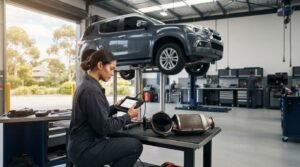

The tallest lift isn’t always the best choice for a 4×4. Add touring gear, towing loads or a full complement of passengers, and a setup chosen for appearance alone may not deliver the ride, control or clearance you need. If you’re weighing up how to choose a 4×4 lift kit, start with the vehicle as you actually drive it, not just how you’d like it to look.
More room for tyres and greater confidence beyond the bitumen can be useful, while comfort and predictable handling still matter on everyday roads. The right configuration depends on your vehicle, its accessories and regular load, and the terrain you plan to tackle.
This guide compares lift options, explains the role of key components and explores how a lift can affect ride, handling and tyre choice. It also gives you practical questions to take to a qualified suspension specialist, including what to check about Victorian modification requirements. Bring your real driving plans into the conversation to work towards a balanced setup, rather than simply chasing extra height.
Key Takeaways
- Decide what matters most across touring, towing, daily driving and off-road use before comparing lift heights.
- To work out how to choose a 4×4 lift kit, match its components to your vehicle, regular load and intended terrain.
- Understand the difference between a body lift and a suspension lift before weighing up your options.
- Consider tyre fitment, steering, braking and suspension geometry together, because a change in one area can affect the overall setup.
- Take your vehicle details, current modifications and typical payload to a suspension specialist. Ask what fitment and Victorian compliance checks apply.
How to Choose a 4×4 Lift Kit: Start With Your Driving Plans
A well-matched lift can help your 4×4 handle its regular load and intended terrain, while keeping comfort and control in view. Choosing by height alone is like planning a trip by looking only at the destination. The right setup depends on how the vehicle gets there and what it carries along the way.
Before comparing components, rank your priorities: touring, towing, daily driving, off-roading and carrying accessories. Then describe the roads and tracks you usually drive, from sealed commutes and gravel roads to rough, rutted trails. Include what the vehicle carries on longer trips and whether you tow.
This gives a suspension specialist a useful brief, rather than a single request for “more lift”. For background on the purpose of a suspension lift, consider how it may support off-road or appearance goals. The right configuration still depends on the vehicle and how you use it.
What do you want the lift kit to change?
Be specific about the outcome. Ground clearance, suspension travel and appearance are separate goals. A change in ride height doesn’t automatically deliver more suspension travel, and appearance alone won’t determine how the vehicle behaves on a corrugated road. Think about where clearance matters on your usual tracks, how the vehicle should respond over uneven ground, and how much everyday comfort you want to retain.
There can be trade-offs. A setup prioritised for off-road use may feel different on the daily commute. A touring vehicle also needs to remain composed as its load changes. Start by explaining what you want to improve and what you don’t want to compromise.
How do accessories and towing affect your choice?
Added weight changes the suspension requirements. Note what’s fitted now and what you expect to carry regularly, including:
- a bull bar and accessories mounted at the front
- a canopy, drawers and stored recovery gear
- touring equipment, passengers and luggage
- a trailer or caravan on typical towing trips
Assess the vehicle as it travels, not just as it sits empty in the driveway. Regular payload can affect ride height and how the suspension responds, so describe your typical loaded travel to a qualified professional. Ask them to check your vehicle’s load limits and whether the proposed setup suits your vehicle, accessories and towing plans. A lift kit doesn’t, by itself, increase those limits.
The right kit depends on your vehicle, load and intended use, not height alone. That’s the practical starting point for how to choose a 4×4 lift kit.
Compare 4×4 Lift Kit Options by Components and Intended Use
A lift figure tells you how much height a setup aims to add, but not how it may feel on the road or perform under load. Compare the components as a matched package and ask what each part is intended to do on your vehicle. Configurations vary, so confirm the details for your exact make, model and year before deciding.
Some options focus on levelling the vehicle’s stance, while a suspension lift changes ride height through suspension components. Ask what a proposed kit changes and whether it addresses your actual priorities, such as regular load, tyre fitment or the terrain you drive. The name or advertised height alone won’t tell you whether the setup is suitable.
Which suspension components should you compare?
Springs support the vehicle and influence how the suspension responds to its load. Shock absorbers help manage suspension movement as the wheels travel over bumps and uneven ground. Their characteristics need to suit the vehicle and intended use. Changing one component without considering the rest can affect the overall result.
| Component | Role in the setup | What to compare |
|---|---|---|
| Springs | Support the vehicle’s weight and contribute to ride height. | Suitability for the vehicle’s regular load and intended use. |
| Shock absorbers | Help control suspension movement over changing surfaces. | Whether they’re matched to the springs, vehicle and driving conditions. |
| Supporting components | May help accommodate the chosen configuration or vehicle-specific requirements. | Which parts are included, why they’re needed and whether they fit your vehicle. |
Use the table as a prompt for questions, not a universal parts list. Some vehicles or kits may require supporting components, while others may not. Ask the installer to explain the full package, confirm fitment and outline any expected trade-offs in ride or handling. That’s more useful than comparing headline lift figures alone.
Suspension lift or body lift: what is the difference?
A suspension lift changes the vehicle’s suspension to raise the body and chassis relative to the wheels. A body lift uses spacers to raise the body from the chassis without changing the suspension itself. These approaches aren’t interchangeable: a body lift doesn’t provide the same suspension changes or increase axle ground clearance. Neither option suits every vehicle or purpose.
Before choosing, confirm compatibility, installation requirements and applicable compliance considerations for your vehicle. A qualified professional can help assess how a proposed configuration may affect ride, handling and clearance. Outcomes depend on the vehicle and components selected.
If you’re comparing options, discuss your vehicle and intended setup with Veloce Tuning’s suspension and lift kit team in Carrum Downs. Comparing components against your actual use can help turn a target height into a more considered setup.
Will a 4×4 Lift Kit Affect Handling, Tyres and Compliance?
It can. Raising a 4×4 may change how it responds on the road and track, so component suitability and installation matter. That doesn’t mean every vehicle will feel the same after a lift. Outcomes depend on the vehicle, the parts selected, how the setup is installed and adjusted, and the load it carries.
Think of suspension, steering, braking and tyres as connected parts of one system. A change to ride height can affect suspension geometry, while a different tyre size or fitment can raise its own clearance and compatibility questions. When considering how to choose a 4×4 lift kit, ask how the complete setup will work together instead of focusing on lift height in isolation.
How can a lift change on-road and off-road behaviour?
Ride and handling may feel different on highways, gravel roads and uneven tracks. The result depends on the vehicle, its components, setup and load, so don’t assume handling will remain unchanged. Tell the installer how you use the 4×4 across these conditions, including whether it regularly carries touring gear or tows. That context helps you weigh comfort, control and capability for your driving.
Have suspension geometry checked after relevant changes, because altered component positions can affect how the suspension and steering move together.
What should you check about tyres and vehicle compliance?
Before settling on a setup, ask whether your chosen tyres are compatible with the proposed suspension and whether there’s adequate clearance for the vehicle’s intended use. Consider how fitment may change as the suspension moves, not only how the tyres sit when the vehicle is stationary. Have the whole combination assessed for your specific vehicle.
Compliance also needs a vehicle-specific check. In Victoria, VicRoads information and the national Vehicle Standards Bulletin 14 (VSB 14) can be useful starting points, but neither should be treated as blanket approval for every modification. Applicable requirements may depend on the vehicle and the changes proposed. Confirm what applies with a qualified workshop or the relevant authority before proceeding.
Bring your vehicle details, proposed components, tyre plans and typical load to that conversation. A qualified suspension professional can help identify fitment and compliance questions before parts are selected. Check the specifics first, then plan the setup around the whole vehicle.
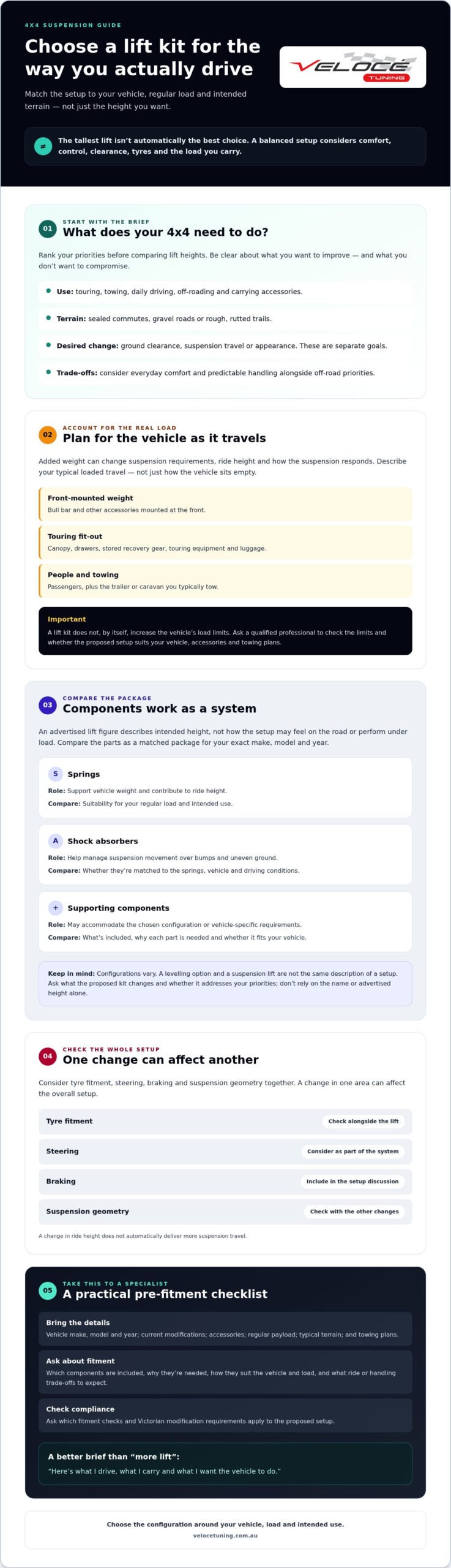
Use This 4×4 Lift Kit Checklist Before You Buy
A clear brief makes a workshop discussion more productive. Use this checklist to explain how your 4×4 is set up now, how you use it and what you want the lift to change. It gives a suspension specialist practical information to assess before recommending components.
What information should you bring to a suspension consultation?
- Vehicle details: Note the make, model and year, along with any existing suspension changes.
- Tyres and wheels: Record your current tyre size and any wheel changes, and bring details of the tyres you’re considering.
- Current and planned accessories: List fitted items such as a bull bar, canopy or drawers, along with additions you’re planning.
- Regular load: Describe who and what the vehicle usually carries, including touring equipment, and note whether you tow.
- Driving plans: Rank daily driving, touring, towing and off-road use by importance. Explain the roads and tracks you regularly tackle.
- Desired changes: Be clear about what you want to improve, such as clearance or how the vehicle responds under load, and what you want to preserve, such as everyday comfort.
What should you ask before approving the work?
Use these details to check whether the proposed setup matches your vehicle and plans. Ask:
- Which components are proposed, and how are they suited to my vehicle and regular load?
- Are the components compatible with my current modifications and intended tyre fitment?
- What installation work is included, and which post-fitment checks are planned?
- How will you assess the suspension, steering and tyre clearance as a connected setup?
- What Victorian compliance requirements should I verify for this vehicle and modification, and which authority can confirm them?
Clarify what’s included before approving the work rather than assuming alignment, inspections or other follow-up tasks are part of the job. Compliance requirements can depend on the specific vehicle and modification, so ask the workshop what needs checking and confirm applicable requirements with the relevant authority.
For broader guidance, explore Suspension Lift Kit Melbourne, or take this checklist to Veloce Tuning in Carrum Downs to discuss your suspension and lift kit requirements.
Choose and Fit Your 4×4 Lift Kit With a Clear Plan
A considered lift kit decision follows a clear sequence: define what you want the vehicle to do, account for its regular load, compare suitable components, then verify fitment and applicable requirements before committing. This keeps the focus on how the 4×4 actually gets used, rather than a height figure in isolation.
Vehicle-specific details matter. Existing modifications, the way accessories distribute weight, intended tyre fitment and regular payload can all affect which components are appropriate. A professional assessment can help identify these factors before you buy parts that may not suit the vehicle or the driving conditions you described.
When should you get a professional lift kit assessment?
Get advice before selecting components if your 4×4 already has suspension or other modifications, regularly carries a substantial load, or will tow. An assessment is also sensible if you’re unsure whether a proposed setup will fit your vehicle or what compliance checks may apply. Bring your vehicle details and describe its usual load and driving conditions so the discussion starts with the real setup, not assumptions.
How to take the next step with a local suspension specialist
Veloce Tuning offers suspension and lift kit upgrades from its Carrum Downs workshop. To make the conversation useful, share your vehicle’s make, model and year, current suspension and tyre setup, accessories, typical payload, towing needs and the mix of highway, gravel-road and off-road driving you expect. Be clear about what you want to change and what matters most to retain, such as everyday comfort or predictable handling.
Ask which options may suit your vehicle, what needs checking for fitment, and how to verify any relevant Victorian requirements for the proposed modification. The right next step is a discussion based on your 4×4 and its intended use. If you’re working out how to choose a 4×4 lift kit, start with those specifics and make a plan before selecting components.
Discuss your 4×4 suspension setup with Veloce Tuning.
Build a Setup Around the Way You Drive
A capable 4×4 setup starts with more than a target lift height. Define how you use the vehicle, account for its regular load, then compare components and confirm fitment before choosing a direction. Springs, shocks, tyres and other vehicle-specific requirements need to work as part of a considered setup, with handling and compliance checks included in the planning.
That’s the practical answer to how to choose a 4×4 lift kit: match the components to your vehicle, load and driving plans, and get advice where fitment or Victorian requirements are uncertain. A clear conversation before parts are selected can help you make a more informed decision.
Veloce Tuning offers suspension and lift kit upgrades from its Carrum Downs workshop, serving Carrum Downs, Frankston, Patterson Lakes, Mornington, Skye, Seaford and Sandhurst. Share your vehicle details, current setup and intended use to discuss the options.
Frequently Asked Questions
How do I choose the right lift kit for my 4×4?
Choose a kit around your vehicle, regular load and intended driving, rather than lift height alone. Start by ranking daily driving, touring, towing and off-road use, then note accessories and the weight you usually carry. Compare the full component package and ask a qualified suspension specialist to check fitment, handling considerations and applicable compliance requirements. That’s the practical approach to how to choose a 4×4 lift kit for your actual conditions.
What is the difference between a suspension lift and a body lift?
A suspension lift raises the vehicle by changing suspension components, while a body lift raises the body from the chassis using spacers. They’re different approaches and shouldn’t be treated as interchangeable. A body lift doesn’t change the suspension itself or provide the same change to ground clearance as a suspension lift. Suitability depends on your vehicle, intended use and proposed setup, so confirm compatibility and installation requirements before choosing either option.
Will a lift kit affect my 4×4’s handling?
It can affect how your 4×4 responds, but the outcome depends on the vehicle, components, installation and load. A change in ride height can influence suspension geometry, steering feel and the relationship between suspension and tyres. Don’t assume handling will remain unchanged. Ask the installer to assess the suspension, steering, braking and tyre fitment as a connected system, and explain how you use the vehicle on highways, gravel roads and tracks.
Can I fit larger tyres after installing a lift kit?
Possibly, but a lift doesn’t automatically make every larger tyre suitable. Confirm the proposed tyre and wheel combination is compatible with your vehicle and suspension setup, and ask about clearance as the suspension moves, not only when the vehicle is parked. Tyre fitment may also have compliance implications. Before buying tyres, have a qualified workshop assess the exact vehicle, wheel and tyre details, then verify any applicable requirements with the relevant authority.
Do I need an engineer’s certificate for a 4×4 lift kit in Victoria?
Whether certification or other approval is needed depends on the vehicle and the specific modifications, so there isn’t a reliable one-size-fits-all answer. Treat VicRoads guidance and national Vehicle Standards Bulletin 14 (VSB 14) as starting points for checking what may apply, not blanket approval. Describe the proposed changes to a qualified workshop and confirm the requirements for your vehicle with the relevant Victorian authority before proceeding.
Does adding accessories mean I need different suspension?
Not automatically, but added weight can change how the suspension sits and responds, particularly if accessories are fitted permanently or the vehicle regularly carries touring gear. Include items such as a bull bar, canopy, drawers, passengers and towing needs in the assessment. Ask a qualified professional to consider the typical loaded vehicle and confirm its load limits and suspension suitability before selecting components. An accessory alone doesn’t determine the right setup.
Should a 4×4 lift kit be professionally installed?
Professional installation is recommended, particularly if your vehicle has existing modifications, carries substantial loads, or you’re uncertain about component fitment or compliance. A specialist can assess the vehicle and explain what installation and post-fitment checks are appropriate. Confirm what’s included before approving the work. Veloce Tuning offers suspension and lift kit upgrades from Carrum Downs, serving nearby Frankston, Patterson Lakes, Mornington, Skye, Seaford and Sandhurst. Bring your vehicle details and intended use to discuss your setup.